In today’s fast-paced digital landscape, businesses are constantly on the lookout for innovative ways to streamline their operations and enhance efficiency. One area that has garnered significant attention is lead automation. By automating lead generation, businesses can save time, improve accuracy, and ultimately drive higher conversion rates. This article delves into the essential steps to automate leads effectively, ensuring that you stay ahead in the competitive market.
In today’s competitive landscape, automating your lead generation process can save you time and enhance efficiency. By following these five easy steps, you can streamline your approach and focus on converting leads into loyal customers. For instance, using tools that feature design elements like bag mockup templates can help you create appealing visuals to attract your target audience.
Table of Contents
Understanding Lead Automation
Lead automation refers to the use of technology and software to streamline the process of capturing, nurturing, and converting leads into customers. It eliminates the manual effort often involved in these processes, allowing businesses to focus on strategy and execution.
Before diving into the steps, let’s explore the key benefits of lead automation:
- Increased efficiency in lead management
- Improved accuracy and reduced human error
- Enhanced customer experience through timely follow-ups
- Data-driven insights for better decision-making
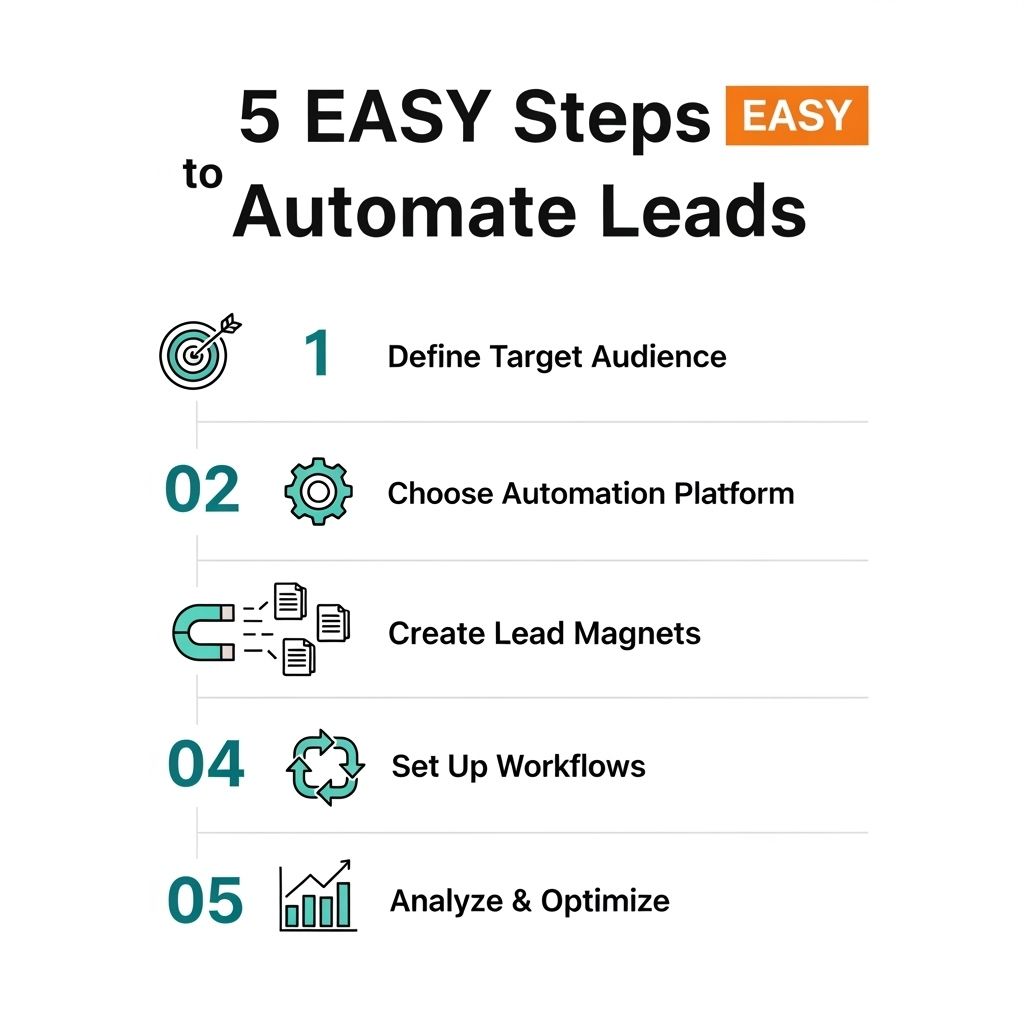
Step 1: Define Your Target Audience
Before implementing any automation tools, it’s crucial to define your target audience. Understanding who your ideal customers are will guide your lead generation efforts and help tailor your messaging accordingly. Here’s how to define your target audience:
1. Analyze Existing Customers
Look at your current customer base to identify common characteristics, including:
- Demographics (age, gender, location)
- Behavioral traits (purchasing habits, engagement level)
- Interests and needs
2. Create Buyer Personas
Based on your analysis, create detailed buyer personas that represent your ideal customers. Include information such as their pain points, goals, and preferred communication channels.
Step 2: Choose the Right Automation Tools
With a clear understanding of your audience, the next step is to select the right tools for automation. Various platforms cater to lead generation and automation, each with its unique features. Some popular options include:
| Tool | Features | Best For |
|---|---|---|
| HubSpot | Email marketing, CRM, analytics | Comprehensive inbound marketing |
| Pardot | Lead nurturing, scoring, and management | B2B marketing |
| Marketo | Customer engagement, analytics, A/B testing | Enterprise-level solutions |
| Mailchimp | Email campaigns, landing pages, automation | Small to medium-sized businesses |
When selecting a tool, consider factors such as integration capabilities, ease of use, pricing, and customer support.
Step 3: Set Up Lead Capture Forms
Lead capture forms are essential for collecting information from potential customers. Ensure your forms are user-friendly and strategically placed throughout your website. Here are some tips for effective lead capture:
1. Keep It Simple
Limit the number of fields in your forms to only the essentials. Asking for excessive information can deter potential leads.
2. Offer Value
Encourage users to fill out your forms by offering something valuable in return, such as:
- Free eBooks or guides
- Exclusive discounts or promotions
- Webinars or online courses
3. Use A/B Testing
Test different versions of your forms to determine which design and messaging yield the highest conversion rates. Assess factors like layout, colors, and call-to-action buttons.
Step 4: Automate Lead Nurturing
Once you capture leads, automating the nurturing process is vital for keeping potential customers engaged. Consider implementing the following strategies:
1. Email Drip Campaigns
Set up automated email sequences that provide valuable content to your leads over time. This could include:
- Welcome emails
- Informative articles or case studies
- Exclusive offers and promotions
2. Lead Scoring
Implement a lead scoring system to prioritize leads based on their engagement level. Assign points for actions such as:
- Opening emails
- Clicking on links
- Visiting specific pages on your website
3. Personalization
Utilize personalization techniques to make your communications more relevant to each lead. This can include using their name, referencing their specific interests, or suggesting products based on their previous interactions.
Step 5: Monitor and Optimize Your Process
Finally, it’s imperative to continuously monitor and optimize your lead automation process. Utilize analytics tools to track key performance indicators (KPIs) such as:
- Lead conversion rates
- Engagement rates (email opens, clicks)
- Return on investment (ROI)
Regularly review and analyze this data to identify areas for improvement. Experiment with different strategies, tools, and messaging to optimize your lead automation process continually.
Conclusion
Automating lead generation is not just a trend; it’s a necessity for businesses aiming to maximize efficiency and improve results. By carefully defining your target audience, selecting the right tools, setting up effective lead capture forms, automating the nurturing process, and continuously monitoring your efforts, you can create a robust lead automation strategy that drives growth and success. Start taking these steps today to transform your lead generation approach and stay ahead of the competition.
FAQ
What are the benefits of automating leads?
Automating leads helps save time, increase efficiency, enhance data accuracy, and improve follow-up rates, allowing businesses to focus on closing sales.
How can I start automating my lead generation process?
Begin by identifying your target audience, selecting the right automation tools, and setting up workflows that capture and nurture leads effectively.
What tools are recommended for lead automation?
Popular tools for lead automation include HubSpot, Salesforce, Mailchimp, and Zapier, which help streamline processes and integrate various marketing efforts.
Is lead automation suitable for small businesses?
Yes, lead automation is highly beneficial for small businesses as it allows them to optimize their marketing efforts and manage leads more effectively without a large team.
How can I measure the success of my lead automation efforts?
You can measure success through key metrics such as conversion rates, lead response times, and overall ROI from your automated lead generation campaigns.