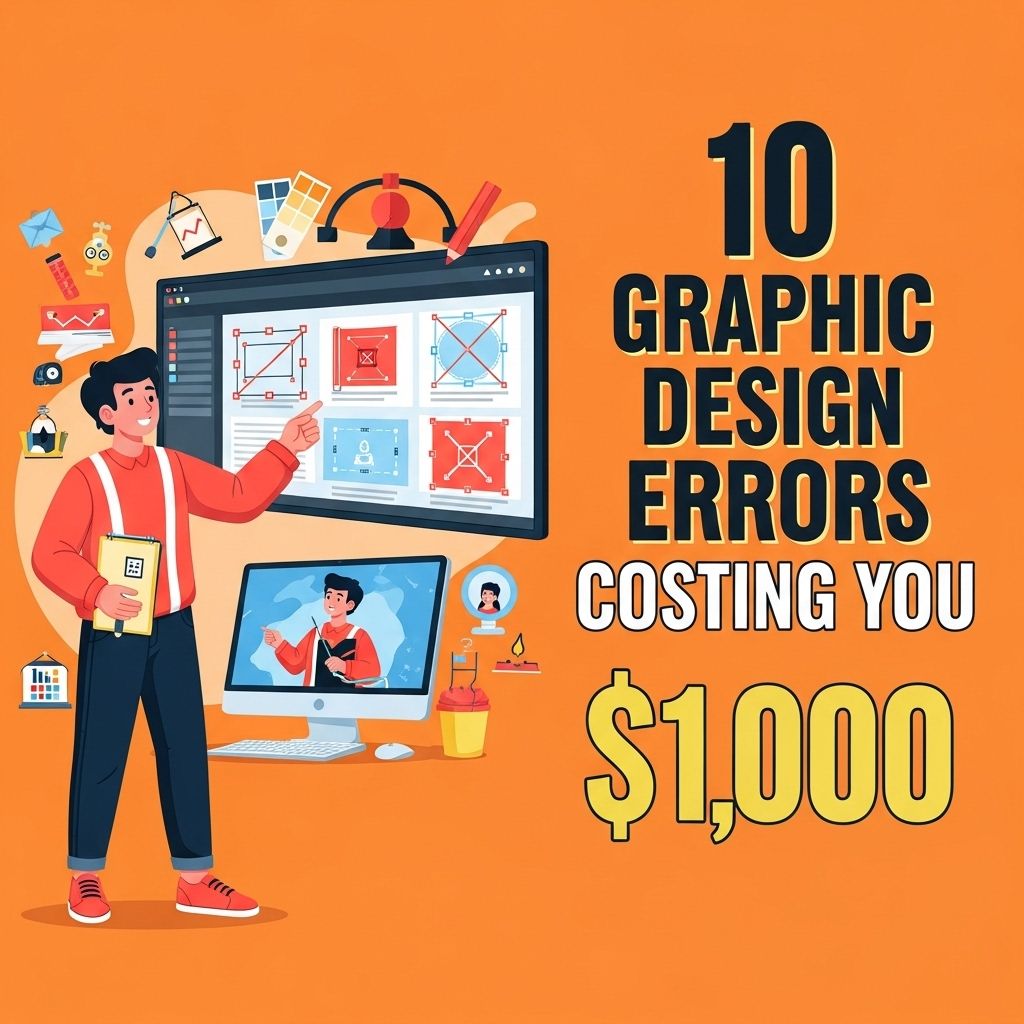
Graphic design is more than just creating visually appealing images; it’s about effective communication through visual elements. A well-designed piece can capture attention, convey messages, and convert viewers into customers. However, many designers overlook crucial elements that can lead to costly errors. In this article, we will delve into ten graphic design errors that could easily cost you $1,000 or more if not addressed.
Graphic design plays a crucial role in successful branding, but many designers fall into common traps that can be costly. From neglecting the importance of hierarchy to misusing colors, these mistakes can undermine the effectiveness of a project. To elevate your designs, learning from these errors is essential, and resources like varieties of bag mockups can offer valuable inspiration.
Table of Contents
1. Poor Understanding of the Target Audience
One of the fundamental aspects of graphic design is understanding who the target audience is. Designing without a clear picture of the audience can lead to wasted resources and misguided efforts.
Common Mistakes:
- Ignoring demographic factors like age, gender, and interests.
- Failing to recognize cultural sensitivities.
- Creating designs that appeal to the designer, not the audience.
2. Neglecting Branding Consistency
Branding plays a vital role in creating a recognizable identity. Inconsistent branding can confuse consumers and diminish loyalty.
| Aspect | Consistent Branding | Inconsistent Branding |
|---|---|---|
| Colors | Uniform color palette enhances brand recall | Varied colors can dilute brand identity |
| Fonts | Same typography communicates professionalism | Different fonts confuse brand message |
| Logo Usage | Standardized logo application reinforces recognition | Different versions can lead to brand dilution |
3. Inadequate Typography Choices
Typography sets the tone of your design and influences readability. Missteps in typography can lead to confusion and disengagement.
Key Points to Consider:
- Choose legible fonts appropriate for the medium.
- Limit the number of font styles to maintain coherence.
- Pay attention to font size for various viewing devices.
4. Overloading with Graphics
While visuals can enhance a design, overcrowding a layout can detract from the message and overwhelm the viewer.
Best Practices:
- White space is your friend; it helps create balance.
- Prioritize essential graphics that add value.
- Avoid using too many images, icons, or illustrations.
5. Not Optimizing for Different Platforms
Designs should be tailored for various platforms—what works on a website may not be effective on social media. Understanding each platform’s nuances is crucial.
Guidelines for Optimization:
- Use appropriate dimensions for images and layouts per platform.
- Adapt design elements to suit user behavior on each platform.
- Test designs across devices to ensure consistency.
6. Ignoring Accessibility Standards
Designing with accessibility in mind ensures that everyone, including those with disabilities, can engage with your content.
Accessibility Tips:
- Utilize color contrast ratios for readability.
- Include alternative text for images.
- Ensure navigability for keyboard users.
7. Lack of a Clear Call to Action
A compelling call to action (CTA) guides users on what to do next. Without clarity, potential customers may leave without taking any action.
Effective CTA Strategies:
- Use action-oriented language.
- Position CTAs prominently within the design.
- Test different variations for effectiveness.
8. Failing to Conduct Adequate Research
Design should be informed by thorough research. Skipping this step can lead to misinterpretations and ineffective designs.
Research Strategies:
- Analyze competitors’ designs for insights.
- Conduct surveys to gather audience preferences.
- Stay updated on design trends across your industry.
9. Using Low-Quality Images
Images can make or break a design. Using low-resolution images can harm your brand’s perception and lead to lost opportunities.
Image Quality Tips:
- Source high-resolution images from reputable platforms.
- Utilize vector graphics for scalability.
- Consider custom photography when possible.
10. Overlooking Feedback and Revisions
Feedback is essential for growth and improvement. Ignoring constructive criticism can result in repeated mistakes and a stagnant design process.
Feedback Best Practices:
- Encourage open discussions with stakeholders.
- Implement feedback through structured revision cycles.
- Learn from past projects to inform future designs.
Conclusion
Understanding and avoiding these common graphic design errors can save you significant costs and enhance the effectiveness of your projects. By focusing on your audience, maintaining consistency, optimizing designs, and being open to feedback, you can create impactful designs that resonate with your target market and drive positive results.
FAQ
What are common graphic design errors that can lead to financial loss?
Common graphic design errors include poor typography, low-resolution images, inconsistent branding, lack of a clear focal point, and neglecting mobile optimization.
How can poor typography affect my business?
Poor typography can lead to miscommunication and a lack of professionalism, which may result in lost customers and revenue.
Why is image resolution important in graphic design?
Low-resolution images can appear pixelated or blurry, diminishing the quality of your branding and potentially driving away clients.
What is the impact of inconsistent branding in design?
Inconsistent branding can confuse customers and dilute brand identity, which can hinder customer loyalty and affect sales.
How does neglecting mobile optimization impact graphic design?
Neglecting mobile optimization can lead to a poor user experience on mobile devices, resulting in lost traffic and revenue.
What steps can I take to avoid these graphic design errors?
To avoid graphic design errors, ensure you use high-quality images, maintain consistent branding, focus on readability, and test designs on multiple devices.