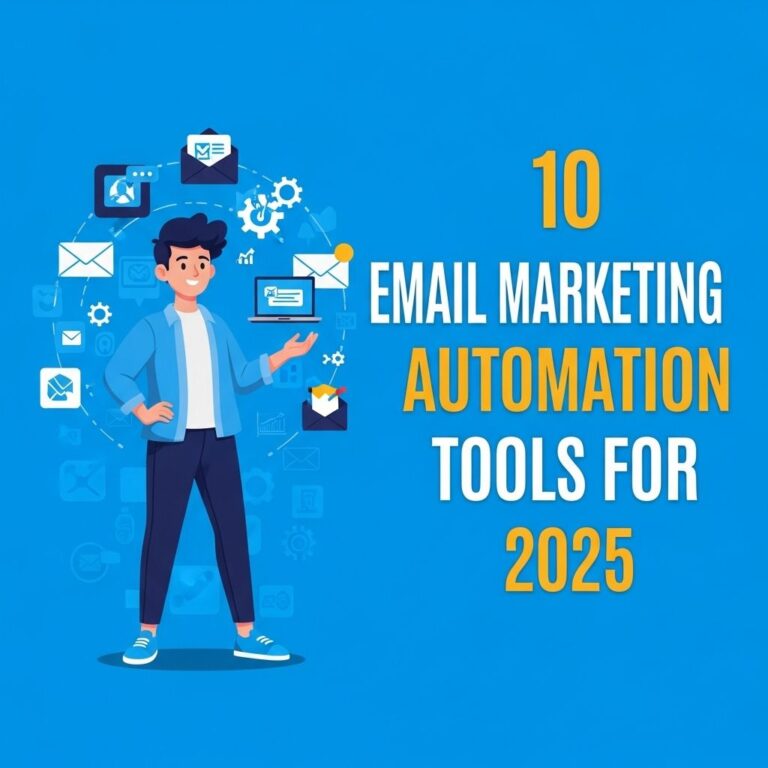
As the digital landscape evolves, email marketing remains a cornerstone of effective business communication. With advancements in technology, automation tools are emerging that allow marketers to streamline their campaigns, enhance customer engagement, and improve overall efficiency. This article will delve into ten of the most promising email marketing automation tools projected to make waves in 2025. Each tool offers a unique set of features that cater to various marketing strategies and business needs.
Table of Contents
1. Mailchimp: A Classic with a Twist
Mailchimp has long been a leader in the email marketing space, and it continues to innovate. In 2025, Mailchimp will boast advanced machine learning capabilities that allow it to predict recipient behavior with greater accuracy. This means:
- Tailored content recommendations based on user interaction.
- Automated A/B testing to optimize message effectiveness.
- Enhanced audience segmentation for targeted campaigns.
Key Features:
| Feature | Description |
|---|---|
| Smart Recommendations | AI-driven suggestions for content and timing. |
| Workflow Automation | Create complex workflows with ease. |
| Analytics Dashboard | Comprehensive insights into campaign performance. |
2. ActiveCampaign: The All-in-One Solution
ActiveCampaign is known for its robust automation features that integrate email marketing with CRM tools. In 2025, it is expected to further enhance its functionality with:
- Unified customer profiles that track engagement across all channels.
- Predictive sending times to increase open rates.
- Enhanced customer journey mapping for better targeting.
Benefits of ActiveCampaign:
- Seamless integration with eCommerce platforms.
- Advanced segmentation options.
- Real-time notification of customer interactions.
3. HubSpot: The Inbound Marketing Pioneer
HubSpot has set the standard for inbound marketing, and its email automation capabilities are essential for any marketer. By 2025, it is expected to include:
- More intuitive drag-and-drop email builder.
- Smart content that changes based on user behavior.
- Integration with AI chatbots for lead nurturing.
Why Choose HubSpot?
| Advantage | Details |
|---|---|
| All-in-One Marketing Hub | Combines email, CRM, social media, and more. |
| Detailed Analytics | In-depth reporting to refine strategies. |
| Community Resources | Access to plenty of tutorials and user forums. |
4. Sendinblue: Budget-Friendly Automation
Sendinblue is gaining traction due to its affordability without sacrificing features. Predictions for 2025 include:
- Real-time web tracking to capture user behavior.
- Advanced automation workflows that respond to customer actions.
- Multi-channel capabilities (SMS marketing included).
Sendinblue’s Strengths:
- Cost-effective pricing plans.
- User-friendly interface.
- Effective CRM tools.
5. GetResponse: A Focus on Conversions
GetResponse is uniquely positioned for marketers who prioritize conversion rates. By 2025, it is expected to offer:
- A/B testing integrated into all automation workflows.
- A powerful, AI-driven conversion funnel analysis tool.
- In-depth webinar integration for enhanced engagement.
GetResponse Features:
| Feature | Details |
|---|---|
| Landing Page Creator | Build high-converting landing pages easily. |
| Webinar Hosting | Conduct webinars directly through the platform. |
| CRM Integration | Manage contacts and sales within the same tool. |
6. Constant Contact: Empowering Small Businesses
Constant Contact is particularly popular among small businesses, and its evolution toward automation will include:
- Improved integration with social media platforms.
- Event management features for tailored campaigns.
- Enhanced reporting tools focused on small business needs.
Advantages of Constant Contact:
- Simple setup process.
- Excellent customer support options.
- Extensive template library.
7. Klaviyo: The eCommerce Specialist
Klaviyo has cornered the eCommerce market with its targeted marketing tools. In 2025, expect features like:
- Advanced segmentation based on purchase history.
- AI-driven product recommendations in emails.
- Cross-channel messaging that syncs with social ads.
Klaviyo Key Features:
| Feature | Utility |
|---|---|
| Predictive Analytics | Forecast future customer behavior. |
| Integration with Major Platforms | Connect seamlessly with Shopify, WooCommerce, etc. |
| Template Customization | Easy-to-use editor for tailored templates. |
8. Drip: For Serious eCommerce Marketers
Drip caters specifically to eCommerce marketers, enhancing its capabilities for 2025 by introducing:
- Customer lifecycle tracking to personalize outreach.
- Behavioral triggers for more relevant messaging.
- Cross-platform capabilities integrating SMS and social media.
Why Use Drip?
- Highly customizable workflows.
- In-depth analytics tailored for eCommerce.
- Strong community for support and resources.
9. Omnisend: Focused on Multi-Channel Marketing
Omnisend emphasizes multi-channel marketing, making it a comprehensive choice. By 2025, it is projected to enhance its platform by offering:
- Advanced segmentation for SMS alongside email.
- A more robust marketing automation workflow.
- Integration with popular eCommerce platforms and channels.
Benefits of Omnisend:
| Feature | Description |
|---|---|
| Multi-Channel Campaigns | Engage customers across email, SMS, and web push. |
| Analytics Suite | Track performance across all channels. |
| Pre-built Automation Workflows | Quickly set up common workflows. |
10. MailerLite: Simplicity Meets Functionality
MailerLite is gaining popularity due to its simplicity and effectiveness. Looking into 2025, it is expected to provide:
- Improved automation features that are easy to use.
- Enhanced reporting and analytics tools.
- Advanced integrations with other software solutions.
Why MailerLite is a Great Choice:
- User-friendly interface.
- Excellent customer service.
- Affordable pricing for startups and small businesses.
Conclusion
As we head towards 2025, the landscape of email marketing automation tools is set to become more intricate, powerful, and user-friendly. The tools outlined in this article not only offer features to facilitate automation but also incorporate advanced technologies such as artificial intelligence and machine learning to optimize campaigns. Choosing the right tool depends on your specific business needs, budget, and marketing goals. As always, testing different platforms and their features will ensure you find the best fit for your email marketing strategy.
FAQ
What are the top email marketing automation tools for 2025?
The top email marketing automation tools for 2025 include HubSpot, Mailchimp, ActiveCampaign, GetResponse, ConvertKit, and SendinBlue.
How can I choose the right email marketing automation tool for my business?
To choose the right email marketing automation tool, consider factors such as your business size, budget, features needed, user-friendliness, and customer support.
What features should I look for in an email marketing automation tool?
Look for features like customizable templates, segmentation, A/B testing, analytics, integration capabilities, and automation workflows.
Are email marketing automation tools suitable for small businesses?
Yes, many email marketing automation tools are designed with small businesses in mind, offering scalable solutions and affordable pricing.
What is the benefit of using email marketing automation tools?
Email marketing automation tools save time, increase efficiency, improve targeting, and enhance overall campaign effectiveness.
Will email marketing automation help improve my email open rates?
Yes, automation tools can help optimize send times, personalize content, and segment audiences, all of which can lead to higher open rates.