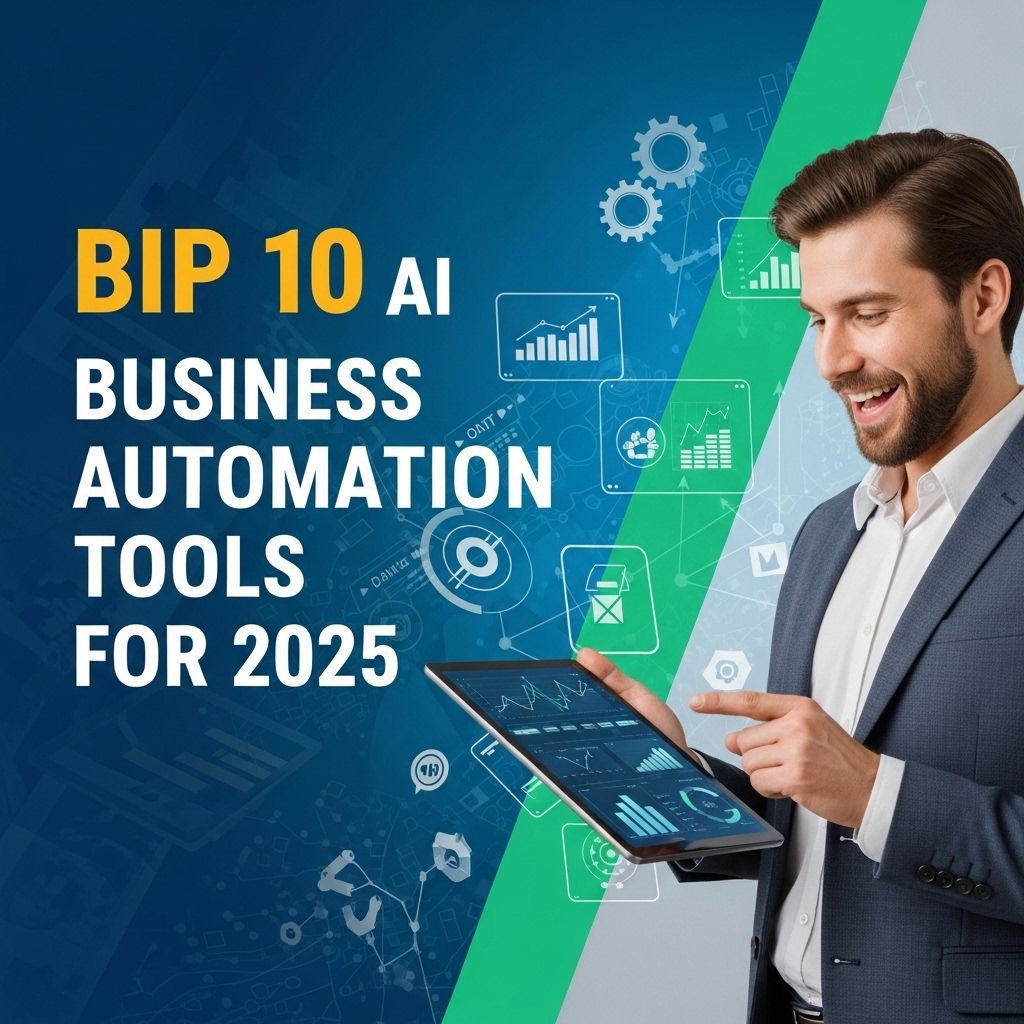
As we move further into the digital age, the integration of artificial intelligence (AI) into business processes has become increasingly crucial. Automating repetitive tasks not only boosts productivity but also allows employees to focus on higher-value activities. In 2025, the landscape of AI business automation tools is set to evolve dramatically, incorporating advanced algorithms and machine learning capabilities. This article explores the top 10 AI tools that are expected to redefine business operations in 2025.
As businesses increasingly leverage technology to enhance efficiency, the importance of AI-driven automation tools cannot be overstated. In 2025, staying competitive means implementing the right solutions to streamline operations, from task management to customer engagement. For inspiration in creative areas like branding, you can explore beer label design ideas that utilize automation for design processes.
Table of Contents
1. UiPath
UiPath remains a leading player in robotic process automation (RPA). It allows businesses to automate routine tasks across various applications without requiring extensive coding skills. With its advanced AI capabilities, UiPath can understand complex data patterns and provide insights to improve workflows.
Key Features:
- Drag-and-drop interface for easy automation.
- AI-driven decision-making algorithms.
- Integration with various third-party applications.
2. Blue Prism
Blue Prism is known for its robust security features and scalability. It empowers organizations to automate, monitor, and manage back-office processes efficiently. With its ‘Digital Workforce,’ companies can achieve unparalleled efficiency in operations.
Advantages:
- Highly secure and compliant solution.
- Seamless integration with existing systems.
- Supports complex processes with ease.
3. Automation Anywhere
This tool offers an intuitive interface along with powerful AI capabilities. Automation Anywhere focuses on creating a digital workforce that can operate alongside human employees, thereby enhancing productivity without sacrificing quality.
Features to Note:
| Feature | Description |
|---|---|
| AI-Powered Bots | Robust bots that learn and adapt to processes over time. |
| Cloud-Native | Deployable on any cloud infrastructure, enhancing accessibility. |
| Analytics Tools | Provides real-time insights into automation performance. |
4. Microsoft Power Automate
Part of the Microsoft suite, Power Automate is designed for users to automate workflows between applications and services. Its AI Builder allows users to create AI models that can be easily integrated into automated workflows.
Benefits:
- User-friendly interface for rapid deployment.
- Integration with Microsoft products and third-party apps.
- AI model customization for tailored workflows.
5. Zapier
Zapier is well-known for its simplicity and ease of use. Although primarily a task automation tool, it is increasingly incorporating AI functionalities to enhance its capabilities. Users can automate repetitive tasks across various applications by setting up ‘Zaps.’
Why Choose Zapier?
- Supports thousands of applications.
- Simplified task automation without coding.
- Active user community for support and ideas.
6. WorkFusion
WorkFusion combines RPA with AI and machine learning. It is particularly effective in sectors like finance and insurance, where complex data processing is required. WorkFusion automates end-to-end operations, making it a preferred choice for larger enterprises.
Key Strengths:
| Strength | Details |
|---|---|
| Machine Learning | Enhances the performance of bots through continuous learning. |
| Data Extraction | Efficiently manages and extracts data for analysis. |
| End-to-End Automation | Handles complex workflows seamlessly. |
7. ServiceNow
ServiceNow is a cloud-based platform that automates IT service management (ITSM). It offers AI-driven workflows that help improve service delivery and operational efficiencies. ServiceNow’s capabilities extend beyond IT, making it versatile for various business functions.
Highlights:
- AI-enhanced incident management.
- Integration with popular enterprise applications.
- Customizable workflows for different departments.
8. Pega
Pega is known for its customer relationship management (CRM) solutions, but its AI capabilities are driving business automation forward. It allows companies to tailor customer interactions and automate processes based on AI insights.
Innovative Aspects:
- Dynamic case management for improved customer service.
- Real-time analytics for decision-making.
- Integration with various data sources for comprehensive insights.
9. TIBCO Software
TIBCO offers a suite of integration and analytics tools that enhance business automation. Its AI capabilities support predictive analytics, helping businesses make data-driven decisions quickly.
Benefits of TIBCO:
| Feature | Description |
|---|---|
| Data Integration | Seamlessly connects various data sources. |
| Predictive Analytics | Helps foresee business trends and adjust strategies accordingly. |
| Agility | Facilitates rapid response to operational changes. |
10. IBM Watson
IBM Watson is a powerful AI platform that provides advanced analytics and machine learning capabilities. It enables businesses to automate complex processes and derive insights from large datasets.
Why IBM Watson Stands Out:
- Natural language processing for better human interaction.
- Integration with existing systems for enhanced automation.
- Robust security features to protect sensitive data.
Conclusion
As businesses continue to adapt to the demands of a rapidly changing environment, integrating AI automation tools will be essential. The tools listed above represent the forefront of technology in 2025, enabling businesses to streamline operations, enhance productivity, and remain competitive. By embracing these solutions, organizations can not only automate routine tasks but also unlock new opportunities for growth and innovation.
FAQ
What are AI business automation tools?
AI business automation tools are software applications that utilize artificial intelligence to automate repetitive tasks, streamline processes, and enhance productivity in various business operations.
How can AI automation tools benefit my business?
AI automation tools can improve efficiency, reduce human error, save time, and lower operational costs by automating routine tasks and enabling employees to focus on higher-level strategic activities.
What types of tasks can AI business automation tools handle?
AI business automation tools can handle a variety of tasks including data entry, customer service through chatbots, email marketing, inventory management, and financial analysis.
Are AI automation tools suitable for small businesses?
Yes, AI automation tools are scalable and can be tailored to meet the needs of small businesses, helping them to compete more effectively and optimize their operations.
What should I consider when choosing an AI automation tool?
When choosing an AI automation tool, consider factors such as ease of use, integration capabilities, cost, scalability, and the specific needs of your business.
How will AI business automation tools evolve by 2025?
By 2025, AI business automation tools are expected to become more advanced with improved machine learning capabilities, enhanced personalization, and greater integration with other business systems, leading to more effective automation solutions.