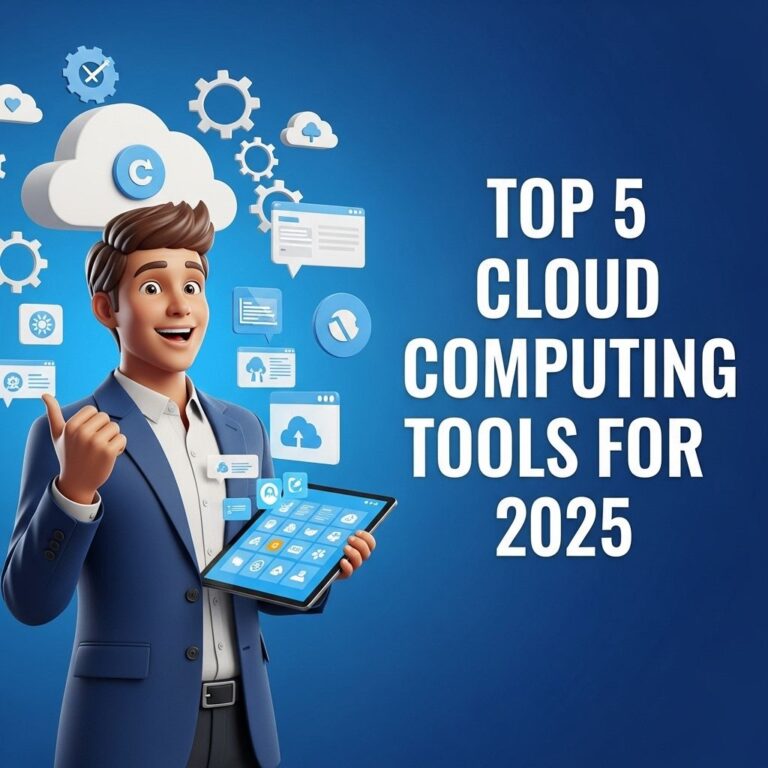
As businesses continue to evolve and adapt to the digital landscape, cloud computing has established itself as an essential component for operational success. Tools that facilitate cloud computing are rapidly advancing, offering innovative solutions tailored for efficiency, scalability, and performance. In this article, we will explore the top five cloud computing tools projected to dominate the landscape by 2025, highlighting their key features, benefits, and unique functionalities.
As cloud computing continues to evolve, several tools stand out as essential for businesses in 2025. This overview will explore the top five cloud computing tools poised to transform how organizations manage data and resources. For those interested in design, check out these bag mockup visualization tips to enhance your marketing materials.
Table of Contents
1. Amazon Web Services (AWS)
Amazon Web Services remains a cornerstone of cloud computing, providing a comprehensive suite of services that cater to diverse business needs. AWS is recognized for its robust infrastructure, extensive range of tools, and global reach.
Key Features of AWS
- Scalability: AWS allows businesses to scale resources up or down according to demand, ensuring cost-effectiveness and flexibility.
- Global Reach: With data centers located in multiple regions, AWS offers low-latency performance for users worldwide.
- Machine Learning and AI: AWS provides advanced tools like SageMaker and Rekognition, enabling businesses to integrate machine learning into their applications.
- Wide Range of Services: From computing power and storage to IoT and serverless architectures, AWS has a service for every business need.
Benefits and Use Cases
Organizations of all sizes leverage AWS for its flexibility, reliability, and extensive service offerings. Companies can use AWS for:
- Hosting web applications and websites.
- Storing and analyzing big data.
- Running enterprise applications.
- Implementing DevOps practices.
2. Microsoft Azure
Microsoft Azure has rapidly gained traction as a leading cloud computing platform, especially among enterprises that rely on Microsoft products. Azure offers an integrated cloud service that supports a variety of programming languages, tools, and frameworks.
Key Features of Microsoft Azure
- Hybrid Cloud Capabilities: Azure excels in hybrid cloud solutions, allowing businesses to seamlessly integrate on-premises data with the cloud.
- Developer Tools: Azure provides robust tools for developers, including Azure DevOps, Visual Studio integration, and application insights.
- Security and Compliance: Microsoft invests heavily in security, offering built-in compliance tools and advanced threat protection.
- AI and Machine Learning: Azure’s AI services, such as Azure Cognitive Services, enable organizations to build intelligent applications.
Benefits and Use Cases
Azure is particularly beneficial for businesses looking for seamless integration with Microsoft products. Some use cases include:
- Building and managing applications in the cloud.
- Data analytics and visualization.
- Enterprise resource planning (ERP) solutions.
3. Google Cloud Platform (GCP)
Google Cloud Platform stands out for its data analytics and machine learning capabilities. As organizations increasingly focus on data-driven decision-making, GCP provides the tools to empower these initiatives.
Key Features of Google Cloud Platform
- Big Data Analytics: GCP offers powerful tools like BigQuery for processing and analyzing large datasets efficiently.
- Machine Learning: With TensorFlow and AutoML, GCP makes it easier for developers to create sophisticated machine learning models.
- Serverless Computing: GCP’s serverless offerings, such as Cloud Functions and Cloud Run, allow developers to build applications without managing servers.
- Networking: GCP offers leading data transfer speeds and low-latency connections due to its global fiber optic backbone.
Benefits and Use Cases
GCP is ideal for businesses focused on analytics and machine learning. Use cases include:
- Real-time analytics and data warehousing.
- Building smart applications with AI.
- Hosting containerized applications.
4. IBM Cloud
IBM Cloud is a robust platform designed for enterprise-grade solutions, emphasizing security and regulatory compliance. IBM has cultivated a strong presence in sectors like finance and healthcare, where data security is paramount.
Key Features of IBM Cloud
- Hybrid Multicloud Support: IBM Cloud facilitates hybrid and multicloud architectures, allowing businesses to operate across multiple cloud environments.
- AI and Machine Learning: With IBM Watson, businesses can deploy AI capabilities to enhance customer engagement and operational efficiency.
- Security Features: IBM Cloud integrates advanced security measures and compliance capabilities, making it suitable for regulated industries.
- Blockchain Technology: IBM offers solutions for developing and managing blockchain networks, catering to businesses seeking transparency and traceability.
Benefits and Use Cases
IBM Cloud is beneficial for businesses requiring high security and compliance. Use cases include:
- Financial services applications.
- Healthcare data management.
- Building and managing blockchain networks.
5. Oracle Cloud Infrastructure (OCI)
Oracle Cloud Infrastructure has positioned itself as a strong contender in the cloud service market, particularly for businesses that rely on Oracle databases and enterprise applications.
Key Features of Oracle Cloud Infrastructure
- Performance Optimization: OCI is renowned for high performance and low-latency database services.
- Autonomous Database: Oracle’s Autonomous Database automates database management, ensuring optimal performance and security.
- Security: OCI emphasizes security with built-in protections and compliance features.
- Extensive Integration: Oracle products integrate seamlessly with OCI, making it an ideal choice for existing Oracle customers.
Benefits and Use Cases
OCI is particularly well-suited for businesses already using Oracle solutions. Use cases include:
- Database management and analytics.
- ERP and CRM systems.
- Building scalable enterprise applications.
Conclusion
As cloud computing continues to evolve, the tools and platforms that facilitate cloud services play a crucial role in helping businesses achieve digital transformation. By 2025, AWS, Microsoft Azure, Google Cloud Platform, IBM Cloud, and Oracle Cloud Infrastructure are expected to remain at the forefront of cloud technology, each offering unique features and capabilities tailored to various business needs. Whether you’re a startup or an established enterprise, understanding these top cloud computing tools can help you leverage their strengths to gain a competitive advantage in the digital landscape.
FAQ
What are the top cloud computing tools in 2025?
The top cloud computing tools in 2025 include AWS, Microsoft Azure, Google Cloud Platform, IBM Cloud, and Oracle Cloud, each offering unique features and services to meet diverse business needs.
How can I choose the right cloud computing tool for my business?
To choose the right cloud computing tool, assess your business requirements, budget, scalability needs, and the specific features offered by each provider.
What are the benefits of using cloud computing tools?
Benefits of using cloud computing tools include improved collaboration, cost savings, enhanced security, scalability, and access to advanced technologies.
Are cloud computing tools secure in 2025?
Yes, cloud computing tools in 2025 are equipped with advanced security measures, including encryption, access controls, and compliance with regulations to ensure data protection.
Can small businesses benefit from cloud computing tools?
Absolutely! Cloud computing tools provide small businesses with affordable access to powerful computing resources, enabling them to compete with larger companies.