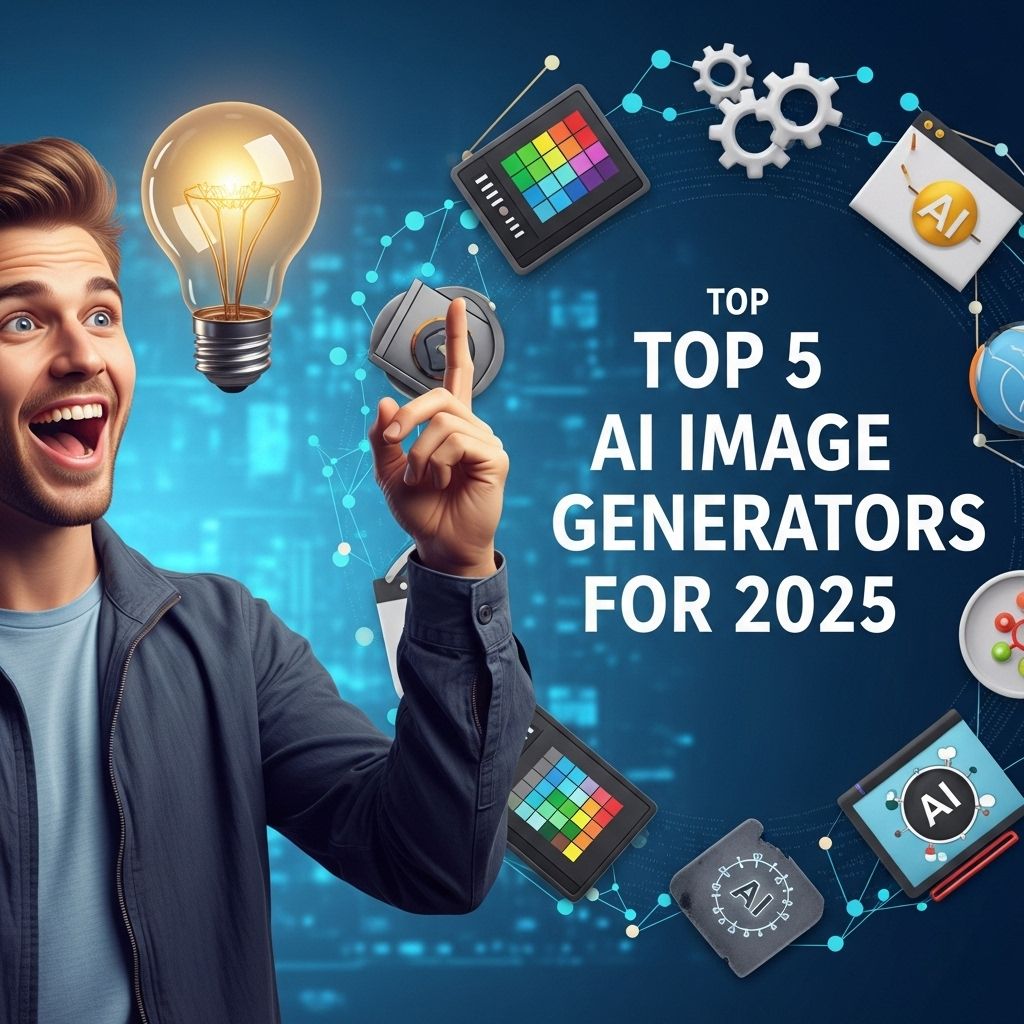
The rapid advancement of artificial intelligence has revolutionized the way we create and manipulate images. From generating hyper-realistic portraits to creating fantastical worlds, AI image generators are becoming increasingly sophisticated and accessible. As we look to the future, particularly 2025, several platforms are poised to redefine the landscape of digital art creation. This article explores the top five AI image generators that promise to lead the way in 2025, showcasing their unique features, capabilities, and potential applications.
Table of Contents
1. DALL-E 3
DALL-E 3, developed by OpenAI, builds upon its predecessors’ foundations by offering even more refined image generation abilities. This AI model creates images from text descriptions, enabling users to generate unique and imaginative artworks.
Key Features:
- Enhanced Understanding: Improved comprehension of complex prompts and nuances in language.
- Inpainting: The ability to edit specific areas of an image, filling them with contextually relevant content.
- Variability: The generation of multiple variations from a single prompt enhances creativity.
Use Cases:
- Content creation for social media marketing.
- Concept art for video games and films.
- Visual storytelling for blogs and articles.
2. Midjourney
Midjourney has gained significant traction for its community-driven approach to image generation. This platform operates through Discord, where users can interact with the AI to create and share stunning visual art.
Key Features:
- Community Collaboration: Users can share prompts and results, fostering creativity and learning.
- Style Customization: Fine-tune the artistic style of generated images with various parameters.
- Iterative Refinement: Users can refine images through feedback loops, allowing for iterative improvements.
Use Cases:
- Artistic collaboration for independent artists.
- Creating unique illustrations for graphic novels.
- Experimentation with different artistic styles.
3. Runway ML
Runway ML has carved a niche for itself with its robust suite of creative tools that harness the power of machine learning. This platform is especially favored by video creators and designers looking to enhance their projects with AI-generated visuals.
Key Features:
- Integrated Video Editing: Combine image generation with motion graphics seamlessly.
- Real-Time Collaboration: Work on projects with teams in real-time, facilitating streamlined workflows.
- API Access: Developers can integrate AI capabilities into their applications.
Use Cases:
- Creating unique assets for video productions.
- Augmenting design projects with AI-generated visuals.
- Building interactive installations with dynamic content.
4. Artbreeder
Artbreeder combines machine learning with collaborative art creation, allowing users to blend images and manipulate them to create new artworks. This platform stands out for its emphasis on genetic algorithms, enabling users to ‘breed’ images together.
Key Features:
- Image Blending: Users can combine multiple images to create unique variations.
- Parameter Adjustments: Fine-tune features such as color, style, and composition.
- Community Gallery: A vast library of creations encourages inspiration and collaboration.
Use Cases:
- Exploring new artistic styles and concepts.
- Creating character designs for games and animation.
- Collaboratively developing art for exhibitions.
5. DeepArt.io
DeepArt.io leverages deep neural networks to transform photos into artwork using styles from famous artists. This platform is particularly appealing to individuals and businesses seeking to add an artistic touch to their images.
Key Features:
- Style Transfer: Apply the style of renowned artists to any photograph.
- High-Resolution Outputs: Generate print-ready images for commercial use.
- User-Friendly Interface: Simple and straightforward design for ease of use.
Use Cases:
- Creating personalized gifts and merchandise.
- Marketing campaigns that require visually striking imagery.
- Art project explorations for students and hobbyists.
Conclusion
As we move towards 2025, the capabilities of AI image generators will continue to expand, offering unprecedented opportunities for artists, designers, and creators across various industries. Whether through community-driven platforms like Midjourney or advanced tools like DALL-E 3 and Runway ML, these technologies promise to enhance creativity and push the boundaries of digital art. Embracing these AI tools will undoubtedly reshape how we think about and produce visual content, making it an exciting time for both creators and consumers alike.
FAQ
What are the top AI image generators for 2025?
As of 2025, the top AI image generators include models like DALL-E 3, Midjourney V5, Artbreeder, Runway ML, and DeepAI.
How do AI image generators work?
AI image generators use deep learning algorithms to analyze and create images based on textual descriptions or existing images, utilizing neural networks to generate realistic visuals.
Can I use AI image generators for commercial purposes?
Most AI image generators have specific licensing agreements; it’s essential to check the terms of use for each platform to determine if commercial usage is permitted.
What are the benefits of using AI image generators?
AI image generators allow for quick and creative image production, enabling users to visualize concepts effortlessly, save time, and reduce costs associated with traditional graphic design.
Are there any free AI image generators available?
Yes, several AI image generators offer free versions or trials, such as DeepAI and Artbreeder, though they may have limitations compared to premium versions.
What advancements can we expect in AI image generation by 2025?
By 2025, we can expect significant advancements in AI image generation, including improved realism, higher resolutions, and better understanding of complex prompts, enhancing user creativity.