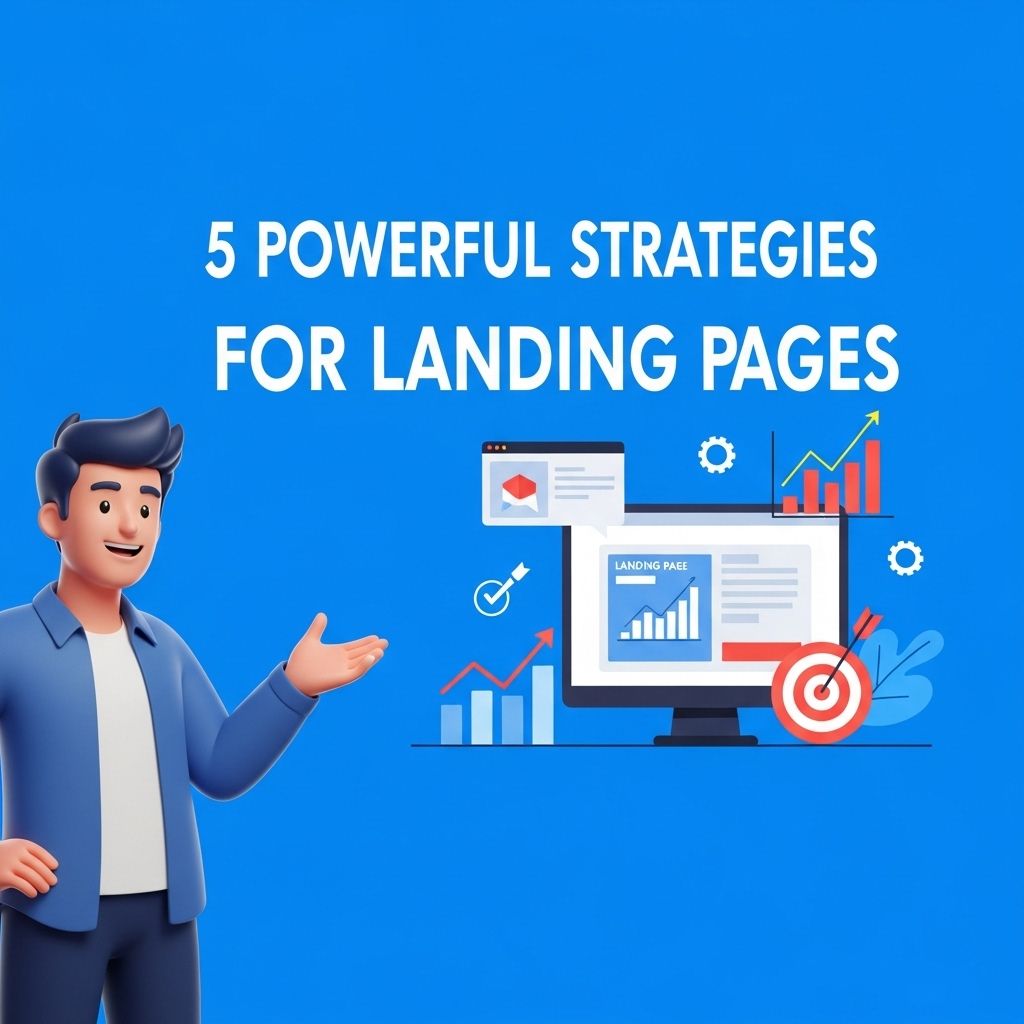
In the digital marketing landscape, a well-optimized landing page can make all the difference between a successful campaign and one that falls flat. Whether you’re driving traffic through paid ads, email marketing, or social media, the landing page serves as the final step in convincing potential customers to take action. To capitalize on this crucial opportunity, let’s explore five powerful strategies that can elevate your landing pages significantly.
Table of Contents
1. Define a Clear Purpose
The first step in creating a compelling landing page is to define its purpose. Without a clear goal, the page risks becoming a confusing space for visitors. Here are some common objectives for landing pages:
- Lead generation
- Sales conversions
- Event sign-ups
- Downloadable content (eBooks, whitepapers)
- Product demonstration requests
Each of these goals requires specific messaging and design elements that align with the intended action. By identifying the primary objective early in the design process, you can tailor the subsequent content and layout to guide visitors effectively.
2. Optimize for User Experience (UX)
User experience is paramount for keeping visitors engaged and encouraging them to convert. Here are some key UX principles to consider:
2.1. Simplified Layout
A clean and straightforward layout can enhance readability and reduce distractions. Consider using:
- Plenty of white space
- Intuitive navigation (if applicable)
- A clear hierarchy of information
2.2. Fast Load Times
Your landing page should load quickly; ideally, under three seconds. Consider optimizing:
- Images (compress them without sacrificing quality)
- Code (minifying CSS, JavaScript, and HTML)
- Hosting (choose a reliable provider with fast servers)
2.3. Mobile Responsiveness
With a significant portion of users accessing the internet via mobile devices, ensure your landing pages are fully responsive. Test how your page looks and functions on various devices to guarantee a seamless experience.
3. Craft Compelling Content
The content on your landing page must resonate with your target audience. Consider the following strategies for creating persuasive copy:
3.1. Strong Headlines
Your headline is the first thing visitors see, making it crucial for capturing attention. Use strong action words, pose thought-provoking questions, or highlight the value proposition prominently.
3.2. Use Subheadings Wisely
Subheadings can break up text and guide readers through the content. Ensure subheadings complement the main headline by expanding on the value you are offering.
3.3. Highlight Benefits Over Features
While it’s essential to mention features, focusing on benefits can resonate more with potential customers. Illustrate how your products or services improve their lives or solve their problems:
| Feature | Benefit |
|---|---|
| 24/7 customer support | Peace of mind knowing help is always available |
| Free trial | Opportunity to test the service without commitment |
4. Implement Trust Signals
Building trust is crucial for conversion, especially for new visitors unfamiliar with your brand. Consider integrating these trust signals:
4.1. Customer Testimonials
Real reviews from satisfied customers can significantly influence potential buyers. Showcase testimonials prominently on your landing page.
4.2. Security Badges
If applicable, include security badges to reassure users that their data is safe. This is especially important for e-commerce sites.
4.3. Case Studies
Detailed case studies can demonstrate the effectiveness of your service or product. They provide tangible proof of success stories that new visitors can relate to.
5. A/B Test and Analyze
Creating a high-performing landing page is an iterative process. It’s essential to continually test various elements to find what works best:
5.1. A/B Testing
Run A/B tests to compare different versions of your landing page. Experiment with:
- Headline wording
- Call-to-action (CTA) button colors and text
- Images vs. videos
5.2. Analyze Performance Metrics
- Conversion rate
- Bounce rate
- Time on page
- Click-through rate (CTR)
Conclusion
Incorporating these five strategies into your landing page design can lead to significant improvements in conversion rates. Remember, the digital landscape is ever-evolving, so staying updated with the latest trends and best practices is key to maintaining an effective online presence. By defining a clear purpose, optimizing for user experience, crafting compelling content, implementing trust signals, and continuously testing and analyzing your efforts, you will be well on your way to creating high-performing landing pages that drive results.
FAQ
What are the key components of an effective landing page?
An effective landing page should include a compelling headline, clear call-to-action (CTA), engaging visuals, concise and persuasive copy, and trust signals such as testimonials or reviews.
How can I optimize my landing page for conversions?
To optimize your landing page for conversions, focus on a single clear goal, use A/B testing to determine the most effective elements, ensure fast loading times, and minimize distractions to keep users focused on the CTA.
What role does mobile optimization play in landing pages?
Mobile optimization is crucial as a significant portion of web traffic comes from mobile devices. Ensure your landing page is responsive, loads quickly, and provides a seamless user experience on all screen sizes.
How can I improve the load time of my landing page?
You can improve load time by optimizing images, leveraging browser caching, minimizing HTTP requests, and using a content delivery network (CDN) to distribute your content more efficiently.
What is A/B testing and how does it benefit landing pages?
A/B testing involves creating two versions of a landing page to see which one performs better. It helps identify effective elements such as headlines, CTAs, and images, ultimately leading to higher conversion rates.
How important is the use of visuals on landing pages?
Visuals are extremely important on landing pages as they can capture attention, convey messages quickly, and enhance the overall user experience. High-quality images or videos can help illustrate your product or service effectively.