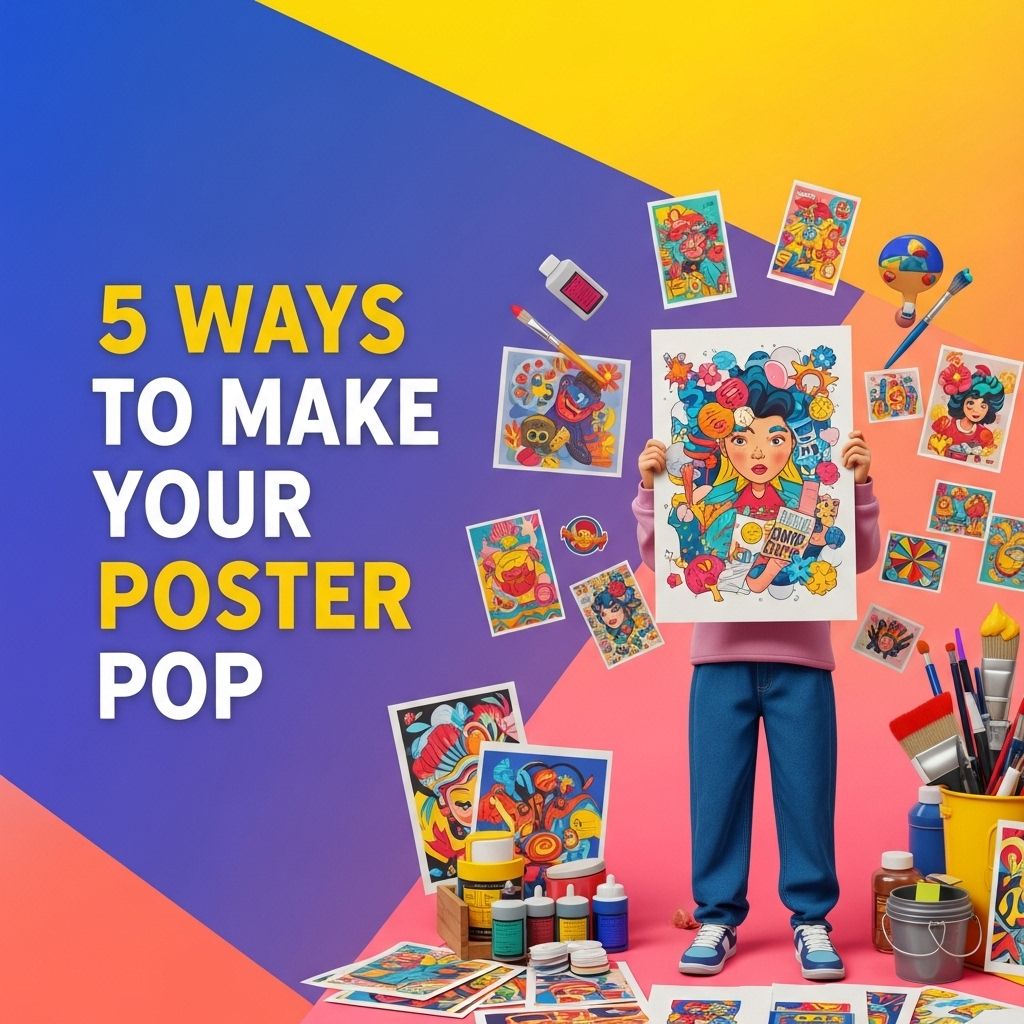
Creating a visually striking poster is essential for grabbing attention and effectively communicating your message. Whether you are designing a poster for an event, a marketing campaign, or personal use, making it stand out is crucial. In this article, we will explore five innovative ways to make your poster pop and leave a lasting impression on your audience.
Table of Contents
1. Utilize Bold Color Combinations
Color plays a significant role in visual communication. Using bold color combinations can help draw attention to your poster.
Why Color Matters
Colors evoke emotions and influence perceptions. Here are tips on using colors effectively:
- Contrast: Use contrasting colors to highlight key information or elements.
- Color Wheel: Refer to the color wheel for complementary or analogous color schemes.
- Brand Consistency: Align your color choices with your brand’s identity if applicable.
Consider using tools like Adobe Color or Coolors.co to create appealing palettes.
2. Incorporate Eye-Catching Typography
The typeface you choose can impact how your message is perceived. Bold and creative typography can enhance the overall aesthetic of your poster.
Effective Typography Techniques
Here are some methods to make your text stand out:
- Hierarchy: Use different font sizes and weights to establish a visual hierarchy.
- Contrast: Pair a bold font with a simple one for balance.
- Readability: Ensure the text is easy to read from a distance, especially for important information.
Popular Font Combinations
| Header Font | Body Font |
|---|---|
| Montserrat | Open Sans |
| Raleway | Roboto |
| Oswald | Lora |
3. Use Striking Imagery and Graphics
Visual elements can enhance the message and aesthetics of your poster. High-quality images and graphics not only attract attention but also reinforce your message.
Creating a Visual Impact
Consider these tips when incorporating imagery:
- Resolution: Use high-resolution images to avoid pixelation.
- Relevance: Ensure images relate directly to your message or theme.
- Illustrations vs. Photos: Decide whether illustrations or photographs best convey your message.
4. Incorporate White Space Effectively
White space, or negative space, refers to the empty areas around your content. It is a powerful tool in design that can help your poster breathe and enhance readability.
Benefits of White Space
Using white space effectively can:
- Highlight important elements
- Reduce clutter and distractions
- Make the poster look more professional
How to Use White Space
Here are some strategies to integrate white space:
- Margin Spaces: Ensure consistent margins around the edges of your poster.
- Spacing Between Elements: Give ample space between text, images, and other elements.
- Group Related Elements: Use white space to group related information, making the poster easier to navigate.
5. Add Interactive Elements
Incorporating interactive elements can make your poster more engaging and memorable. This can be especially effective for digital posters.
Types of Interactive Elements
Consider the following interactive features:
- QR Codes: Include QR codes that link to additional information or a website.
- Augmented Reality: Use AR to bring graphics to life through a smartphone app.
- Fold-Out Sections: For physical posters, consider fold-out sections for more detailed information.
Benefits of Interactivity
Adding interactive elements can:
- Encourage engagement from the audience
- Provide additional context or information
- Enhance the overall experience of the poster
In conclusion, designing a poster that pops requires a strategic approach. By utilizing bold colors, effective typography, striking imagery, white space, and interactive elements, you can create a captivating poster that effectively conveys your message and resonates with your audience. Remember, the key to a successful poster is not just in the design but also in how well it communicates its intended message.
FAQ
What are the best colors to use for a catchy poster?
Bright and contrasting colors can help your poster stand out. Using a complementary color scheme can create visual interest and draw attention.
How important is typography in poster design?
Typography is crucial in poster design as it affects readability and the overall aesthetic. Choose bold, readable fonts and ensure there’s a good hierarchy of text.
What elements should be included to make a poster visually appealing?
Incorporate images, graphics, and icons that relate to your message. A balanced layout with sufficient white space can enhance visual appeal.
How can I create a focal point on my poster?
Use size, color contrast, and placement to create a focal point. Highlight the most important information or imagery to draw viewers’ attention.
Should I include a call to action on my poster?
Yes, including a clear and compelling call to action encourages your audience to take the next step, whether it’s visiting a website or attending an event.
What is the ideal size for a promotional poster?
The ideal size can vary based on the display location, but common sizes include 24×36 inches for large posters and 11×17 inches for smaller displays.