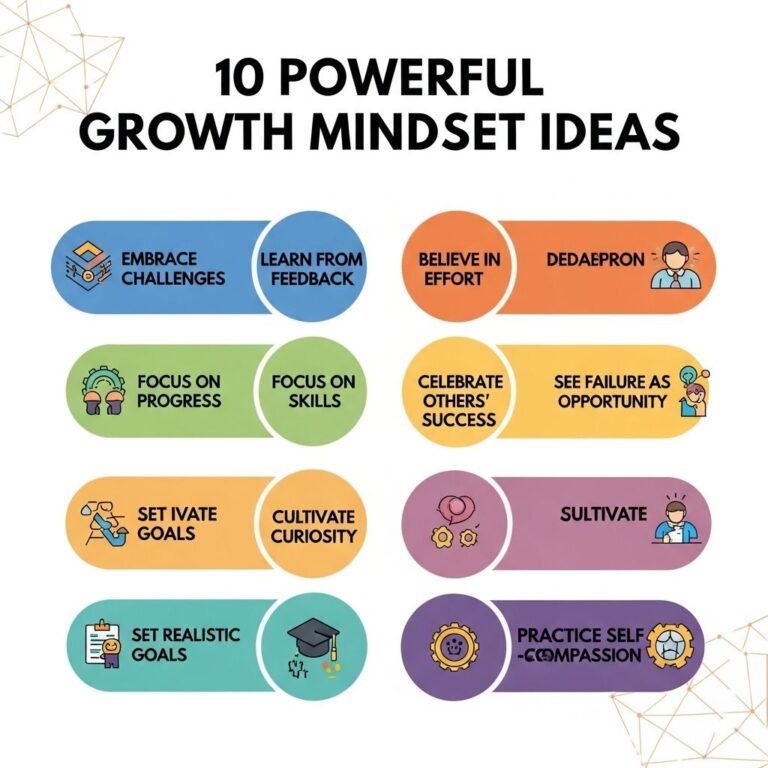
In today’s fast-paced and ever-changing world, maintaining a growth mindset is crucial for personal and professional development. A growth mindset, as coined by psychologist Carol Dweck, is the belief that abilities and intelligence can be developed through dedication and hard work. This approach fosters resilience, adaptability, and a willingness to learn. In this article, we will explore ten powerful ways to cultivate and maintain a growth mindset, empowering you to achieve your goals and overcome challenges.
Table of Contents
1. Embrace Challenges
One of the core principles of a growth mindset is the willingness to embrace challenges rather than avoid them. This not only helps you develop new skills but also fosters resilience. When faced with obstacles, consider the following:
- Identify the challenge: Clearly define what the obstacle is.
- Reframe your perspective: View challenges as opportunities for growth.
- Create a plan: Outline steps to tackle the challenge effectively.
2. Cultivate Curiosity
Curiosity is essential for a growth mindset. It encourages you to ask questions, seek knowledge, and engage with new experiences. To cultivate curiosity:
- Ask open-ended questions: Instead of seeking yes/no answers, explore deeper inquiries.
- Experiment regularly: Try new activities, whether it’s learning a musical instrument or picking up a new sport.
- Engage with diverse perspectives: Surround yourself with people who have different viewpoints.
3. Emphasize Effort Over Talent
People with a growth mindset understand that effort is more important than inherent talent. Recognizing the value of hard work can significantly influence your approach to tasks. Consider these strategies:
| Mindset | Action |
|---|---|
| Fixed Mindset | Believes talent alone leads to success |
| Growth Mindset | Values effort and persistence as keys to success |
4. Learn from Feedback
Feedback is a powerful tool for growth. Instead of viewing criticism as a negative experience, see it as an opportunity to improve. To effectively use feedback:
- Request constructive criticism: Actively seek input from peers and mentors.
- Reflect on the feedback: Analyze what was said and how it can help you grow.
- Implement changes: Take actionable steps based on the feedback received.
5. Set Learning Goals
Setting specific learning goals can provide direction and motivation. When you focus on learning rather than just performance, you encourage a growth mindset. Here’s how to set effective learning goals:
- Be specific: Clearly outline what you aim to learn.
- Make them measurable: Establish criteria to measure your progress.
- Set achievable timelines: Create a realistic timeline for achieving your goals.
6. Celebrate Small Wins
Maintaining motivation is key to a growth mindset. Celebrating small victories keeps you engaged and reinforces your progress. Consider the following:
- Keep a journal: Document your achievements, no matter how small.
- Share your wins: Discuss your successes with friends and family.
- Reward yourself: Treat yourself for reaching certain milestones.
7. Focus on the Process, Not Just the Outcome
People with a growth mindset recognize that the journey is just as important as the destination. To focus on the process:
- Reflect regularly: Consider what techniques and strategies worked for you.
- Stay adaptable: Be willing to change your approach if necessary.
- Keep a learning log: Document what you learned during the process.
8. Surround Yourself with a Growth-Oriented Community
Your environment plays a significant role in shaping your mindset. Building a community that values growth can provide support and encouragement. Here’s how to create such a community:
- Join groups or organizations: Engage with like-minded individuals who share similar growth goals.
- Attend workshops and seminars: Learn from experts and network with peers.
- Engage in discussions: Share experiences and challenges with your community.
9. Practice Self-Compassion
Self-compassion is vital for maintaining a growth mindset. Being kind to yourself in times of struggle boosts your resilience. To practice self-compassion:
- Recognize your humanity: Understand that everyone struggles and makes mistakes.
- Be mindful: Observe your thoughts and feelings without harsh judgment.
- Encourage yourself: Use positive affirmations and remind yourself of your capabilities.
10. Stay Committed to Lifelong Learning
Finally, a commitment to lifelong learning is essential for a growth mindset. Embrace continuous education and self-improvement as integral parts of your life. Here are some tips:
- Read regularly: Engage with books, articles, and research in your field.
- Enroll in courses: Take online classes or attend workshops to expand your knowledge.
- Practice new skills: Regularly apply what you’ve learned in real-life situations.
Adopting these ten strategies can significantly enhance your growth mindset, empowering you to tackle challenges and achieve personal and professional success. Remember, it’s not just about the destination; it’s about the journey, the lessons learned, and the resilience built along the way.
FAQ
What is a growth mindset?
A growth mindset is the belief that abilities and intelligence can be developed through dedication, hard work, and learning.
How can I develop a growth mindset?
You can develop a growth mindset by embracing challenges, learning from criticism, and seeing failures as opportunities for growth.
What are the benefits of maintaining a growth mindset?
Maintaining a growth mindset can lead to improved resilience, greater motivation, enhanced problem-solving skills, and a more positive outlook on life.
What role does feedback play in a growth mindset?
Feedback is crucial in a growth mindset as it provides opportunities for learning and improvement, allowing individuals to refine their skills and knowledge.
How can I encourage a growth mindset in my children?
You can encourage a growth mindset in children by praising their efforts, encouraging them to take on challenges, and teaching them to view mistakes as learning opportunities.
Can a growth mindset be applied in the workplace?
Yes, a growth mindset can enhance workplace performance by fostering innovation, collaboration, and a culture of continuous learning among employees.