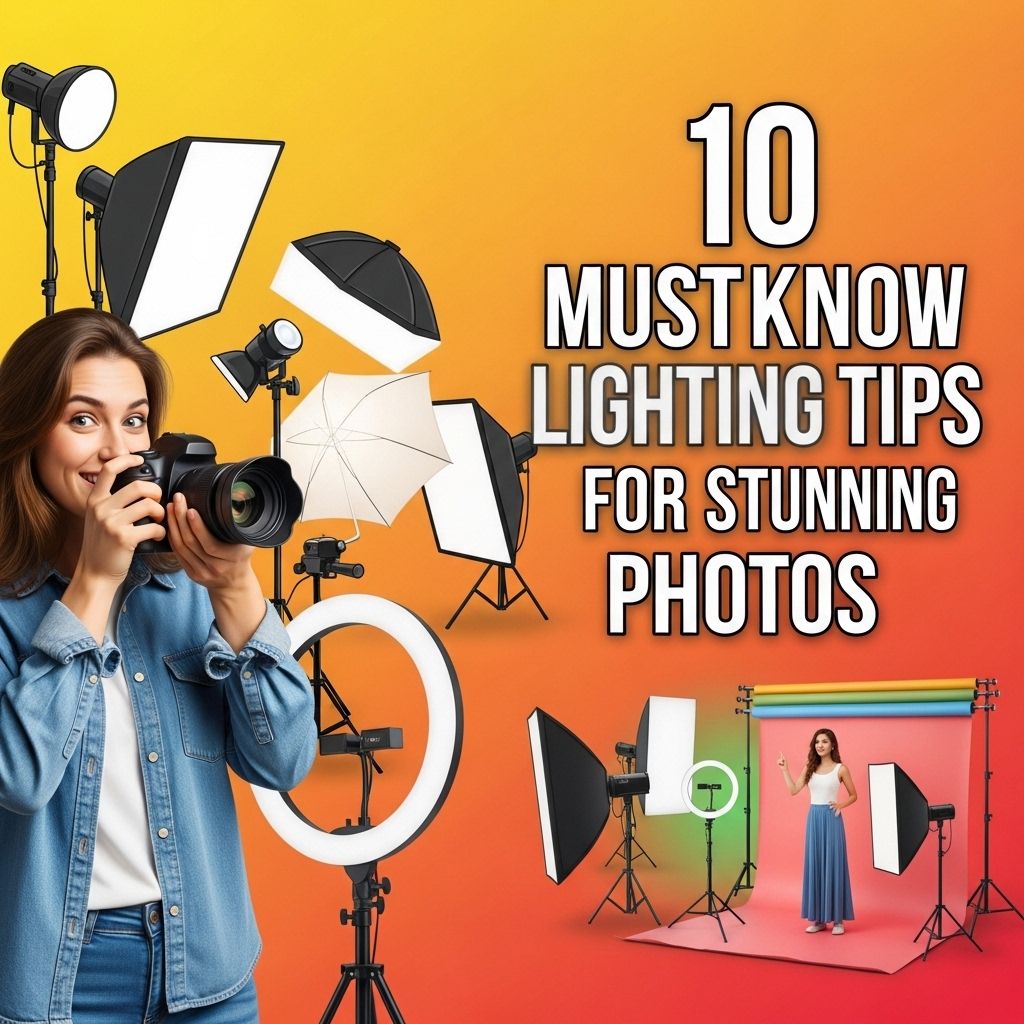
Capturing stunning photographs is an art that intertwines technical skill with creative vision. Among the many elements that influence the quality of a photograph, lighting stands out as the most critical. Proper lighting can transform a mundane shot into a breathtaking masterpiece. Whether you’re a budding photographer or a seasoned pro, understanding the nuances of lighting can dramatically enhance your work. Here are ten essential lighting tips that every photographer should know.
Lighting is a crucial element in photography, especially when capturing the intricate details and rich textures of wine. Understanding how to manipulate natural and artificial light can elevate your wine visuals, making them not only appealing but also storytelling pieces. For inspiration, check out these creative wine visuals.
Table of Contents
1. Understand Natural Light
Natural light is your best friend when it comes to photography. Whether it’s the soft glow of early morning or the golden hour before sunset, understanding how to harness natural light can elevate your photography.
Types of Natural Light
- Golden Hour: The hour after sunrise and before sunset when the light is soft and warm.
- Blue Hour: The period just before sunrise and after sunset when the light takes on a blue hue.
- Overcast Days: Soft, diffused light helps avoid harsh shadows and highlights.
2. Use Artificial Light Wisely
While natural light is ideal, artificial lighting is sometimes necessary to achieve the desired effect. Understanding how to use various types of artificial lights can open new creative doors.
Types of Artificial Light
- Continuous Lighting: Constant light, great for video and still photography.
- Flash: Provides a burst of light; useful in low-light situations.
- Studio Lights: Professional setups that offer diverse lighting options.
3. Learn to Modify Light
Light modifiers can help control the intensity and direction of light. They can soften harsh light, create shadows, and even change the color temperature of your light source.
Common Light Modifiers
- Softboxes: Diffuse light for a softer effect.
- Reflectors: Bounce light back onto the subject to fill in shadows.
- Diffusers: Spread the light over a larger area for a gentle effect.
4. Master the Art of Backlighting
Backlighting is a technique where the main light source is behind the subject, creating a silhouette effect. This can add depth and drama to your images.
Backlighting Techniques
- Position your subject between the light source and the camera.
- Adjust your camera settings to properly expose for the background.
- Use reflectors to bounce light onto the subject for detail.
5. Experiment with Shadows
Shadows can be just as important as light. They add dimension and texture to your photographs. Learning how to play with shadows can help make your photos more dynamic.
Creating Interesting Shadows
- Position your light source low to create long, dramatic shadows.
- Use objects in the scene to cast interesting shapes.
- Experiment with different shutter speeds to capture shadow movement.
6. Utilize Color Temperature
Different light sources have different color temperatures, which can drastically change the mood of your photographs. Understanding Kelvin can help you adjust your settings for the best results.
Color Temperature Chart
| Source | Kelvin Temperature |
|---|---|
| Sunlight | 5500-6500K |
| Overcast Sky | 6000-7000K |
| Incandescent Bulb | 2700-3000K |
| Fluorescent Light | 4000-5000K |
7. Take Advantage of Reflections
Reflections can create unique compositions and enhance your lighting. Look for reflective surfaces like water, glass, or metal to add dramatic effects to your photos.
Tips for Using Reflections
- Look for symmetry in your reflections for balanced compositions.
- Be mindful of your angles to avoid unwanted distractions.
- Experiment with different times of day to see how reflections change.
8. Control Your Exposure Settings
Mastering your camera’s exposure settings is essential for managing light effectively. Knowing how to use ISO, aperture, and shutter speed allows you to adapt to different lighting conditions.
Exposure Triangle
- ISO: Controls the sensitivity of your camera to light.
- Aperture: Determines how much light enters the camera; affects depth of field.
- Shutter Speed: Controls the duration the sensor is exposed to light.
9. Pay Attention to the Direction of Light
The direction of light can drastically change the way your subject is perceived. Knowing how to utilize side lighting, front lighting, and top lighting can bring different moods to your images.
Lighting Directions
- Front Lighting: Flattens features but enhances color.
- Side Lighting: Creates depth and texture.
- Top Lighting: Can create dramatic effects; useful in portrait photography.
10. Practice Makes Perfect
Finally, the best way to master lighting techniques is through consistent practice. Experiment with different settings, scenarios, and types of lighting. The more you shoot, the better you will become at recognizing and utilizing light effectively.
Practice Ideas
- Set aside time each week to focus exclusively on lighting.
- Take the same shot at different times of day to see how light changes.
- Collaborate with other photographers to exchange tips and techniques.
In conclusion, lighting is a fundamental aspect of photography that can make or break an image. Armed with these ten tips, you’re well on your way to creating stunning, high-quality photographs that capture the essence of your subjects. Embrace the light, experiment, and watch your photography evolve.
FAQ
What are the best lighting conditions for photography?
The best lighting conditions for photography are during the golden hour, which is shortly after sunrise or before sunset. During this time, the light is soft and warm, creating stunning images.
How can I use natural light effectively in my photos?
To use natural light effectively, position your subject near windows or outdoors in shaded areas to avoid harsh shadows. Experiment with different angles to find the most flattering light.
What is the difference between hard light and soft light?
Hard light creates strong, defined shadows and highlights, while soft light produces gentle shadows and a more even illumination, often resulting in a more flattering appearance in portraits.
How can I manipulate artificial lighting for better photos?
You can manipulate artificial lighting by using diffusers to soften the light, reflectors to bounce light onto your subject, and adjusting the distance of the light source to create the desired effect.
What are the benefits of using a flash in photography?
Using a flash can help illuminate your subject in low-light situations, freeze motion, and reduce shadows. It can also add depth and dimension to your photos when used creatively.
How do I avoid overexposure in my photographs?
To avoid overexposure, adjust your camera settings by lowering the exposure compensation, using a faster shutter speed, or reducing the ISO. Always check your histogram to ensure proper exposure.