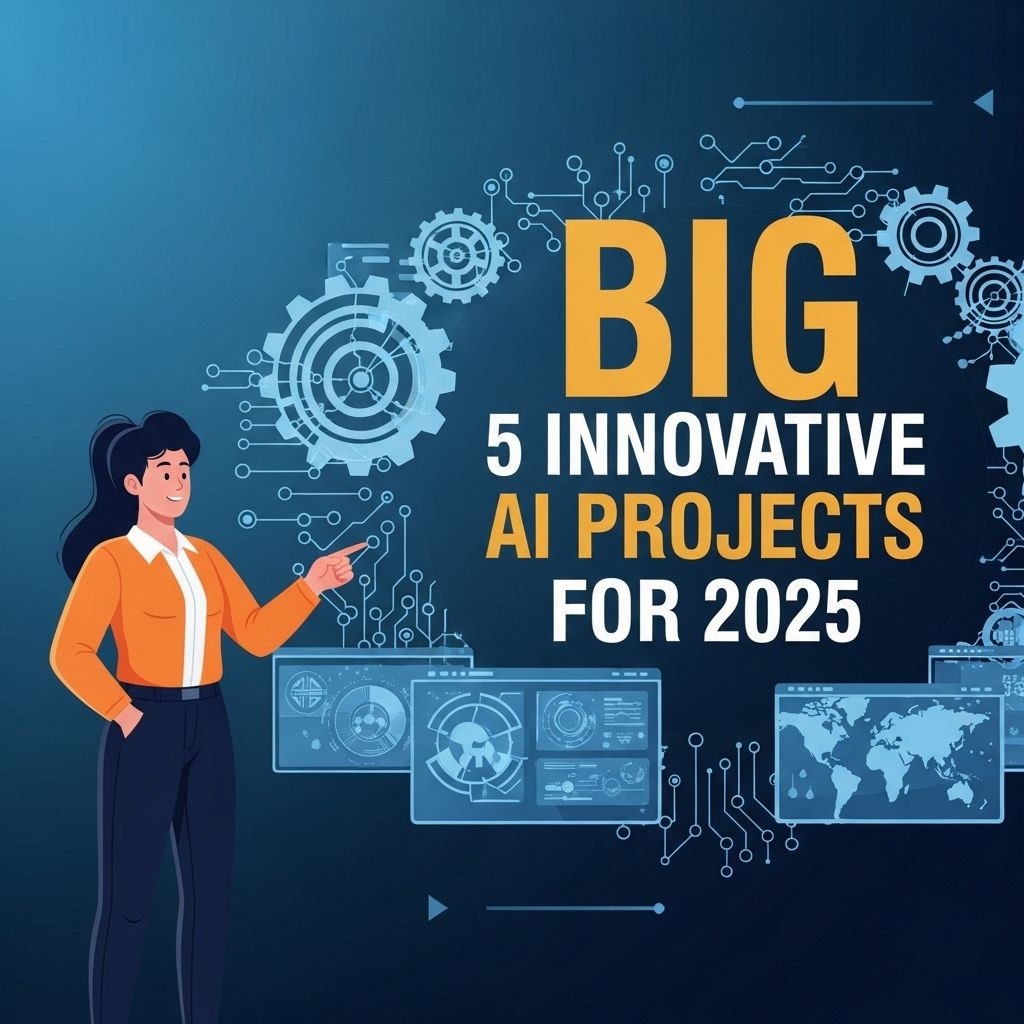
The rapid evolution of artificial intelligence (AI) is reshaping various industries, and as we look ahead to 2025, several innovative projects are poised to revolutionize how we interact with technology. From enhancing customer experiences to streamlining operations, these projects leverage advanced algorithms and machine learning capabilities to push the boundaries of what is possible. In this article, we explore five groundbreaking AI projects set to make a significant impact in 2025.
As we approach 2025, the landscape of artificial intelligence is rapidly evolving, bringing forth innovative projects that could redefine various industries. From healthcare advancements to creative applications in design, these initiatives showcase the potential of AI to enhance our everyday lives. For instance, if you’re exploring design possibilities, check out these useful bag mockup visualization tips to elevate your creative endeavors.
Table of Contents
1. AI-Powered Personal Health Assistants
Imagine having a personal health assistant that understands your medical history, preferences, and even your daily routines. This innovative AI project aims to create an intelligent digital assistant capable of providing personalized health recommendations, tracking fitness goals, and reminding users about medication schedules.
Key Features:
- Personalized Health Insights: Analyzes user data to offer tailored health advice.
- Medication Management: Sends reminders for medication intake and tracks adherence.
- Symptom Checker: Uses natural language processing to understand symptoms and suggest potential causes.
- Telehealth Integration: Connects users with healthcare professionals for virtual consultations.
2. Autonomous Supply Chain Management
The efficiency of supply chains is vital for businesses in today’s fast-paced market. By 2025, AI is expected to play a crucial role in creating autonomous supply chain management systems that optimize logistics, inventory management, and demand forecasting.
How It Works:
- Data Collection: Gathers real-time data from various sources, including suppliers, inventory levels, and market trends.
- Predictive Analytics: Uses machine learning to forecast demand and adjust inventory levels accordingly.
- Autonomous Decision-Making: Automates ordering and logistics operations based on predictive insights.
Benefits:
| Benefit | Impact |
|---|---|
| Cost Reduction | Minimizes excess inventory and storage costs. |
| Increased Efficiency | Streamlines operations to reduce delivery times. |
| Enhanced Customer Satisfaction | Ensures products are available when customers need them. |
3. AI-Driven Creative Content Generation
Content creation is about to undergo a transformation with AI-driven tools capable of generating high-quality written, visual, and audio content. This project focuses on building models that understand context, tone, and audience preferences.
Applications:
- Blog Writing: Generates engaging articles tailored to specific topics and audiences.
- Graphic Design: Creates custom visuals based on user specifications and trends.
- Music Composition: Composes original music tracks that align with particular moods or themes.
Challenges:
- Quality Control: Ensuring generated content matches human creativity and standards.
- Ethical Considerations: Addressing copyright and ownership issues surrounding AI-generated works.
4. Smart Cities with AI-Optimized Infrastructure
The concept of smart cities is evolving, with AI technologies playing a central role in optimizing urban living. By 2025, cities will leverage AI to manage traffic flow, enhance energy efficiency, and improve public safety through predictive analytics.
Components of AI-Driven Smart Cities:
- Traffic Management Systems: Use AI to analyze real-time traffic data and adjust signals to reduce congestion.
- Energy Distribution: Optimizes energy usage based on demand, reducing waste and lowering costs.
- Public Safety Monitoring: Integrates AI surveillance systems to detect and respond to incidents faster.
Impact:
These advancements aim to create more livable, efficient, and sustainable urban environments, significantly enhancing the quality of life for residents.
5. AI in Climate Change Mitigation
As the world grapples with climate change, AI technologies are emerging as powerful tools in the fight against environmental degradation. Projects targeting climate change will focus on data analysis, resource management, and predictive modeling to devise effective solutions.
Strategic Approaches:
- Carbon Footprint Tracking: Uses AI to monitor emissions from various sectors and suggest reduction strategies.
- Resource Optimization: Analyzes agricultural practices to enhance crop yields while minimizing environmental impact.
- Disaster Response Optimization: Predicts natural disasters and helps allocate resources effectively for disaster recovery.
Expected Outcomes:
- Increased Efficiency: Reduces waste and resource consumption in various sectors.
- Enhanced Resilience: Prepares communities for climate-related challenges.
- Data-Driven Policy Making: Provides insights for policymakers to implement effective environmental regulations.
Conclusion
The innovative AI projects outlined above represent just a glimpse into the transformative potential of artificial intelligence in 2025 and beyond. As these technologies evolve, they promise to enhance our daily lives, streamline operations, and address some of the most pressing challenges facing humanity. Embracing these advancements will be crucial for businesses, governments, and individuals to thrive in an increasingly connected and intelligent world.
FAQ
What are some innovative AI projects expected in 2025?
In 2025, expect innovative AI projects in areas like personalized medicine, autonomous vehicles, AI-driven climate modeling, advanced natural language processing, and AI for smart cities.
How will AI impact healthcare by 2025?
By 2025, AI is projected to revolutionize healthcare through personalized treatment plans, predictive analytics for patient outcomes, and automation of administrative tasks to improve efficiency.
What role will AI play in transportation in 2025?
In 2025, AI will enhance transportation with fully autonomous vehicles, smart traffic management systems, and improved logistics and supply chain solutions, reducing congestion and increasing safety.
How can AI contribute to climate change solutions in 2025?
AI is expected to play a crucial role in climate change solutions by optimizing energy consumption, improving renewable energy forecasts, and enabling more accurate climate modeling to inform policy decisions.
What advancements in natural language processing can we expect by 2025?
By 2025, advancements in natural language processing will lead to more intuitive and human-like interactions with AI, enabling applications in customer service, content creation, and real-time translation.
What are smart cities and how will AI shape them by 2025?
Smart cities by 2025 will leverage AI for efficient resource management, enhanced public safety, improved transportation systems, and better citizen engagement, creating a more sustainable urban environment.