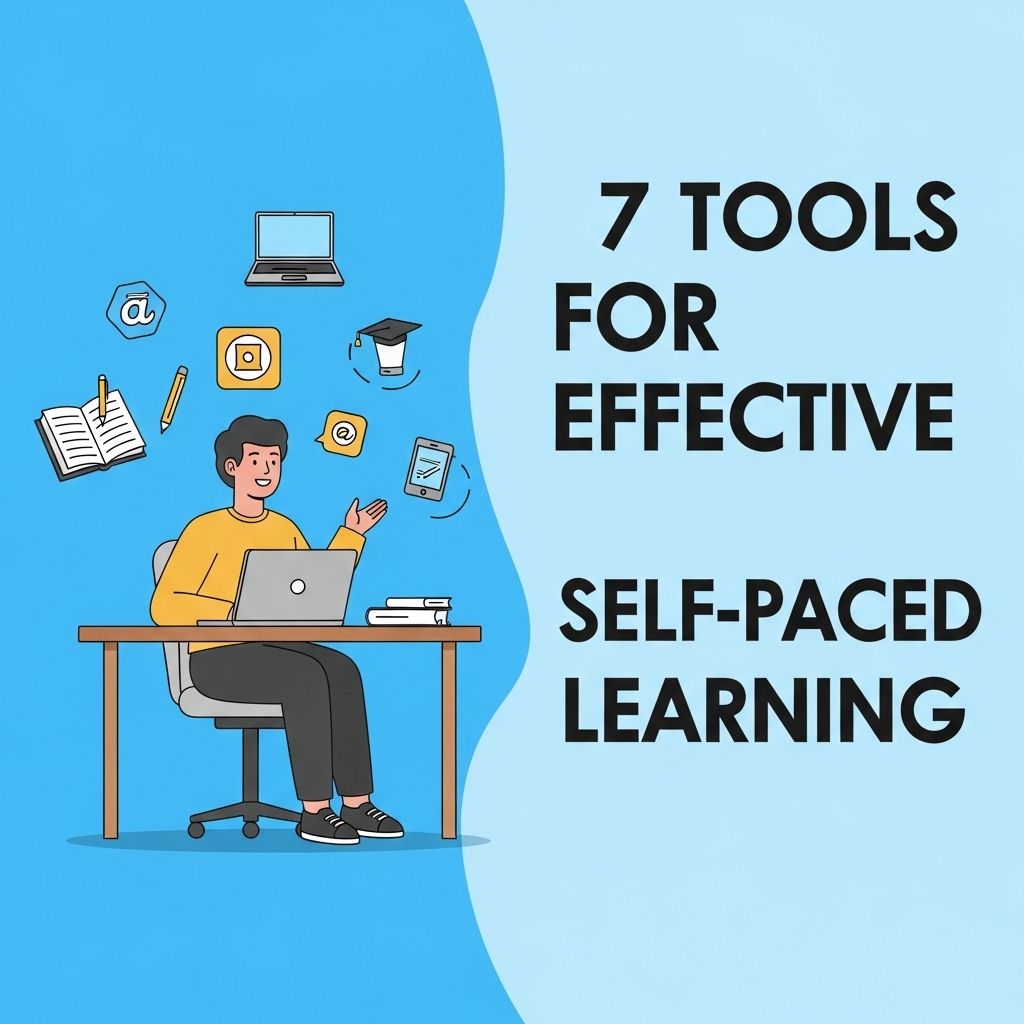
In today’s fast-paced world, the ability to learn at one’s own pace has become an invaluable skill. Whether you’re a student, a professional looking to upskill, or someone simply pursuing a personal interest, effective self-paced learning tools can make all the difference. This article explores seven essential tools that can enhance your self-directed learning journey, allowing you to absorb information more efficiently and engage deeply with the material.
Table of Contents
1. Online Learning Platforms
Online learning platforms have revolutionized the way we approach education. They provide a vast array of courses across diverse subjects, catering to different learning styles and schedules. Here are some popular options:
- Coursera: Offers courses from top universities and institutions, with a mix of free and paid options.
- edX: Similar to Coursera, it provides access to a variety of university-level courses.
- Udemy: Features a marketplace of courses on a wide range of topics, often with lifetime access.
Benefits of Online Learning Platforms
These platforms offer:
- Flexibility to learn anytime, anywhere.
- A wide range of subjects and skill levels.
- Opportunity to learn from professionals and experts in the field.
2. Note-Taking Apps
Effective learning involves taking organized and accessible notes. Note-taking apps can help you capture, organize, and revise your study materials efficiently. Consider these popular tools:
| App | Features | Platforms |
|---|---|---|
| Evernote | Tagging, multimedia support, web clipping | Windows, macOS, iOS, Android |
| Notion | Customizable templates, collaboration tools, database features | Web, Windows, macOS, iOS, Android |
| OneNote | Integration with Office, free-form canvas, collaboration | Windows, macOS, iOS, Android |
How Note-Taking Apps Enhance Learning
These apps allow you to:
- Organize information systematically.
- Access notes across devices.
- Collaborate with peers for group projects.
3. Time Management Tools
Self-paced learning requires effective time management. Tools that help you plan, track, and manage your time can boost your productivity. Here are some popular time management tools:
- Trello: A Kanban-style board application to organize tasks.
- Todoist: A powerful task manager that helps you keep track of your to-dos.
- Pomodoro Timer Apps: Apps like Focus Booster can help manage your study sessions using the Pomodoro Technique.
Features to Look For
When selecting time management tools, consider:
- User-friendly interfaces.
- Integration with calendars and other apps.
- Customization options to suit your learning style.
4. Interactive Learning Tools
Interactive learning tools provide engaging ways to study and retain information. These tools often include quizzes, simulations, and gamified learning experiences. A few noteworthy options include:
- Kahoot: A game-based learning platform that makes quizzes fun and interactive.
- Quizlet: Allows users to create flashcards and quizzes for various subjects.
- Duolingo: A gamified language learning app that makes learning new languages enjoyable.
Advantages of Interactive Learning Tools
Using these tools can:
- Increase engagement and motivation.
- Help reinforce knowledge through active participation.
- Provide instant feedback on your understanding.
5. Virtual Study Groups
Sometimes, learning in isolation can be challenging. Virtual study groups leverage technology to connect learners with peers. Tools like Zoom, Microsoft Teams, or Slack can facilitate group discussions and collaborative study sessions.
Benefits of Virtual Study Groups
Joining a virtual study group can:
- Foster a sense of community and support.
- Encourage accountability among group members.
- Provide diverse perspectives on the material.
6. E-Books and Audiobooks
Reading is a cornerstone of self-paced learning. With e-books and audiobooks, you can consume content on your terms. Popular platforms include:
- Kindle: Offers a massive library of e-books across various genres.
- Audible: Provides a subscription-based model for audiobooks.
- Scribd: A subscription service that gives access to e-books, audiobooks, and more.
Choosing the Right Format
When selecting between e-books and audiobooks, consider:
- Your learning style (visual vs. auditory).
- The context in which you’ll be consuming the material (reading while commuting vs. relaxing at home).
7. Content Curation Tools
Curating content from diverse sources can enhance your understanding of any subject. Content curation tools help you collect, organize, and share resources efficiently. Popular options include:
- Pocket: Save articles and videos to view later.
- Feedly: Aggregate content from various blogs and news sources into one feed.
- Flipboard: Create a personal magazine from topics that interest you.
Maximizing Learning with Curation Tools
Utilizing content curation tools allows you to:
- Stay updated on the latest trends and research.
- Discover new resources that enhance your understanding.
- Share valuable content with peers or collaborators.
Conclusion
Incorporating the right tools into your self-paced learning strategy can significantly impact your overall effectiveness and enjoyment of the process. By leveraging online learning platforms, note-taking apps, time management tools, interactive resources, virtual study groups, reading formats, and content curation tools, you’ll foster a more engaging, productive, and fulfilling educational experience. Embrace the flexibility and personalization that self-paced learning offers, and take your skills to the next level.
FAQ
What are the best tools for self-paced learning?
Some of the best tools for self-paced learning include online learning platforms like Coursera, Udemy, and Khan Academy, as well as productivity tools like Notion, Trello, and Google Drive.
How can I stay motivated during self-paced learning?
Staying motivated can be achieved by setting clear goals, creating a study schedule, and using tools like Habitica or Forest to track progress and minimize distractions.
Are there any free resources for self-paced learning?
Yes, there are many free resources available for self-paced learning, such as edX, MIT OpenCourseWare, and various YouTube channels dedicated to educational content.
What role do mobile apps play in self-paced learning?
Mobile apps can enhance self-paced learning by providing access to courses and materials on the go, allowing learners to study anytime and anywhere.
Can self-paced learning be effective for all subjects?
Yes, self-paced learning can be effective for a variety of subjects, although it may require different strategies depending on the complexity and nature of the material.
How can I measure my progress in self-paced learning?
You can measure your progress by setting milestones, using tracking tools like progress bars or checklists, and regularly reviewing your understanding of the material.