In an increasingly digital world, where technology drives business operations, cybersecurity has emerged as a critical component of any organization’s strategy. The rise of cyber threats, from data breaches to ransomware attacks, poses a significant risk to businesses of all sizes. Protecting sensitive information and maintaining customer trust is paramount. This article outlines essential cybersecurity strategies that businesses must implement to safeguard their digital assets.
In today’s digital landscape, protecting your business from cyber threats is more crucial than ever. Adopting effective cybersecurity strategies can safeguard your sensitive information and maintain your reputation. Discover essential tactics to fortify your defenses and ensure a secure environment for your operations, including resources that can enhance your branding, such as beer design templates.
Table of Contents
Understanding Cybersecurity Threats
Before diving into strategies, it’s important to understand the landscape of cybersecurity threats that businesses face:
- Malware: Malicious software designed to harm or exploit devices, networks, or services.
- Phishing: Attempts to acquire sensitive information by masquerading as a trustworthy entity via emails or messages.
- Ransomware: A type of malware that encrypts data, demanding a ransom for its release.
- Insider Threats: Security risks that originate from within the organization, often caused by employees or contractors.
- DDoS Attacks: Distributed Denial-of-Service attacks overwhelm a network, rendering it inaccessible to users.
1. Conduct Regular Security Audits
Regular cybersecurity audits help identify vulnerabilities and assess the effectiveness of current security measures. Businesses should:
- Evaluate security policies and procedures.
- Check compliance with industry regulations.
- Identify and analyze potential threats.
2. Educate Employees on Cybersecurity Best Practices
Employees are often the first line of defense against cyber threats. Implementing a comprehensive training program is essential:
Key Components of Employee Training
- Understanding common threats such as phishing and social engineering.
- Recognizing the signs of a potential data breach.
- Proper password management and the use of two-factor authentication.
3. Implement Robust Access Controls
Access control measures ensure that only authorized personnel can access sensitive information. This can be achieved through:
- Role-Based Access Control (RBAC): Granting access based on user roles within the organization.
- Least Privilege Principle: Providing users with the minimum level of access required to perform their job functions.
4. Use Advanced Security Technologies
Investing in advanced cybersecurity technologies can enhance an organization’s defense mechanisms:
Essential Technologies
| Technology | Description |
|---|---|
| Firewalls | Monitor and control incoming and outgoing network traffic based on predetermined security rules. |
| Intrusion Detection Systems (IDS) | Monitor networks for malicious activities or policy violations. |
| Endpoint Protection | Provides security for endpoints such as laptops and mobile devices against threats. |
| Encryption | Converts data into a coded format to prevent unauthorized access. |
5. Develop an Incident Response Plan
An effective incident response plan is critical for minimizing damage during a cyber incident. Key steps include:
- Establish a response team with defined roles.
- Outline procedures for detection, containment, and eradication of threats.
- Implement communication protocols for internal and external stakeholders.
- Conduct regular drills to test the effectiveness of the response plan.
6. Regularly Update Software and Systems
Keeping software and systems updated is vital for protecting against known vulnerabilities. Businesses should:
- Enable automatic updates wherever possible.
- Regularly check for updates on all software applications and operating systems.
- Patch security flaws as soon as updates become available.
7. Backup Data Regularly
Data backups are an essential component of any disaster recovery plan. A robust backup strategy involves:
- Regularly scheduled backups of critical data.
- Storing backups in multiple locations, including off-site and cloud solutions.
- Testing backup restoration processes to ensure data integrity.
Conclusion
As cyber threats continue to evolve, businesses must stay proactive in their cybersecurity efforts. By implementing these seven strategies, organizations can significantly reduce their risk of cyber incidents and ensure the safety of their digital assets. Cybersecurity is not a one-time task but an ongoing commitment to safeguarding the future of your business.
FAQ
What are the key cybersecurity strategies for protecting my business?
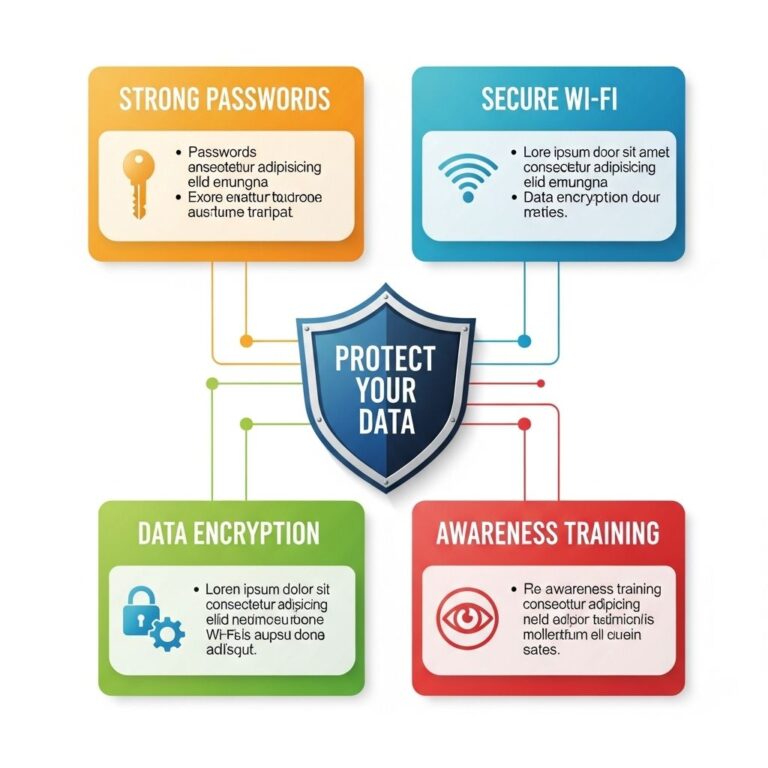
The key strategies include implementing strong passwords, regularly updating software, conducting employee training, utilizing firewalls, implementing multi-factor authentication, and regularly backing up data.
How often should I update my cybersecurity measures?
You should review and update your cybersecurity measures at least quarterly, or more frequently if you notice new threats or changes in your business environment.
What role does employee training play in cybersecurity?
Employee training is crucial as it helps staff recognize phishing attempts, understand secure practices, and become aware of their role in maintaining the company’s cybersecurity.
What is multi-factor authentication and why is it important?
Multi-factor authentication (MFA) adds an extra layer of security by requiring users to provide two or more verification factors to gain access, making unauthorized access much more difficult.
How can I ensure my business data is backed up securely?
You can ensure secure backups by using encrypted cloud storage solutions, maintaining offline backups, and regularly testing your backup systems to ensure data can be restored successfully.