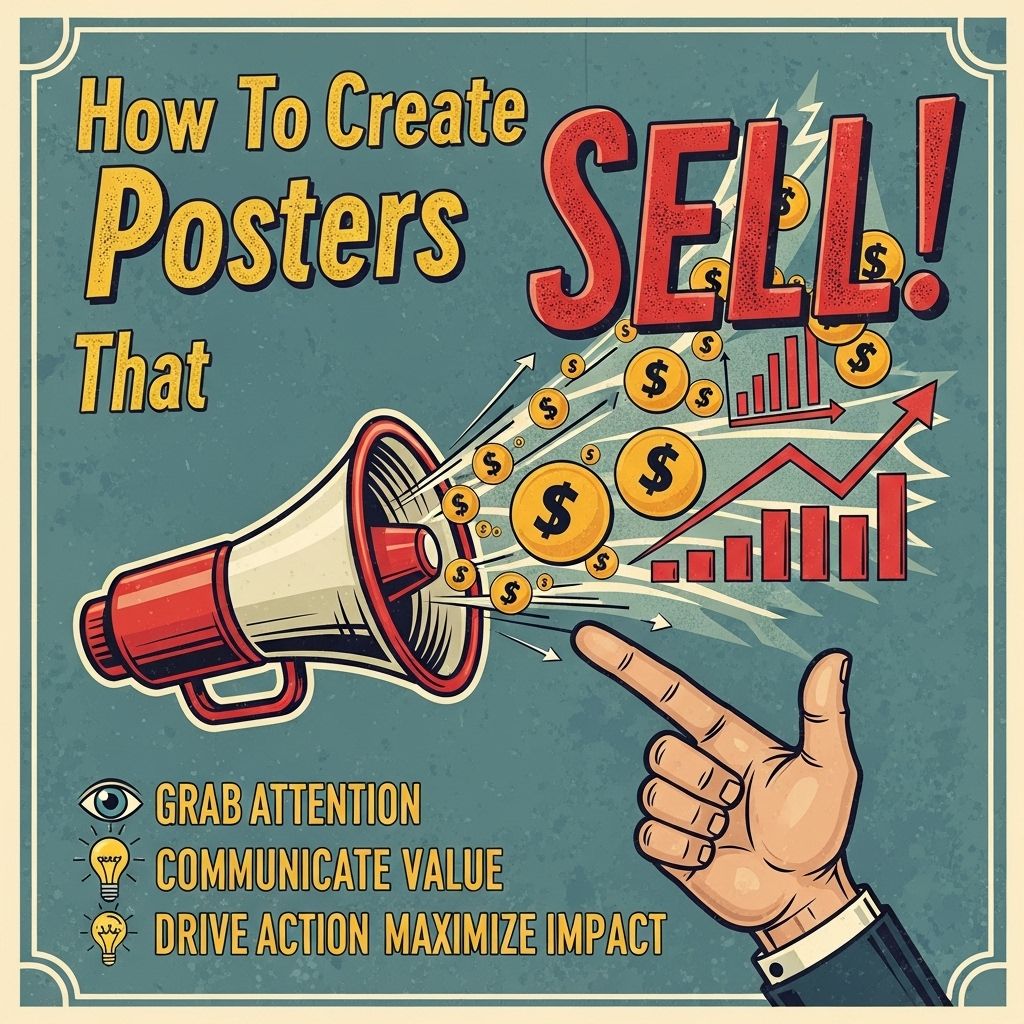
Creating a poster that captivates and converts viewers into customers is an essential skill for any marketer, artist, or entrepreneur. Posters are not just visual aids; they are powerful marketing tools that can convey messages quickly and effectively. In this article, we’ll explore the essential elements of poster design, from the initial concept to the final print. Whether you’re promoting an event, launching a product, or sharing a message, mastering these techniques will help you create posters that sell.
Table of Contents
Understanding Your Audience
The first step in creating a successful poster is understanding who your audience is. Knowing your target demographic influences every design choice you make. Here are some factors to consider:
- Age group: Different age groups respond to different styles and messages.
- Interests: Align your poster’s theme with the interests of your audience.
- Location: Tailor your design to fit the cultural and aesthetic preferences of the region.
Defining the Purpose of Your Poster
Before diving into design, clarify the purpose of your poster. This will guide your creative decisions. Common purposes for posters include:
- Event Promotion: Informing the public about an upcoming event.
- Product Launch: Showcasing new products to generate buzz.
- Awareness Campaigns: Spreading awareness about social issues or community initiatives.
Elements of Effective Poster Design
An effective poster design incorporates several key elements that work together to convey a clear message and attract attention. Below are the critical components:
1. Eye-Catching Visuals
Visual elements are the first thing people notice. Here are some tips:
- Use high-resolution images that are relevant to your message.
- Incorporate bold colors to create contrast and attract attention.
- Consider using illustrations or infographics to simplify complex information.
2. Clear Typography
Typography can make or break your poster. Here are some best practices:
| Font Type | Usage | Recommendation |
|---|---|---|
| Sans Serif | Headlines, Catchy Phrases | Arial, Helvetica |
| Serif | Body Text | Times New Roman, Georgia |
| Display Fonts | Unique Branding | Limited Use |
3. Compelling Copy
Your poster’s text should be concise and impactful. Here are tips for writing effective copy:
- Use short, catchy headlines that grab attention.
- Incorporate a clear call-to-action (CTA).
- Keep body text to a minimum; focus on key messages.
4. Layout and Composition
The arrangement of elements on your poster is crucial for readability. Consider the following:
- Use the rule of thirds to create visual balance.
- Ensure there is enough white space to avoid clutter.
- Align text and images for a polished look.
Choosing the Right Tools for Creation
Several tools can help you design professional-quality posters, regardless of your skill level:
Graphic Design Software
Here are some popular options:
- Adobe Photoshop: Ideal for detailed image editing and graphics.
- Canva: User-friendly and offers numerous templates for beginners.
- InDesign: Best for layout-based projects.
Print Options
When it comes to printing your posters, quality matters. Consider the following:
- Choose the right paper stock (e.g., matte, glossy).
- Opt for a professional printing service for the best results.
- Consider the size of your poster based on where it will be displayed.
Marketing Your Poster
A well-designed poster is just the beginning; effective marketing is essential to ensure it reaches your audience. Here are some strategies:
1. Leverage Social Media
Promote your poster on platforms where your audience is active. Use visually appealing posts to generate interest.
2. Utilize Email Marketing
Share your poster with your email list to increase visibility. Incorporate it into newsletters or event announcements.
3. Collaborate with Influencers
Partner with influencers in your niche to promote your poster to their followers.
Measuring the Success of Your Poster
After launching your poster, it’s vital to assess its impact. Here are metrics you can track:
- Engagement Rate: Monitor social media shares and likes.
- Conversion Rate: Track how many viewers take the desired action (e.g., signing up for an event).
- Feedback: Gather opinions from viewers to improve future designs.
Conclusion
Creating posters that sell involves a blend of creativity, strategic thinking, and technical skills. By understanding your audience, defining your purpose, and focusing on design elements, you can craft compelling posters that not only attract attention but also drive action. Utilize the right tools, market your creations effectively, and measure their success to continuously improve your poster-making skills. With practice and dedication, your posters can become a significant asset in your marketing toolkit.
FAQ
What are the essential elements of a selling poster?
A selling poster should include a clear message, eye-catching visuals, a strong call to action, and relevant contact information or branding.
How do I choose the right colors for my poster?
Choose colors that align with your brand and evoke the desired emotions. Use contrasting colors for text and background to enhance readability.
What size should my poster be for maximum impact?
The size of your poster depends on where it will be displayed. Common sizes are 24×36 inches for large displays and 11×17 inches for smaller settings.
How can I make my poster stand out in a crowded space?
Use bold typography, unique images, and a simplified layout to draw attention. Limit the amount of text to ensure the message is quick to grasp.
Should I use images or illustrations on my poster?
Both images and illustrations can be effective. Choose based on your target audience and the message you want to convey. High-quality visuals are key.
What are some common mistakes to avoid when creating posters?
Avoid cluttered designs, excessive text, and low-resolution images. Ensure your poster is easy to read from a distance and aligns with your brand identity.