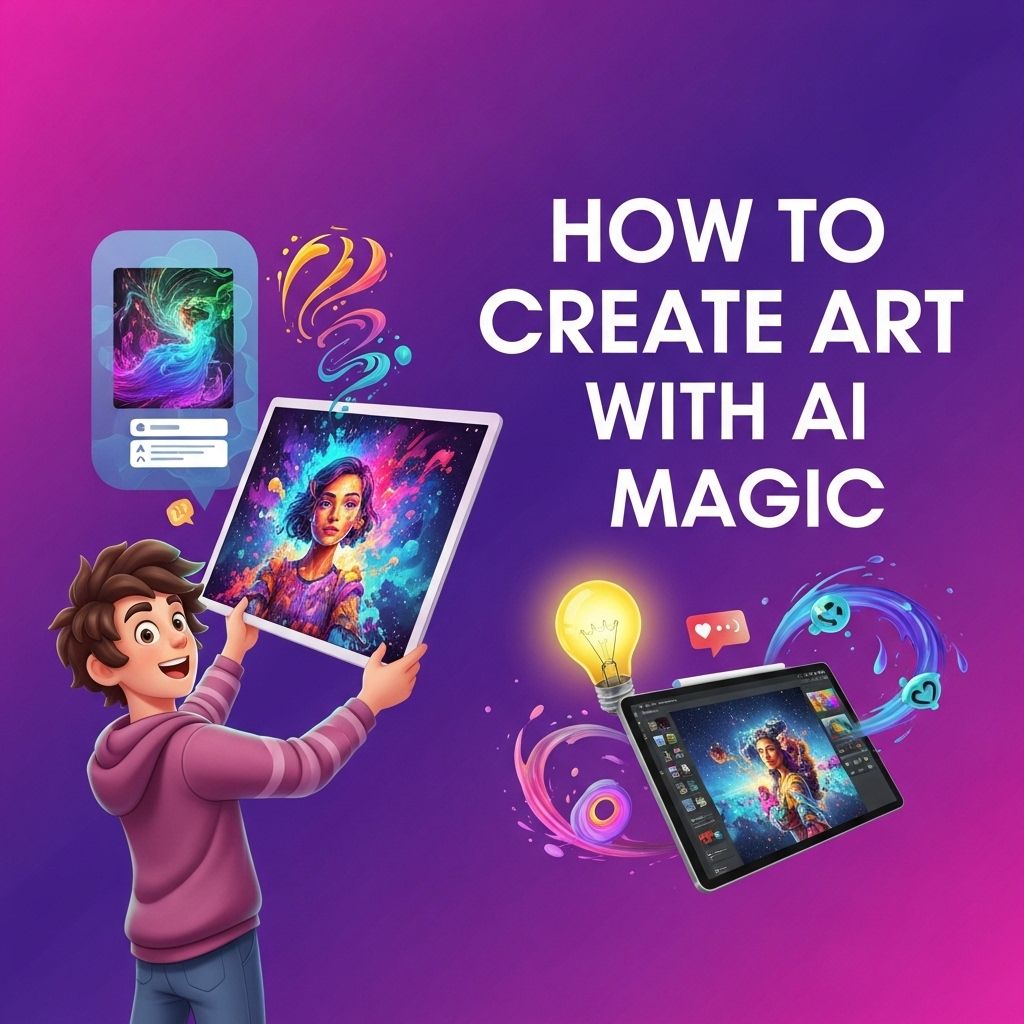
In the rapidly evolving landscape of technology, artificial intelligence (AI) has emerged as a transformative force in various fields, and art is no exception. Artists and technologists alike are exploring new ways to create, collaborate, and innovate through AI-driven tools. Whether you’re a seasoned artist or a curious newcomer, the idea of creating art with AI magic opens a world of possibilities that challenge traditional notions of creativity. This article delves into the various methods and tools available, the principles of AI art generation, and the implications of integrating AI into the artistic process.
In the realm of creativity, AI magic allows artists to craft stunning visuals with unprecedented ease and innovation. Whether you’re looking to design a unique bag or enhance your artistic projects, leveraging digital tools can transform your ideas into reality. For those seeking inspiration, bag mockup visualization tips offer valuable insights to elevate your designs.
Table of Contents
Understanding AI in Art Creation
At its core, AI art is the result of algorithms and machine learning models that analyze vast amounts of data to generate unique visual outputs. These technologies can mimic styles, create original compositions, and even assist artists in realizing their visions. Here are some key components to understand:
1. Machine Learning and Deep Learning
Machine learning (ML) is a branch of AI that enables systems to learn from data and improve over time. Deep learning, a subset of ML, utilizes neural networks to process and analyze data more effectively. In the context of art, these technologies can:
- Recognize patterns in existing artworks.
- Generate new images based on learned styles.
- Enhance artwork through filters and effects.
2. Generative Adversarial Networks (GANs)
GANs are a revolutionary approach within deep learning that involves two neural networks: a generator and a discriminator. The generator creates images, while the discriminator evaluates them. This process leads to the creation of increasingly realistic images over time. GANs have been used to:
- Create photorealistic images from sketches.
- Transform photographs into artistic styles.
- Generate entirely new concepts based on input parameters.
Popular AI Art Tools and Platforms
With a plethora of tools available, both amateur and professional artists can experiment with AI. Here are some noteworthy platforms that make the process accessible:
| Tool Name | Description | Key Features |
|---|---|---|
| DeepArt | Uses neural networks to transform photos into artworks. | Style transfer, high-resolution outputs |
| Artbreeder | Allows users to blend images and create new artworks collaboratively. | Image manipulation, collaborative features |
| DALL-E 2 | Generates images from textual descriptions. | Text-to-image generation, innovative concepts |
| Runway ML | Provides tools for creatives to use AI in their workflows. | Video and image editing, easy integration |
Creating Your First AI Artwork
If you’re eager to dive into the world of AI-generated art, follow these steps to create your first piece:
Step 1: Choose Your Tool
Select an AI art tool that suits your needs. For beginners, platforms like DeepArt or Artbreeder provide user-friendly interfaces.
Step 2: Select Base Material
You can start with an existing image or create a simple sketch. The quality of your base material can significantly influence the final output.
Step 3: Experiment with Styles
Utilize the style transfer features to apply various artistic styles to your base material. This is where you can see the magic of AI unfold.
Step 4: Adjust Parameters
Most tools will allow you to tweak parameters such as colors, styles, and even the level of detail. Play around until you achieve a result that resonates with you.
Step 5: Finalize and Save
Once satisfied with your artwork, finalize it and save it in your preferred format. Consider sharing it with the community for feedback!
Ethical Considerations in AI Art
As with any form of technology, the integration of AI into art raises several ethical questions:
1. Originality and Ownership
Who owns the artwork created by AI? The user, the developer of the AI, or the dataset used for training? These questions spark ongoing debates in the art community.
2. The Role of the Artist
With AI taking on more creative tasks, what does this mean for artists? Some argue that AI can enhance the creative process, while others fear it may diminish the role of human creativity.
3. Bias in Algorithms
AI systems can inadvertently perpetuate biases present in their training data. Artists must be aware of these biases to ensure their work is inclusive and representative.
Future Trends in AI-Generated Art
The future of AI art is both exciting and unpredictable. Here are some trends to watch:
- Increased Personalization: As AI algorithms become more advanced, the ability to create highly personalized art will expand.
- Collaboration with AI: More artists will embrace AI as a collaborative tool rather than a replacement for human creativity.
- Integration with AR/VR: Expect to see AI-generated art coalesce with augmented and virtual reality technologies for immersive experiences.
Conclusion
The intersection of art and artificial intelligence is a vibrant and rapidly evolving domain that opens up new avenues for creativity and expression. By understanding the underlying technologies and ethical implications, artists can leverage AI to enhance their work and explore unprecedented possibilities. Whether you’re creating your first piece or refining your craft, the magic of AI art is an exciting frontier worth exploring.
FAQ
What is AI-generated art?
AI-generated art refers to artwork created using artificial intelligence algorithms and tools, which can analyze data and create unique visual representations.
How can I start creating art with AI?
You can start creating art with AI by using user-friendly platforms and software that provide tools for generating images, such as DALL-E, Midjourney, or Artbreeder.
Do I need coding skills to create art with AI?
No, most AI art tools are designed for users without coding skills and offer intuitive interfaces that allow anyone to create art easily.
Can I sell AI-generated art?
Yes, you can sell AI-generated art, but it’s important to check the licensing agreements of the AI tools you use, as some may have restrictions on commercial use.
What types of art can I create using AI?
You can create various types of art using AI, including paintings, illustrations, digital sculptures, and even animations, depending on the tools you choose.
Is AI art considered original?
AI art can be considered original as it is generated by algorithms that create unique compositions, but the definition of originality can vary based on context and copyright laws.