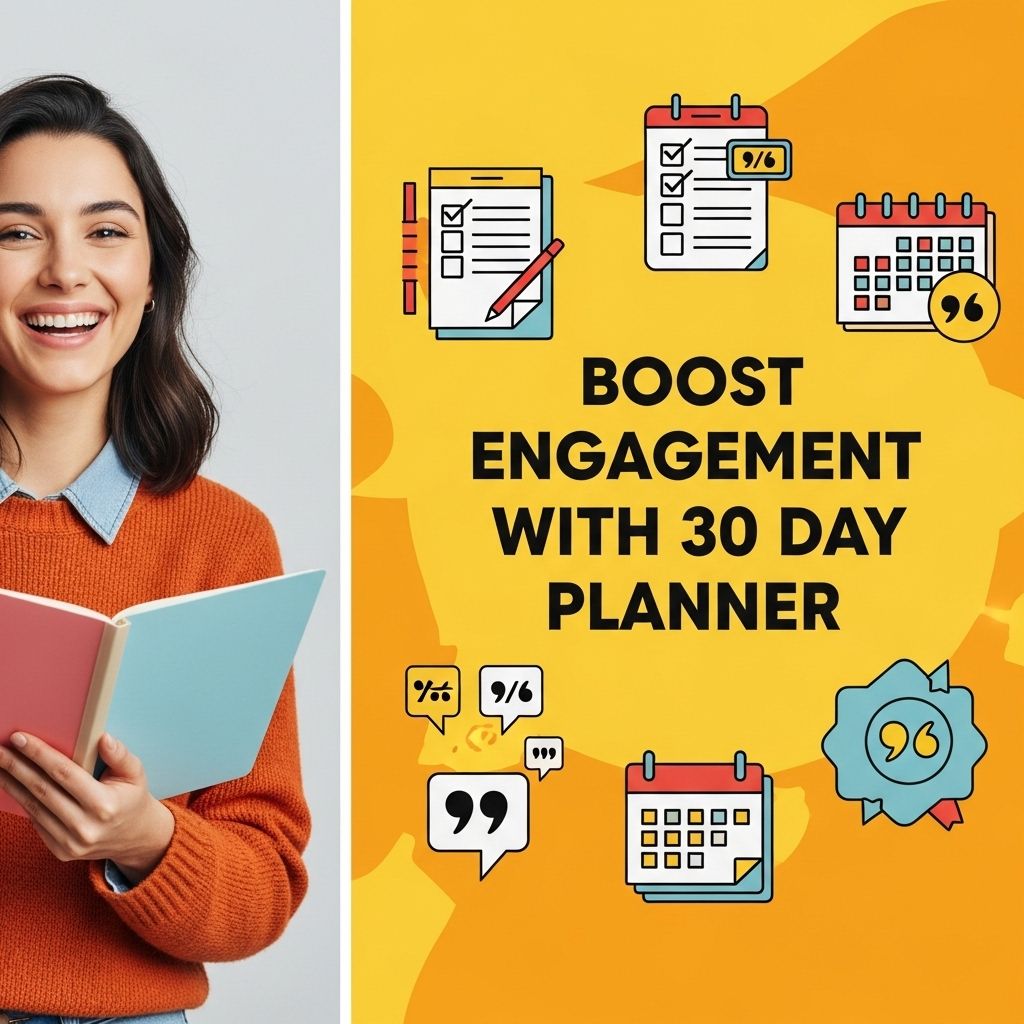
In today’s fast-paced digital landscape, keeping your audience engaged is more crucial than ever. A 30-day planner can serve as a powerful tool to boost engagement, whether you’re a content creator, a social media manager, or a business owner. By strategically mapping out your content and interactions over the course of a month, you can ensure that your audience remains captivated and involved. This article explores the benefits of using a 30-day planner, tips for effective planning, and tools that can help you succeed.
Boosting engagement with a well-structured 30-day planner can transform your productivity and focus. By organizing tasks and setting clear goals, you’ll find yourself more motivated and in control of your daily activities. For a fresh look, you might consider using options like these varieties of bag mockups to enhance your visual presentations.
Table of Contents
Why Use a 30-Day Planner?
Planning your content and engagement strategies can seem daunting, but a structured approach can have numerous advantages. Here are some key benefits:
- Consistency: Regularly scheduled posts and interactions help maintain your audience’s interest.
- Strategic Focus: With a clear plan, you can align your content with your overall business goals.
- Audience Insight: A planner allows you to experiment with different types of content and analyze what resonates.
- Time Management: Planning ahead reduces last-minute stress and creates a sense of routine.
How to Create an Effective 30-Day Planner
Creating a 30-day planner involves a mix of strategy, creativity, and adaptability. Here’s a step-by-step guide to crafting a planner that works for you:
Step 1: Define Your Goals
Before you dive into planning, outline your primary goals. Consider the following questions:
- What type of engagement do you want to foster? (e.g., likes, shares, comments)
- Are you launching a new product or service during this period?
- What specific audience do you want to attract?
Step 2: Identify Content Themes
Establish broader themes for each week or day. Possible themes might include:
- Inspirational Quotes
- Behind-the-Scenes Content
- Product Features
- User-Generated Content Highlights
Step 3: Utilize a Content Calendar
Using a content calendar can help visualize your planning. Here’s a simple example:
| Day | Content Type | Platform | Notes |
|---|---|---|---|
| 1 | Introduction Post | Introduce the monthly theme | |
| 2 | Poll | Engage audience with a question | |
| 3 | Blog Post | Website | In-depth article on a relevant topic |
| 4 | Live Q&A | Direct engagement with followers | |
| 5 | User Highlight | Feature a user’s story |
Step 4: Engage and Interact
Engagement isn’t just about posting content; it’s also about interaction. Schedule time for:
- Responding to comments
- Engaging with audience content
- Following up on polls or questions
Step 5: Analyze and Adjust
At the end of the 30 days, take a moment to evaluate your performance:
- What content performed best?
- Which days saw the highest engagement?
- What adjustments can enhance future plans?
Tools to Aid Your Planning
Several tools can assist in creating a successful 30-day planner:
1. Trello
A visual collaboration tool that allows you to create boards, lists, and cards to organize your content ideas and schedules.
2. Google Calendar
Leverage Google Calendar to set reminders for posting and interacting with your audience. You can also integrate it with other tools for seamless workflow.
3. Hootsuite
This social media management platform enables you to schedule posts across multiple platforms, analyze performance, and engage with your followers in one place.
4. Canva
Use Canva for designing stunning graphics that accompany your posts. Custom visuals can enhance your overall engagement.
Incorporating Feedback Loops
Feedback loops are essential for refining your approach. Here’s how to implement them:
- Ask for feedback directly from your audience through surveys or posts.
- Monitor engagement metrics to identify which content resonates.
- Adjust your planner based on feedback and analytics to enhance effectiveness.
Maximizing Your Reach
Beyond just posting content regularly, consider these strategies to maximize your reach:
- Cross-Promotion: Share your content across multiple platforms to reach different audience segments.
- Collaborations: Partner with other creators or brands to tap into their audience.
- Utilize Hashtags: Strategically use hashtags relevant to your niche to increase discoverability.
Conclusion
A 30-day planner is not merely a scheduling tool; it’s a comprehensive strategy for engagement that encourages consistency, creativity, and connection. By following the steps outlined in this article and utilizing the right tools, you can foster a more engaged audience and enhance your overall brand presence. Now, take the leap and start crafting your own 30-day engagement strategy!
FAQ
What is a 30 Day Planner?
A 30 Day Planner is a structured tool designed to help individuals organize their tasks, goals, and activities over a month-long period, promoting better time management and productivity.
How can a 30 Day Planner boost engagement?
By providing a clear framework for daily tasks and goals, a 30 Day Planner encourages users to stay focused and committed, leading to increased engagement in their personal and professional activities.
What are the benefits of using a 30 Day Planner?
Using a 30 Day Planner can enhance accountability, improve time management skills, reduce stress, and help users track their progress towards achieving their goals.
Is a 30 Day Planner suitable for everyone?
Yes, a 30 Day Planner can be beneficial for anyone looking to improve their organization skills, from students to professionals and even families managing household tasks.
How do I get started with a 30 Day Planner?
To get started, choose a planner format that suits your style, set specific goals for the month, and break them down into daily tasks to keep yourself on track.
Can I customize my 30 Day Planner?
Absolutely! Many planners are designed to be customizable, allowing you to add personal touches, specific goals, and unique layouts that fit your lifestyle.