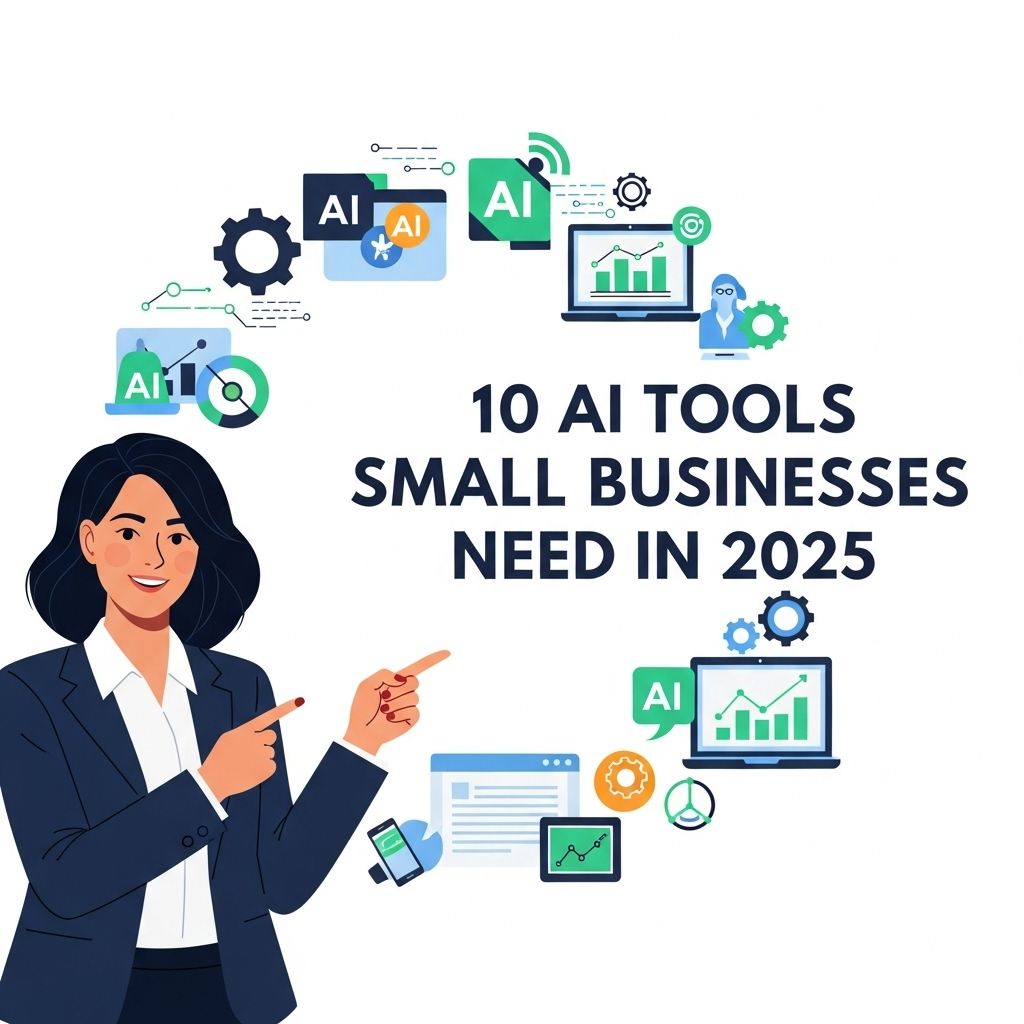
As we move deeper into the 21st century, artificial intelligence (AI) is becoming an integral part of business operations, especially for small businesses looking to optimize their processes, enhance customer experiences, and stay competitive. In 2025, the landscape of AI tools is expected to expand significantly, offering small businesses innovative solutions to meet their unique challenges. This article explores ten essential AI tools that small businesses will need to leverage in 2025 to drive efficiency and growth.
As small businesses continue to adapt to the fast-paced technological landscape of 2025, leveraging artificial intelligence will be more critical than ever. This article explores 10 essential AI tools designed to streamline operations, enhance customer engagement, and boost productivity. From automating routine tasks to providing data-driven insights, these tools empower businesses to thrive in a competitive market and improve their branding efforts, such as creating stunning varieties of bag mockups.
Table of Contents
1. AI-Powered Customer Relationship Management (CRM)
AI-driven CRM systems will be indispensable for small businesses aiming to build and maintain customer relationships. These systems can analyze customer data, predict buying behaviors, and automate communication.
Key Features:
- Data analysis for customer insights
- Automated email marketing campaigns
- Predictive analytics for sales forecasting
2. Intelligent Chatbots
Chatbots will continue to be a game-changer for customer service in small businesses. In 2025, advanced chatbots will provide 24/7 support, handle inquiries, and facilitate sales.
Advantages:
- Instant customer support
- Reduced operational costs
- Enhanced customer engagement
3. AI-Based Content Creation Tools
Creating high-quality content can be a daunting task for small businesses with limited resources. AI content generation tools can help in creating articles, social media posts, and marketing materials.
How They Work:
| Tool Name | Key Functionality | Best For |
|---|---|---|
| Jasper | Generating blog posts and articles | Content marketing |
| Copy.ai | Creating ad copy and social media posts | Social media marketing |
| Writesonic | Writing product descriptions | E-commerce |
4. Predictive Analytics Software
Small businesses can leverage predictive analytics to make data-informed decisions about inventory, sales forecasting, and marketing strategies, thus optimizing their operations.
Benefits of Predictive Analytics:
- Improved decision-making
- Increased operational efficiency
- Enhanced customer targeting
5. AI-Driven Social Media Management Tools
Managing social media can be overwhelming, but AI tools can automate scheduling, analyze performance, and even create content suggestions.
Top Tools to Consider:
- Hootsuite: For scheduling and analytics
- Buffer: For content curation and audience engagement
- Sprout Social: For comprehensive reporting and publishing
6. Automated Invoicing and Accounting Software
AI can simplify financial management for small businesses by automating invoicing, expense tracking, and financial reporting. This allows business owners to focus on core operations.
Popular AI Accounting Tools:
| Tool Name | Main Features | Best For |
|---|---|---|
| QuickBooks | Automated bookkeeping and reporting | Small to medium businesses |
| Xero | Real-time financial insights | Startups |
| FreshBooks | Time tracking and invoicing | Freelancers |
7. AI Recruitment Tools
Finding the right talent is crucial for small businesses. AI recruitment tools can streamline the hiring process by screening resumes and matching candidates to job descriptions.
Advantages:
- Reduced time to hire
- Improved candidate matching
- Enhanced candidate experience
8. Personalized Marketing Automation
With the help of AI, small businesses can deliver personalized marketing campaigns to target audiences, increasing conversion rates and customer loyalty.
Key Features:
- Behavioral targeting
- Dynamic content generation
- Automated customer segmentation
9. AI-Enhanced Cybersecurity Solutions
As cyber threats become more sophisticated, small businesses must invest in AI-powered cybersecurity tools to protect their sensitive data from breaches and cyberattacks.
Important Cybersecurity Features:
- Real-time threat detection
- Automated incident response
- Vulnerability assessments
10. AI Tools for Remote Collaboration
The rise of remote work has made collaboration tools essential. AI-powered solutions can enhance communication and improve productivity for distributed teams.
Recommended Tools:
- Slack: For team communication
- Trello: For project management
- Zoom: For virtual meetings
Conclusion
As we look ahead to 2025, small businesses must embrace the myriad of AI tools available to enhance their operations, improve customer engagement, and drive growth. By integrating these technologies, they can not only compete with larger enterprises but also carve out a unique identity in an increasingly crowded marketplace. Investing in AI is no longer a luxury; it is a necessity for small businesses aiming for success in a digital age.
FAQ
What are the top AI tools for small businesses in 2025?
In 2025, the top AI tools for small businesses include customer relationship management systems, AI-driven marketing platforms, automated accounting software, chatbots for customer service, and data analytics tools.
How can AI tools improve efficiency for small businesses?
AI tools can automate repetitive tasks, streamline operations, enhance customer engagement, and provide data-driven insights, all of which significantly improve efficiency for small businesses.
Are AI tools affordable for small businesses?
Yes, many AI tools are designed with small businesses in mind and offer scalable pricing options, making them accessible and affordable for a variety of budgets.
What types of AI tools can help with marketing for small businesses?
AI tools for marketing include email automation software, social media management tools, content creation platforms, and predictive analytics tools that help target customers effectively.
Can AI tools assist in customer service for small businesses?
Absolutely! AI tools like chatbots and virtual assistants can handle customer inquiries, provide support 24/7, and improve response times, enhancing overall customer satisfaction.
How do small businesses choose the right AI tools?
Small businesses should assess their specific needs, budget, and scalability of the tools, as well as read reviews and seek recommendations to choose the right AI tools.