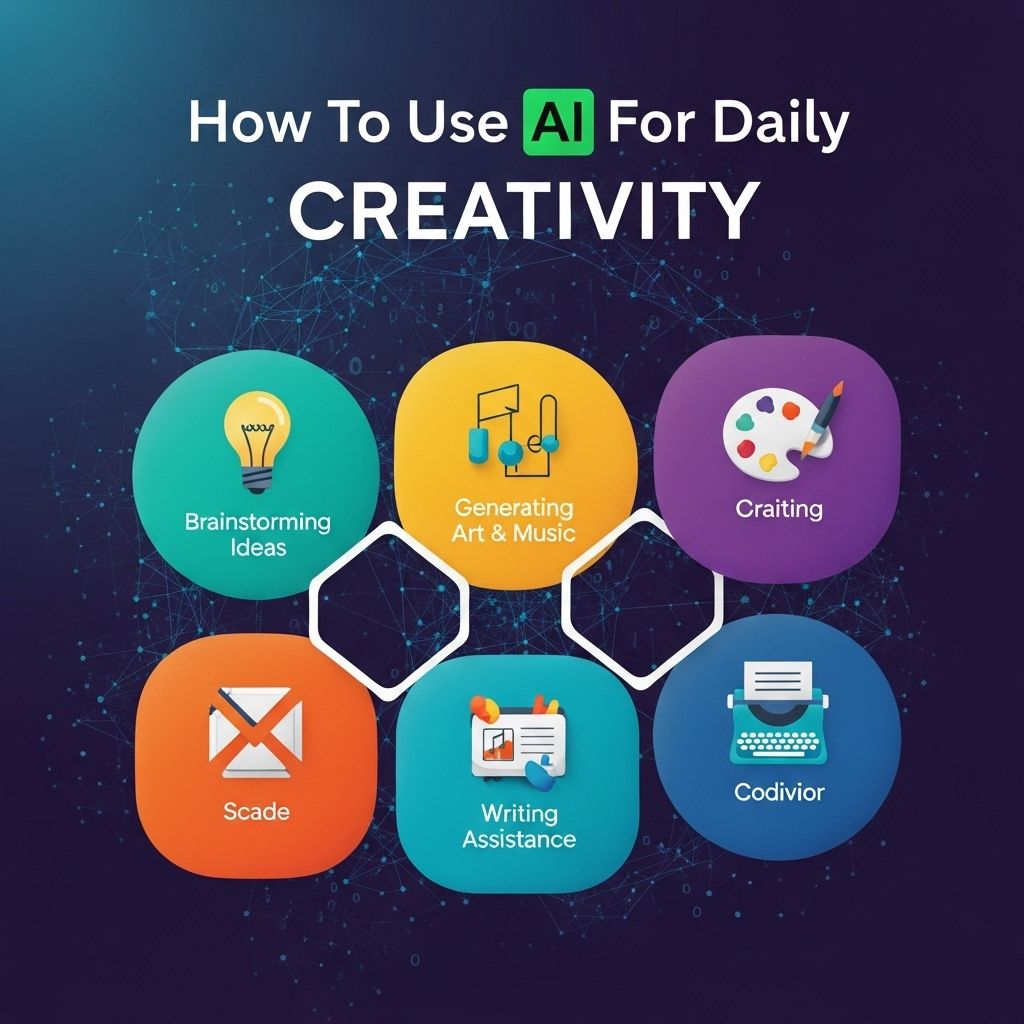
In today’s fast-paced world, integrating technology into our daily routines can unleash a new wave of creativity. Artificial Intelligence (AI) is not just a buzzword—it’s a powerful tool that can enhance our creative processes in ways we never thought possible. From generating content to assisting in brainstorming and providing insights, AI is reshaping how we approach creativity. Let’s explore various ways to harness AI to boost creativity in everyday life.
Table of Contents
Understanding AI’s Role in Creativity
AI is designed to mimic human intelligence by processing data and learning from it. This capability makes it an invaluable resource for creative endeavors. Here are some key benefits of using AI for creativity:
- Inspiration Generation: AI can analyze vast amounts of data to provide inspiration based on current trends and historical context.
- Content Creation: From writing to music composition, AI can assist or even create original works.
- Idea Enhancement: AI tools can refine and expand upon initial ideas, turning them into more developed concepts.
The Tools of the Trade
There are numerous AI tools available today that cater specifically to creative applications. Here’s a categorized list of some popular tools:
Content Creation
- ChatGPT: A conversational AI that can generate text based on prompts, making it ideal for writing articles, stories, or marketing copy.
- Copy.ai: Specializes in generating marketing copy, social media posts, and product descriptions.
Graphic Design
- DeepArt: Transforms photos into artwork by using styles of famous artists.
- Canva: While primarily a design tool, it has integrated AI features that suggest design layouts and elements.
Music Production
- AIVA: Composes music for various genres and can be used to create unique soundtracks.
- Amper Music: An AI music composition tool that empowers users to create custom music tracks.
Practical Applications of AI in Daily Routines
Integrating AI into your daily life can be incredibly straightforward. Here are some practical applications to consider:
1. Brainstorming Sessions
AI can be a fantastic brainstorming partner. Use tools like ChatGPT to generate ideas based on a specific topic. For example:
- Input a subject matter, like “sustainable fashion.”
- Ask for five innovative ideas or trends.
- Evaluate the suggestions and expand on the ones that resonate.
2. Creative Writing
When facing writer’s block, AI can help jumpstart creativity:
- Use AI to draft outlines for articles or stories.
- Generate multiple endings for a narrative and choose the most appealing.
- Request AI to write in different styles to explore various narrative voices.
3. Visual Arts
AI tools can enhance your artistic skills:
- Input your sketches into a tool like DeepArt to see how they would look as famous artwork.
- Use Canva’s AI design suggestions to create professional-looking graphics quickly.
4. Music Composition
Musicians can greatly benefit from AI in their creative processes:
- Experiment with AIVA to create unique tracks based on your input.
- Collaborate with AI to generate melodies or harmonies for your compositions.
Enhancing Team Collaboration
AI not only enhances individual creativity but also improves collaboration in teams:
1. Idea Management
Utilize AI-based project management tools to track ideas and suggestions. These tools can:
- Organize ideas based on priority.
- Provide insights into which ideas have the most support among team members.
2. Feedback Generation
AI can analyze team submissions and provide constructive feedback:
- Use tools that evaluate content for readability, engagement, and style.
- Integrate AI to summarize team discussions and highlight key points.
Challenges and Considerations
While AI presents numerous creative opportunities, there are also challenges to consider:
1. Originality Concerns
Relying too heavily on AI may lead to questions about originality:
- Ensure that AI-generated content is used as a foundation rather than a replacement for personal creativity.
- Always credit AI contributions accordingly.
2. Over-Reliance
Be mindful of becoming overly reliant on AI:
- Balance AI use with traditional creative methods.
- Engage in activities that stimulate your creativity without technology.
Conclusion
Incorporating AI into your daily creative practices does not diminish your originality; instead, it can enhance your abilities and broaden your horizons. As AI continues to evolve, so too will the ways we can use it to fuel our creativity. By experimenting and integrating different AI tools into your routine, you open yourself to a world of possibilities that can transform mundane tasks into exciting ventures. Embrace the future of creativity and let AI be your ally in unleashing your full potential.
FAQ
How can I incorporate AI into my daily creative routine?
You can use AI tools for brainstorming, generating ideas, and even creating content. Try using AI-powered writing assistants, design tools, or music generators to enhance your creativity.
What are some popular AI tools for enhancing creativity?
Some popular AI tools include OpenAI’s ChatGPT for writing, Canva’s AI features for graphic design, and DALL-E for generating images from text prompts.
Can AI help with creative block?
Yes, AI can help overcome creative block by providing prompts, suggestions, and inspiration. Using AI-generated ideas can spark new thoughts and perspectives.
Is AI creativity the same as human creativity?
AI creativity differs from human creativity as it relies on data patterns and algorithms, while human creativity involves emotions, experiences, and intuition.
How can I use AI for content creation?
AI can assist in content creation by generating articles, social media posts, and even video scripts. Tools like GPT-3 can help you draft and edit content efficiently.
Are there any ethical considerations when using AI in creative work?
Yes, ethical considerations include ensuring originality, avoiding plagiarism, and being transparent about AI-generated content. It’s important to use AI responsibly and credit sources appropriately.