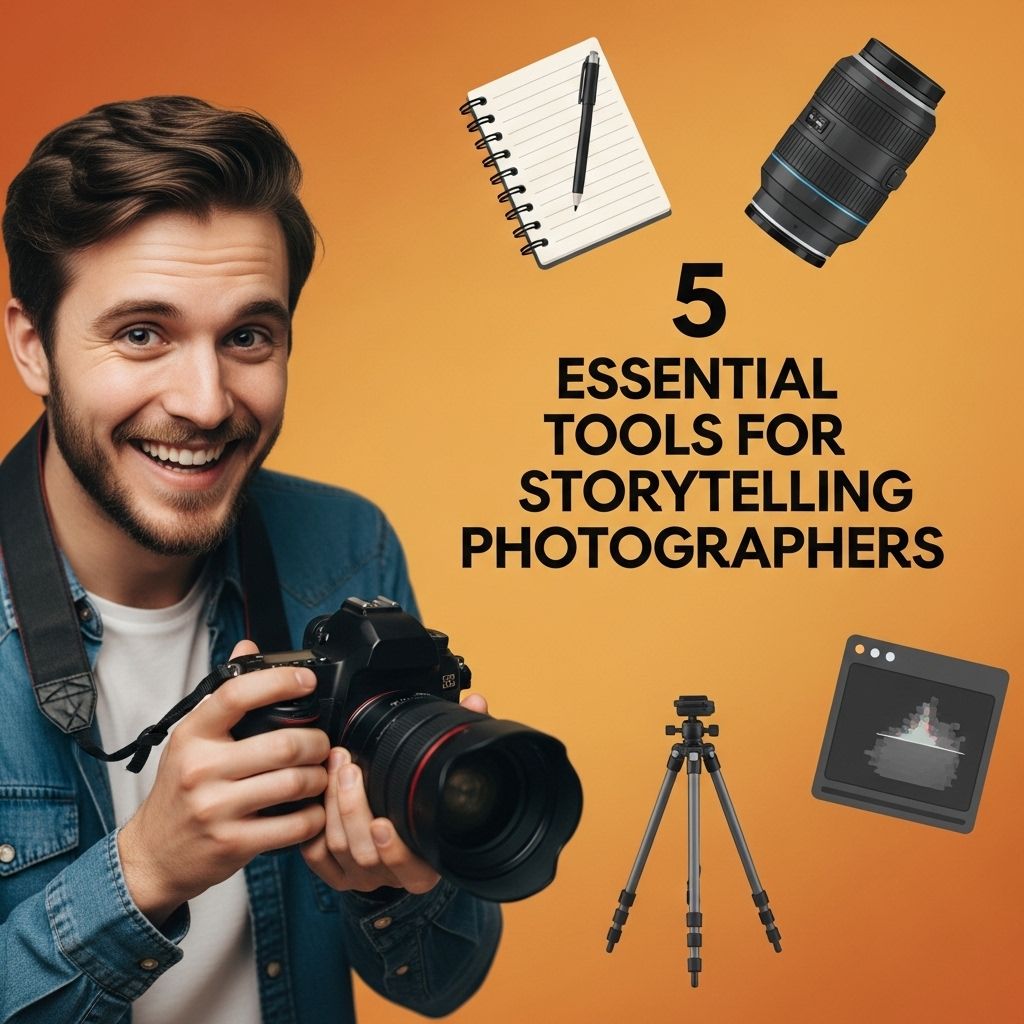
In an age where visual narratives dominate social media and digital platforms, storytelling photography has emerged as a vital form of expression. This form of photography transcends mere image capture; it seeks to evoke emotions, convey messages, and share experiences. For photographers eager to master the art of storytelling through their lens, a set of essential tools is crucial. Whether you’re a seasoned professional or a budding enthusiast, understanding the tools that can enhance your storytelling capabilities can make all the difference.
Every storytelling photographer requires specific tools to effectively convey their narratives through images. From quality cameras to editing software, each element plays a crucial role in the creative process. To elevate your branding, consider using bag mockups for branding that can transform the presentation of your work.
Table of Contents
1. High-Quality Camera
The foundation of storytelling photography begins with a reliable camera. A high-quality camera enables photographers to capture images that are not only visually appealing but also rich in detail and emotion. Consider the following options:
- DSLR Cameras: Popular among professionals for their image quality and versatility.
- Mirrorless Cameras: Compact and lightweight, offering advanced features and fast autofocus.
- Smartphones: Equipped with high-quality cameras and editing apps, they are a convenient option for on-the-go story capture.
Key Features to Look For:
- High Megapixel Count
- Good Low-Light Performance
- Interchangeable Lenses
- Fast Autofocus System
- Video Capabilities
2. Lenses: The Visionary’s Window
Choosing the right lens can dramatically change the narrative of your photograph. Different lenses serve different purposes, allowing you to capture a variety of scenes, subjects, and emotions. Here are some lenses every storytelling photographer should consider:
- Standard Zoom Lens: Versatile for everyday shooting (e.g., 24-70mm).
- Prime Lens: Known for their sharpness, ideal for portraits and low-light scenarios (e.g., 50mm f/1.8).
- Wide-Angle Lens: Perfect for landscapes and capturing expansive scenes (e.g., 16-35mm).
- Telephoto Lens: Great for isolating subjects from a distance (e.g., 70-200mm).
Using Lenses for Storytelling:
- Use a wide-angle lens to create a sense of space and context.
- Opt for a prime lens to focus on intimate details of your subjects.
- Employ telephoto lenses to draw attention to specific elements in your composition.
3. Lighting Equipment
Lighting plays a pivotal role in photography, especially in storytelling. It sets the mood and highlights emotions, transforming ordinary scenes into extraordinary tales. Here are some essential lighting tools:
| Lighting Equipment | Purpose |
|---|---|
| Natural Light | Utilize sunlight, especially during golden hours. |
| Reflectors | Bounce light to illuminate shadowy areas. |
| External Flash | Adds light in low-light conditions or freezes motion. |
| Continuous Lighting | Ideal for video and controlled shooting environments. |
Tips for Effective Lighting:
- Experiment with backlighting for dramatic effects.
- Use diffusers to soften harsh light.
- Understand the direction of light and its impact on your subject.
4. Editing Software
No photograph is complete without the magic of post-processing. Editing software allows photographers to enhance their images, correct flaws, and bring their storytelling vision to life. Some popular editing tools include:
- Adobe Lightroom: Excellent for bulk editing and color correction.
- Adobe Photoshop: Ideal for detailed manipulation and creative edits.
- Capture One: Preferred by many professionals for its powerful editing capabilities.
- VSCO: Great mobile app for quick edits and filters.
Post-Processing Tips:
- Maintain a consistent style across your images to create a cohesive story.
- Utilize presets for quick edits but don’t rely solely on them.
- Pay attention to cropping, as it can dramatically alter the focus of your story.
5. Storyboarding Tools
Visual storytelling often requires careful planning. Storyboarding is a technique that helps photographers organize their ideas and visualize the flow of their narrative. Here are some tools to assist in storyboarding:
- Notion: A versatile tool for creating digital storyboards and organizing concepts.
- Milanote: A visual tool specifically designed for creative projects.
- Google Slides: Easy to use for creating simple visual flows.
Creating an Effective Storyboard:
- Sketch out key scenes to visualize the story progression.
- Determine the mood and tone of each scene.
- Consider the flow of images and how they connect.
Conclusion
In the dynamic landscape of photography, storytelling stands as a pillar that connects photographers with their audience. By leveraging the right tools—from high-quality cameras and versatile lenses to effective lighting equipment and editing software—photographers can create compelling narratives that resonate with viewers. Remember, the essence of storytelling photography lies not just in what you capture, but in how you choose to tell the story behind each photograph. As you embark on your journey, let these essential tools guide your creative process and inspire you to capture the world through your unique lens.
FAQ
What are the essential tools for storytelling photographers?
Storytelling photographers should have a quality camera, versatile lenses, a sturdy tripod, editing software, and a reliable external hard drive for storage.
How can a camera enhance storytelling in photography?
A camera with advanced features allows photographers to capture high-quality images that convey emotions and narratives effectively.
Why is a tripod important for storytelling photography?
A tripod stabilizes the camera, allowing for long exposures and consistent framing, which is crucial for capturing dynamic stories.
What editing software is recommended for storytelling photographers?
Popular editing software includes Adobe Lightroom and Photoshop, which provide tools for enhancing images and bringing stories to life.
How does a reliable external hard drive benefit photographers?
A reliable external hard drive ensures that photographers can safely store and back up their images, safeguarding their storytelling work.