In a world overflowing with information, capturing an audience’s attention has never been more crucial. Whether you’re crafting a blog post, presenting a product, or delivering a speech, the first few seconds can make or break your success. Crafting effective hooks is an art that can significantly enhance your ability to engage your audience right from the start. Here, we delve into powerful strategies to create attention-grabbing hooks that resonate with your audience and compel them to continue consuming your content.
Creating attention-grabbing hooks is essential for engaging your audience from the start. Whether you’re crafting an article, a presentation, or marketing content, the right hook can significantly enhance your message’s impact. For example, using a bag mockup visualization tips can effectively illustrate your points and capture interest.
Table of Contents
Understanding the Importance of Hooks
The hook serves as the initial bait that draws readers in. A well-constructed hook can:
- Generate interest in your content.
- Set the tone for your message.
- Encourage further engagement.
- Differentiate you from competitors.
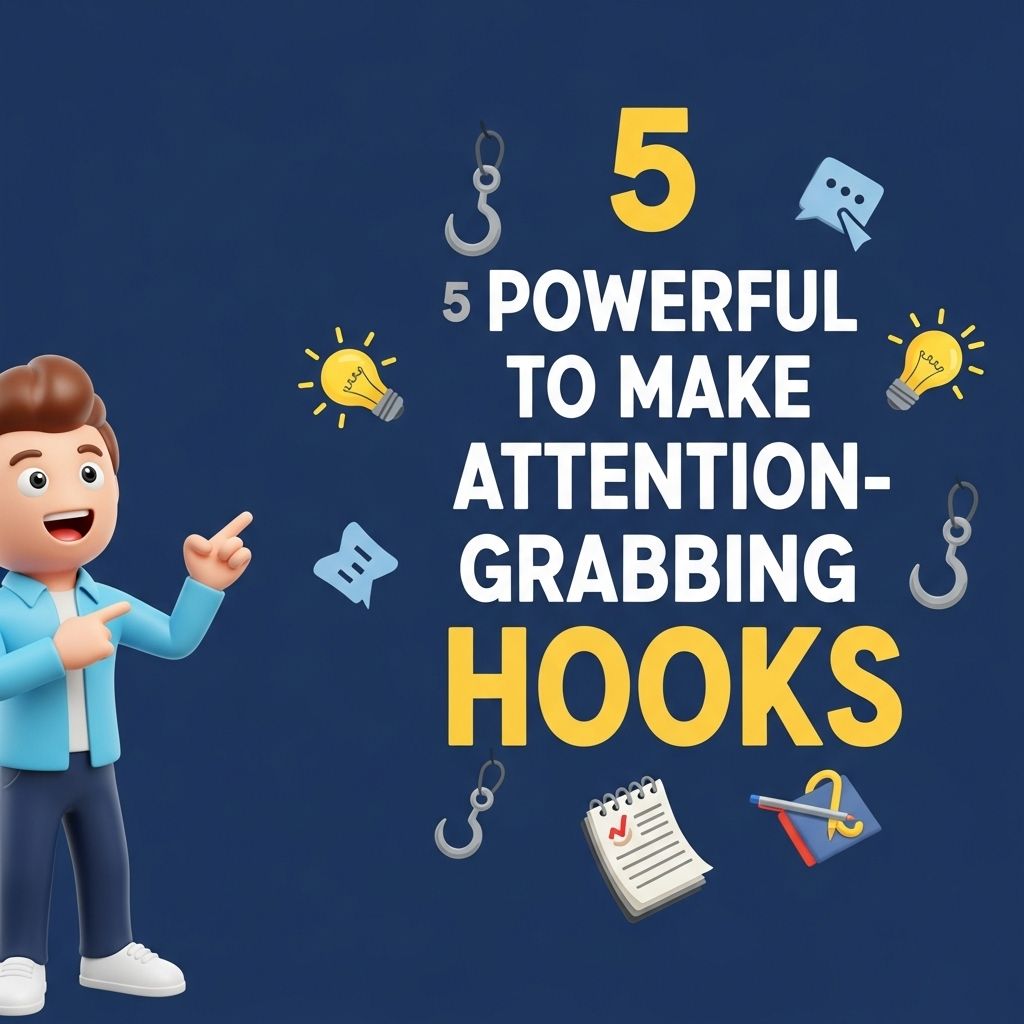
In today’s fast-paced digital landscape, a compelling hook is essential for standing out. Here are five powerful tips to create hooks that captivate your audience.
1. Start with a Provocative Question
Asking a thought-provoking question can immediately engage your audience’s curiosity. This technique encourages them to think and sparks a desire to find answers within your content.
Examples of Provocative Questions:
- What if you could double your productivity in just one week?
- Have you ever wondered why most diets fail?
- Is our obsession with technology making us lonelier?
By presenting a question that resonates with your audience, you invite them to reflect on their own experiences, thus drawing them into your narrative.
2. Use a Compelling Statistic
Incorporating a surprising statistic can provide concrete evidence that piques interest. This not only adds credibility to your content but also makes your audience sit up and pay attention.
How to Find Impactful Statistics:
- Utilize reputable sources such as government databases and academic journals.
- Look for recent studies relevant to your topic.
- Consider using infographics to present statistics visually.
Example:
“Did you know that according to a recent study, 70% of employees feel disengaged at work?” This statistic can serve as a hook for discussions on workplace motivation and productivity.
3. Create a Vivid Scenario
Painting a picture with your words allows the audience to visualize a scenario that relates to your topic. This can create an emotional connection and draw them into your narrative.
Crafting a Scenario:
- Describe a relatable situation that your audience might find themselves in.
- Use sensory details to make the scenario immersive.
- Include relatable characters or situations that resonate with your audience’s daily lives.
For example, you might say, “Imagine waking up to an email that completely changes your career. You have just been offered your dream job, but it comes with an incredible challenge…” This scenario sets the stage for a discussion on career advancement and personal growth.
4. Leverage Strong Quotes
Using a powerful quote can lend authority to your message and provide an entry point for deeper discussion. A quote can summarize your message succinctly while appealing to your audience’s emotions or intellect.
How to Integrate Quotes:
- Choose quotes from influential figures relevant to your topic.
- Make sure the quote encapsulates the essence of your message.
- Use the quote as a springboard for your own ideas.
Example:
“The only way to do great work is to love what you do.” – Steve Jobs, may serve as an excellent hook for a motivational piece about finding passion in your career.
5. Utilize Emotional Language
Words that evoke strong emotions can resonate deeply with your audience. By tapping into their feelings, you create a connection that encourages them to engage further with your content.
Techniques for Using Emotional Language:
- Identify the core emotions you want to evoke (e.g., joy, fear, surprise).
- Use descriptive language that appeals to the senses.
- Incorporate storytelling elements that drive emotional impact.
For example, saying “Imagine the heart-wrenching moment when you realize you’ve lost something precious” creates a sense of urgency and relatability.
Putting It All Together
Creating a compelling hook isn’t a one-size-fits-all approach. Instead, consider your audience, the context of your content, and the message you wish to convey. Here’s a simple framework to help you craft and evaluate your hooks:
| Element | Questions to Consider |
|---|---|
| Target Audience | What interests or concerns do they have? |
| Type of Content | Is it informative, persuasive, or entertaining? |
| Desired Impact | What action do you want your audience to take? |
Conclusion
In conclusion, mastering the art of creating attention-grabbing hooks is crucial for effective communication. By utilizing provocative questions, compelling statistics, vivid scenarios, strong quotes, and emotional language, you can ensure your audience remains engaged from the outset. Take the time to experiment with these techniques, and watch how they transform your ability to connect with your audience. The art of the hook is not merely a technique; it is a gateway to deeper and more meaningful engagement.
FAQ
What is an attention-grabbing hook?
An attention-grabbing hook is a compelling opening statement or question designed to capture the audience’s interest and encourage them to engage with your content.
Why are hooks important in writing?
Hooks are important because they set the tone for your content and can significantly increase reader engagement, encouraging them to continue reading or watching.
What are some effective techniques for creating powerful hooks?
Effective techniques include using provocative questions, surprising statistics, relatable anecdotes, emotional appeals, and vivid imagery.
How can I tailor my hook to my target audience?
To tailor your hook, understand your audience’s interests and pain points, and craft a message that resonates with their emotions and experiences.
Can I use humor as a hook?
Yes, humor can be a great way to create an engaging hook, making your content more relatable and enjoyable for the audience.
What should I avoid when writing hooks?
Avoid clichés and vague statements that don’t provide clear value or intrigue; always aim for originality and relevance to your content.