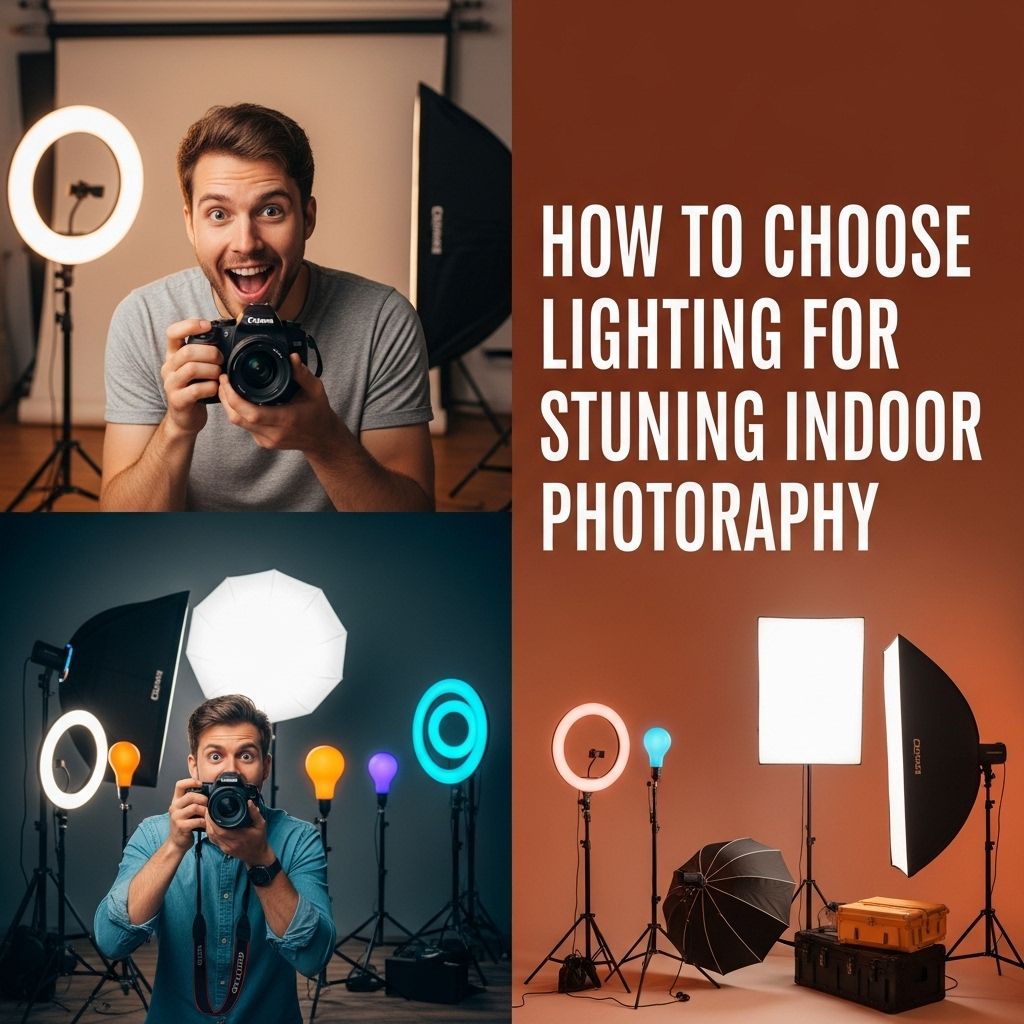
Indoor photography can often pose challenges due to inadequate lighting conditions, but with the right choices, you can create stunning images that captivate your audience. Whether you’re shooting portraits, product photography, or creative still life compositions, understanding how to choose the right lighting can make a significant difference in your results. In this article, we will explore various lighting techniques, types of light sources, and tips for achieving breathtaking indoor shots.
Mastering indoor photography is largely about understanding and utilizing the right lighting. By experimenting with various light sources and setups, photographers can create stunning images that enhance the mood and detail of their subjects. For those interested in capturing the perfect shot while showcasing products, checking out varieties of bag mockups can provide inspiration and options.
Table of Contents
Understanding Light in Photography
Light is a fundamental element of photography. It defines the exposure, mood, and texture of your images. In indoor settings, the type, direction, and quality of light become even more critical. Here are the key aspects to consider:
1. Quality of Light
The quality of light can be categorized as hard or soft:
- Hard Light: Creates sharp shadows and high contrast. Best used for dramatic effects.
- Soft Light: Produces diffused shadows and a more flattering look. Ideal for portraits and detailed product shots.
2. Direction of Light
Light direction can dramatically impact your composition:
- Front Lighting: Illuminates the subject head-on, reducing shadows.
- Side Lighting: Enhances texture and creates depth.
- Back Lighting: Highlights the subject’s outline but may require additional fill light.
Types of Lighting for Indoor Photography
When it comes to indoor photography, your choice of light source can greatly affect the quality of your images. Here are some common types of lighting you can utilize:
1. Natural Light
Natural light is often the most desirable for indoor photography. It offers a soft, flattering quality:
- Benefits: Free, widely available, and enhances colors naturally.
- Challenges: Unpredictable and dependent on weather and time of day.
2. Artificial Light
Artificial light sources can provide consistent and controllable lighting:
- Continuous Lighting: Consists of lamps that provide a constant light source. This can include LED panels, softboxes, and incandescent lights.
- Strobe Lighting: Flash units that provide a short burst of light, ideal for freezing motion and achieving high-quality results.
3. Mixed Lighting
Sometimes, mixing natural and artificial light can yield creative results. However, it requires careful balancing:
- Be aware of the color temperature differences.
- Use gels to match the temperature of different light sources.
Tips for Choosing the Right Lighting
To achieve stunning indoor photographs, consider the following tips:
1. Use a Light Meter
A light meter helps you assess the lighting conditions accurately, ensuring that your exposure settings are just right.
2. Experiment with Angles
Changing the angle of your light source can alter the mood and texture of your images. Try high, low, and side angles to see what works best.
3. Control Ambient Light
Minimize unwanted ambient light by using curtains, reflectors, or flags to direct light where you want it.
4. Utilize Reflectors
Reflectors can bounce light back onto your subject, filling in shadows and adding dimension.
Creating a Lighting Setup
Creating an effective lighting setup for indoor photography involves a few steps:
- Assess the Space: Look for windows, available light sources, and consider how much space you have.
- Choose Your Light Sources: Decide whether you will rely on natural light, artificial lighting, or a combination.
- Set Up Your Background: Ensure your background complements your lighting and subject.
- Test Your Setup: Take a few test shots to evaluate your lighting and make necessary adjustments.
Using Light Modifiers
Light modifiers can significantly enhance your indoor photography:
| Modifier | Purpose |
|---|---|
| Softbox | Diffuses light for a softer look. |
| Umbrella | Reflects and diffuses light effectively. |
| Grid | Controls light spill and adds direction. |
| Diffuser | Reduces harshness of direct light. |
Conclusion
Choosing the right lighting for indoor photography is a blend of understanding light properties, selecting appropriate sources, and employing creative techniques to manipulate that light effectively. With careful planning and experimentation, you can create captivating indoor photographs that tell a story and evoke emotion. Whether you’re an amateur photographer or a professional, mastering indoor lighting will greatly enhance your portfolio and skill set.
FAQ
What type of lighting is best for indoor photography?
Natural light is often the best choice for indoor photography, but soft artificial lights like LED panels and softboxes can also create stunning results.
How can I use window light for indoor photography?
Position your subject near a window to take advantage of natural light. Use reflectors to bounce light and fill shadows for a more balanced exposure.
What is the importance of color temperature in indoor photography?
Color temperature affects the mood and tone of your photos. Use a color temperature meter or adjust your camera settings to match the light source for accurate colors.
How can I avoid harsh shadows in indoor photography?
To avoid harsh shadows, use diffused lighting, position lights closer to your subject, or utilize multiple light sources to create even illumination.
Should I use flash for indoor photography?
Flash can be effective for indoor photography, especially in low-light situations. Use it with diffusers or bounce it off nearby surfaces to create softer light.
What are the best practices for lighting setups in indoor photography?
Experiment with three-point lighting setups, use diffusers and reflectors, and always consider your background to ensure your subject stands out.