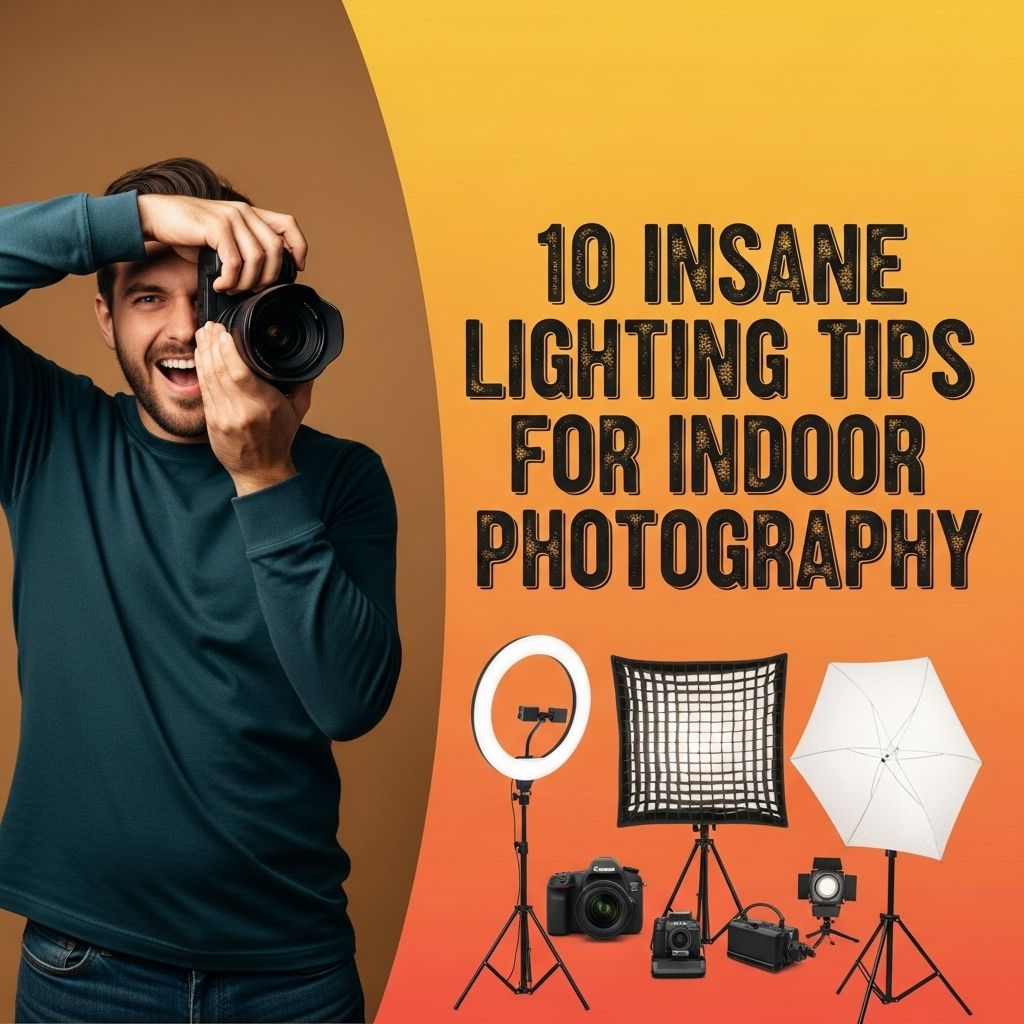
Indoor photography can be a challenging yet rewarding endeavor. The quality of light available in indoor spaces often varies dramatically, which can affect the outcome of your images. Mastering lighting techniques can elevate your photos from ordinary to extraordinary. Here are ten insane tips that can help you enhance your indoor photography skills and grab stunning shots, regardless of the initial lighting conditions.
Capturing stunning indoor photography often hinges on the quality of your lighting. To elevate your images, consider these 10 insane lighting tips that can dramatically enhance your composition and subject matter. For inspiration and resources, check out some creative tools like download free bag mockups.
Table of Contents
Understanding Light Types
The first step in mastering indoor photography is understanding the types of light available to you. Light can be categorized into two main types:
- Natural Light: This is the light that comes from the sun, even indoors. It can seep through windows and provide a soft, diffused effect.
- Artificial Light: This includes any light sources that are man-made, such as lamps, overhead lights, and flash units. Artificial light can be controlled more easily but may produce harsh shadows if not handled correctly.
1. Use Natural Light to Your Advantage
Whenever possible, capitalize on natural light. Here are some tips on how to do that:
Position Your Subject
Place your subject near a window to take advantage of the soft, diffused light. North-facing windows are typically ideal for photography as they provide consistent lighting throughout the day.
Timing Matters
Golden hour—the time just after sunrise or before sunset—provides beautiful, warm lighting. For indoor shots, aim to shoot during these times for the best results.
2. Control Shadows
Shadows can either enhance or ruin your shots. To control them:
- Use reflectors to bounce light back onto your subject.
- Position your subject to minimize harsh shadows.
3. Experiment with Artificial Light
When natural light isn’t available, turn to artificial sources. Here’s how:
Softboxes and Diffusers
Using softboxes or diffusers can create a more flattering, even light. They soften the harshness of direct light sources, which minimizes shadows.
Colored Gels
Adding colored gels to your light sources can completely change the mood of your photographs. Experiment with various colors to see how they affect your composition.
4. Utilize Multiple Light Sources
Relying on a single light source can lead to unflattering results. Instead, consider:
- Combining multiple artificial lights.
- Using lamps and overhead lights together.
- Adjusting the intensity and angle of each light source.
5. Master Your Camera Settings
Your camera settings play a crucial role in how light is captured. Here are key settings to focus on:
| Setting | Description |
|---|---|
| ISO | Increase the ISO for low-light situations but be cautious of noise. |
| Aperture | A wider aperture (lower f-stop number) allows more light to hit the sensor and creates a shallow depth of field. |
| Shutter Speed | Use slower shutter speeds for lower light but ensure you have a steady hand or use a tripod. |
6. Use Tripods for Stability
In lower light situations, camera shake can ruin your images. A tripod stabilizes your camera, allowing for longer exposures without blurriness. Here’s what to look for in a tripod:
- Sturdy construction
- Height adjustability
- Portable design for indoor use
7. Get Creative with Lighting Positions
Changing the angle of your light can produce dramatically different results:
Side Lighting
Illuminate your subject from the side for a dramatic effect that emphasizes texture.
Backlighting
Position the light source behind your subject for a silhouette effect. This technique works particularly well with transparent objects or while capturing a subject with defined edges.
8. Use Bounce and Reflectors
When shooting indoors, you can use bounce cards or reflectors to manage lighting:
- White Reflectors: Help soften shadows and fill in light.
- Gold Reflectors: Add warmth to your images and can mimic golden hour light.
- Silver Reflectors: Increase contrast and produce a punchier effect.
9. Take Advantage of Light Modifiers
Modifiers can help you control the quality and direction of light:
Grids
Grids help to narrow the beam of light, allowing for more control over where the light falls.
Flags
Flags can block excess light and control spill, allowing you to direct your light specifically to your subject.
10. Post-Processing Techniques
Sometimes, adjusting your images in post-processing can enhance lighting effects:
- Use software like Adobe Lightroom or Photoshop to tweak exposure and contrast.
- Experiment with curves and color grading to achieve the desired warm or cool tones.
- Consider adding a vignette for a more dramatic framing effect.
In conclusion, mastering indoor lighting requires a combination of understanding light types, manipulating settings, and using creative techniques. By applying these 10 tips, you’ll find yourself capturing stunning indoor photographs that reflect your artistic vision and technical skill. Remember, the best way to improve is practice—experiment with these techniques to discover what works for you!
FAQ
What are the best lighting techniques for indoor photography?
Using natural light, softboxes, and reflectors can enhance your indoor photography by creating soft, even lighting that reduces harsh shadows.
How can I improve indoor lighting for portraits?
To improve indoor lighting for portraits, position your subject near a window for natural light, or use a ring light to create flattering illumination.
What is the importance of white balance in indoor photography?
White balance is crucial in indoor photography as it ensures that colors appear true to life, preventing unwanted color casts from artificial lighting.
Can I use artificial light for indoor photography?
Yes, artificial light sources like LED panels, softboxes, and flash can provide excellent lighting for indoor photography, especially in low-light situations.
How do I avoid harsh shadows in indoor photos?
To avoid harsh shadows, use diffusers to soften the light, increase the distance between your subject and the background, and experiment with different angles.
What settings should I use for indoor photography?
For indoor photography, start with a lower ISO (100-400), a wide aperture (f/2.8 or lower), and adjust your shutter speed according to the available light.