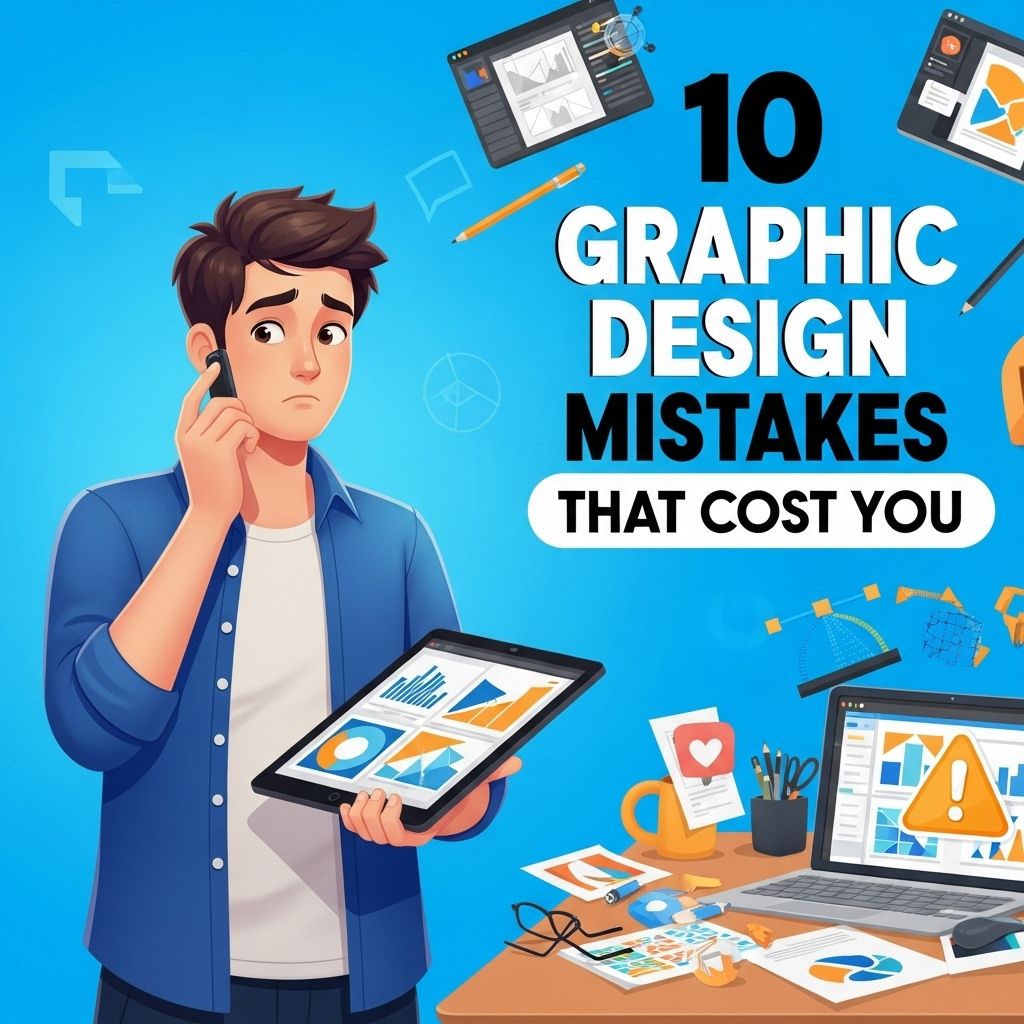
In the ever-evolving world of graphic design, even seasoned designers can fall prey to common pitfalls that can detrimentally affect their work. The visual communication landscape is competitive, and making mistakes not only costs time and effort but can also lead to lost clients and revenue. This article delves into ten graphic design mistakes that could cost you dearly, whether you’re a freelancer, part of an agency, or handling in-house design tasks.
Graphic design can make or break a brand, yet many professionals fall into costly traps that undermine their creative vision. Understanding common pitfalls is essential for producing impactful designs. For those looking to refine their projects, consider exploring these bag mockup visualization tips to avoid mistakes.
Table of Contents
1. Ignoring Brand Guidelines
One of the fundamental errors in graphic design is neglecting to adhere to established brand guidelines. Each brand has its unique identity that needs to be communicated consistently across all platforms.
Key Elements of Brand Guidelines:
- Color Palette
- Typography
- Logo Usage
- Imagery Style
When these elements are overlooked, it can dilute the brand’s identity and confuse the audience.
2. Overcomplicating Designs
Less is often more in graphic design. Overly complicated designs can overwhelm viewers and obscure the intended message. Simplicity can enhance clarity and effectiveness.
Strategies to Simplify:
- Use ample white space
- Limit color choices
- Focus on a single focal point
3. Poor Typography Choices
Typography plays a crucial role in design. Inaccurate font choices can misrepresent the brand and create a lack of professionalism.
Typography Best Practices:
| Do’s | Don’ts |
|---|---|
| Choose readable fonts | Using too many different fonts |
| Pair fonts that complement one another | Overusing decorative fonts |
| Maintain consistent font sizes | Randomly changing font sizes |
4. Neglecting Mobile Compatibility
With an increasing number of users accessing content via mobile devices, neglecting mobile responsiveness in designs can lead to significant losses.
Mobile Design Considerations:
- Test across multiple devices
- Ensure readability on small screens
- Optimize images for faster loading
5. Using Low-Quality Images
In graphic design, image quality is paramount. Subpar images can make professional designs look amateurish. Always opt for high-resolution images that align with the brand’s quality standards.
6. Not Seeking Feedback
Feedback is a valuable resource in the design process. Failing to seek critiques can lead to missed opportunities for improvement and refinement. Peer reviews and client feedback should be integral to your design workflow.
Effective Feedback Techniques:
- Conduct design reviews with peers
- Incorporate client input early on
- Use surveys to gather audience reactions
7. Underestimating the Importance of Color Theory
Color is a powerful communicator in design. Designers who overlook color theory can inadvertently send mixed messages or create visual dissonance.
Basic Color Theory Principles:
- Complementary Colors
- Analogous Colors
- Color Psychology
Understanding these principles can help you create more effective and visually appealing designs.
8. Misalignment and Lack of Grid Systems
Designs that lack structure can appear chaotic and unprofessional. Implementing a grid system can help organize elements and create balance in your layout.
Benefits of Using Grids:
- Enhances visual hierarchy
- Creates consistency across designs
- Improves readability
9. Failing to Update Designs
Design trends evolve rapidly, and what was once trendy can quickly become outdated. Regularly refreshing your designs ensures that they remain relevant and engaging.
How to Keep Designs Current:
- Research current design trends
- Gather inspiration from various sources
- Be open to reinventing past designs
10. Not Defining Target Audience
Every design should have a target audience in mind. Failing to define who you are designing for can lead to irrelevant designs that do not resonate with viewers.
Steps to Identify Your Audience:
- Conduct market research
- Create audience personas
- Gather demographic data
Understanding your audience helps in crafting messages that speak directly to their needs and desires.
Conclusion
The realm of graphic design is filled with opportunities for creativity and innovation, but it also comes with its share of challenges. By recognizing and addressing these common mistakes, designers can enhance their skills, increase client satisfaction, and ultimately save time and money. Embracing continuous learning and feedback is essential in this dynamic industry, helping to ensure that your designs are not just visually appealing but also effective in delivering the intended message.
FAQ
What are common graphic design mistakes to avoid?
Common graphic design mistakes include poor use of color, cluttered layouts, inconsistent fonts, ignoring typography principles, and neglecting the target audience.
How can bad graphic design affect my business?
Bad graphic design can lead to a negative brand perception, loss of credibility, and ultimately, decreased sales as potential customers may not trust poorly designed materials.
What is the impact of choosing the wrong color scheme in graphic design?
Choosing the wrong color scheme can convey the wrong message, confuse the audience, and fail to evoke the desired emotional response, affecting engagement and brand identity.
Why is typography important in graphic design?
Typography is crucial in graphic design as it affects readability, conveys tone, and enhances the overall aesthetic appeal of the design, influencing how the message is received.
How does cluttered design affect user experience?
Cluttered design can overwhelm users, making it difficult for them to navigate or understand the content, leading to frustration and increased bounce rates.
What are the benefits of hiring a professional graphic designer?
Hiring a professional graphic designer ensures high-quality, effective designs that align with your brand, improve visual communication, and ultimately help you stand out in a competitive market.