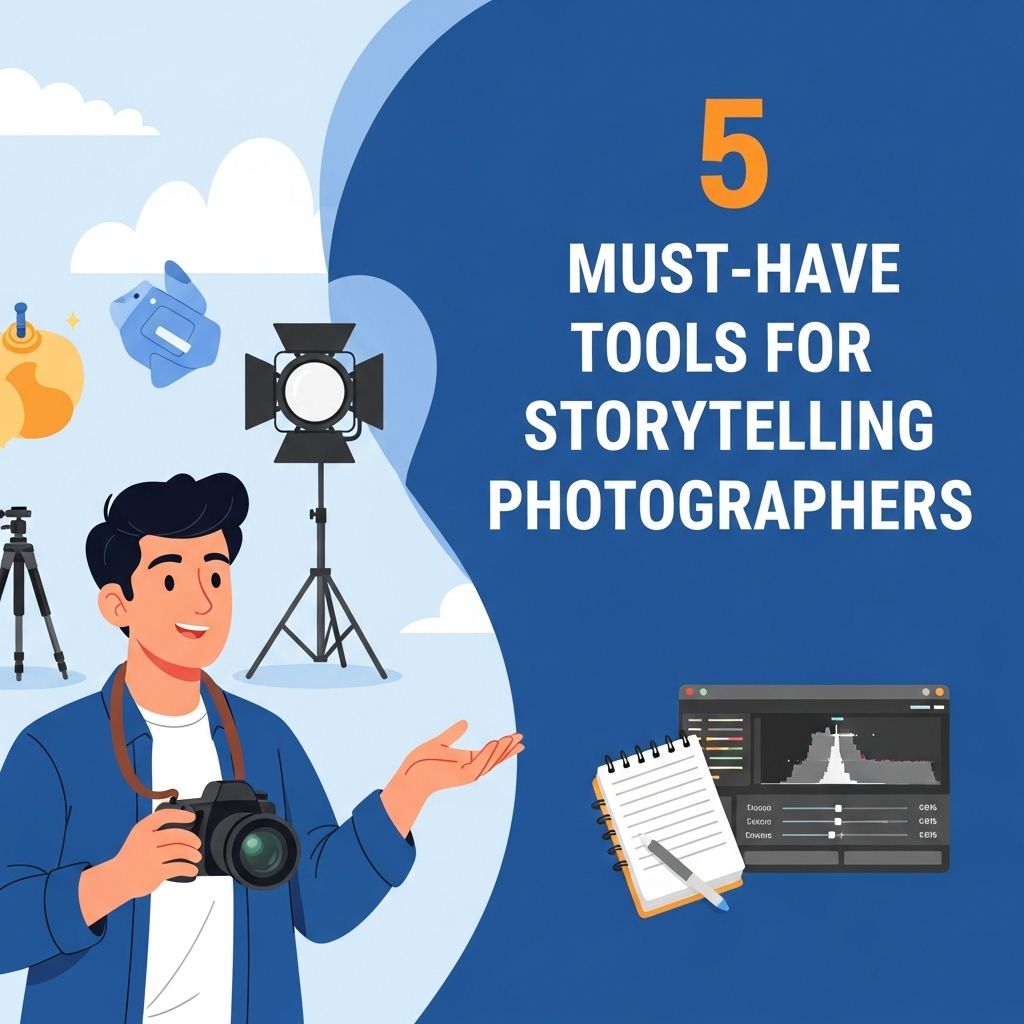
In the digital age, storytelling through photography has become an essential skill for those looking to convey emotions, capture moments, and share narratives visually. With the right tools at your disposal, photographers can elevate their craft and tell powerful stories that resonate with their audience. Whether you are a seasoned photographer or just starting out, here are five must-have tools that will enhance your storytelling capabilities.
Every storytelling photographer needs a reliable toolkit to effectively convey their narrative through images. From the right camera equipment to essential editing software, each tool plays a pivotal role in bringing creative visions to life. For those looking to enhance their visual storytelling, consider versatile resources like how to create bag mockups that can help present your work in a polished manner.
Table of Contents
1. A Versatile Camera
At the heart of every great photo is a capable camera. While smartphones have come a long way in terms of photography, a dedicated camera offers more control over your shots and better image quality. Here are some key features to consider when choosing a camera:
- Sensor Size: Larger sensors typically provide better low-light performance and dynamic range.
- Interchangeable Lenses: This allows you to switch lenses based on the story you’re trying to tell.
- Manual Controls: The ability to adjust shutter speed, aperture, and ISO settings gives you creative freedom.
Recommended Cameras
| Camera | Type | Approx. Price |
|---|---|---|
| Canon EOS R5 | Mirrorless | $3,899 |
| Nikon Z6 II | Mirrorless | $1,999 |
| Sony A7 III | Mirrorless | $1,998 |
| Fujifilm X-T4 | Mirrorless | $1,699 |
2. Quality Lenses
The lens you choose can dramatically affect the way your story is told. Different lenses provide different perspectives, and certain types are better suited for specific storytelling scenarios:
Key Lens Types
- Wide-Angle Lens: Ideal for landscapes and architecture, capturing as much of the scene as possible.
- Prime Lens: Offers excellent sharpness and is great for portraits, often with larger apertures.
- Telephoto Lens: Allows you to capture subjects from a distance, perfect for wildlife and candid photography.
3. Editing Software
Edit your photos to enhance their visual storytelling. Good editing software can help you adjust colors, contrast, and composition. Here are some popular choices:
Editing Software Options
- Adobe Lightroom: Great for batch editing and organizing your photos.
- Adobe Photoshop: Offers advanced editing capabilities for retouching and manipulation.
- Capture One: Known for its high-quality color grading and tethering capabilities.
Basic Editing Workflow
- Import your images into the software.
- Adjust exposure and contrast.
- Edit colors to enhance mood.
- Crop and straighten images to improve composition.
- Export in the desired format.
4. A Reliable Tripod
A sturdy tripod is essential for photographers who want to capture long exposures, landscape shots, or maintain stability in low-light conditions. Consider the following when selecting a tripod:
Tripod Features
- Weight Capacity: Ensure it can support your camera and lens weight.
- Height: Look for adjustable height options for various shooting angles.
- Material: Aluminum tripods are sturdy and affordable, while carbon fiber tripods are lightweight and portable.
5. Storyboarding Tools
Before heading out to shoot, having a plan can help streamline the storytelling process. Storyboarding tools allow you to visualize your shots and organize your narrative. Here are some options:
Digital Storyboarding Tools
- Milanote: A visual workspace that helps you organize ideas and images.
- Storyboard That: A drag-and-drop tool for creating storyboards.
- ShotPro: An app for planning and visualizing your shoot.
Benefits of Storyboarding
- Clarifies your vision and intent for the shoot.
- Ensures you capture all necessary shots.
- Helps with pacing and structure of your story.
Conclusion
Equipping yourself with the right tools is essential for any storytelling photographer. From the camera and lenses to editing software and storyboarding tools, each component plays a significant role in how effectively you can convey your narrative through images. By investing in these must-have tools, you will not only enhance your skills but also ensure that your photography truly resonates with your audience, allowing your stories to shine through every frame.
FAQ
What are the essential tools for storytelling photographers?
Essential tools for storytelling photographers include a high-quality camera, versatile lenses, a sturdy tripod, editing software like Adobe Lightroom or Photoshop, and a reliable external hard drive for storage.
How does a tripod enhance storytelling in photography?
A tripod enhances storytelling by providing stability for long exposure shots, allowing for precise composition, and enabling the use of slower shutter speeds to capture motion and atmosphere.
Why is editing software important for photographers?
Editing software is crucial for photographers as it allows them to enhance images, correct colors, and adjust lighting, ultimately helping to better convey the story behind each photograph.
What type of camera is best for storytelling photography?
A DSLR or mirrorless camera is typically best for storytelling photography due to their versatility, image quality, and the ability to interchange lenses for different perspectives.
How can an external hard drive benefit photographers?
An external hard drive benefits photographers by providing ample storage space for large files, ensuring data backup and security, and allowing easy organization of projects and portfolios.
What role do versatile lenses play in storytelling photography?
Versatile lenses play a crucial role in storytelling photography by allowing photographers to capture a wide range of scenes, from close-ups to landscapes, thus enhancing the narrative of their work.