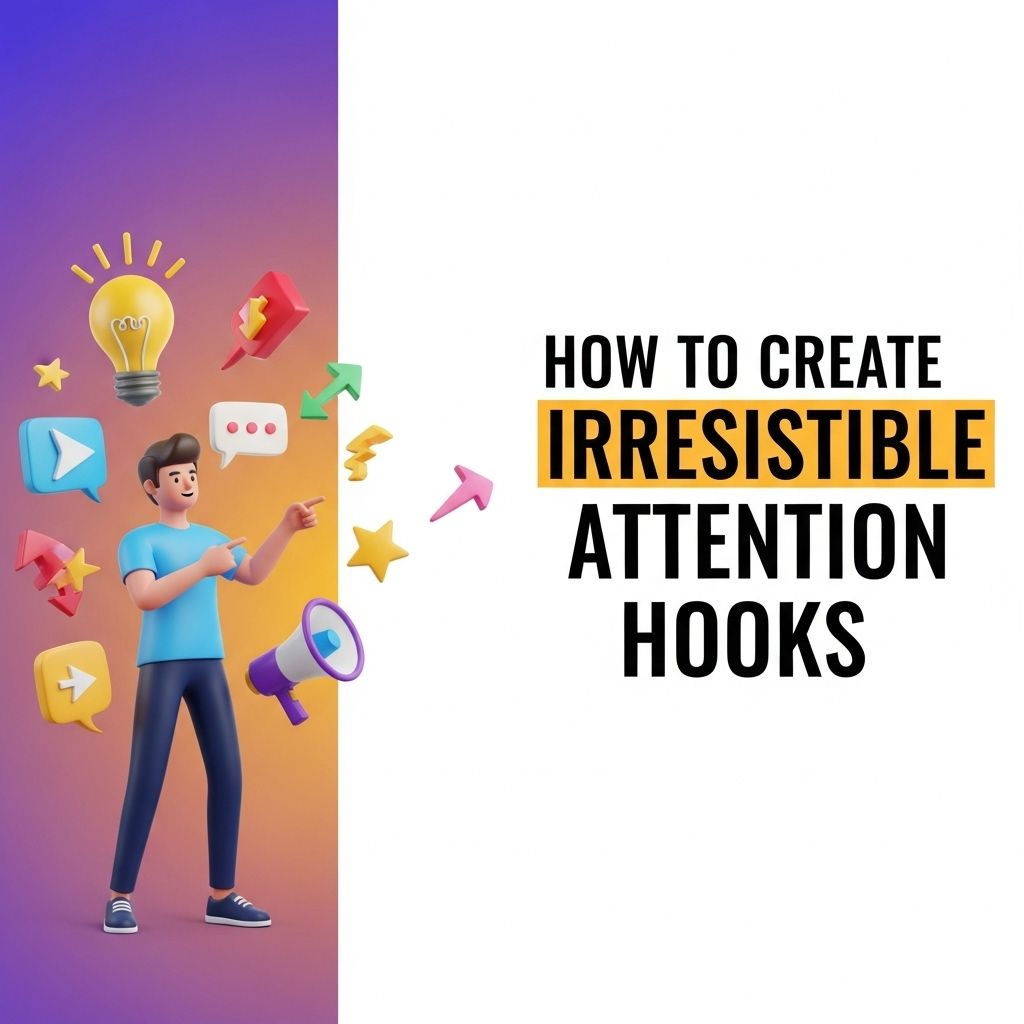
In an age where information is abundant, capturing attention has become a monumental challenge. Whether you’re writing an article, creating a video, or crafting an ad, the first few seconds are crucial. An irresistible attention hook not only draws readers in but also keeps them engaged. This article will explore various techniques and strategies for creating compelling hooks that resonate with your audience.
Creating irresistible attention hooks for your content is essential for capturing your audience’s interest from the get-go. Whether you’re sharing creative designs or practical tips, the right hook can make all the difference. For instance, explore best bag mockup designs to inspire your next visual storytelling project.
Table of Contents
Understanding the Importance of Attention Hooks
Attention hooks serve as gateways to your content. They are the initial phrases or visuals that pique interest and spark curiosity. Here are some reasons why they are vital:
- First Impressions Matter: The hook is often the first thing a reader encounters.
- Stand Out from the Crowd: In a sea of content, a strong hook can differentiate your work.
- Create Emotional Connections: Good hooks resonate with the audience’s feelings and desires.
- Increase Engagement: A well-crafted hook keeps the audience interested in your content.
Types of Attention Hooks
There are several types of attention hooks you can utilize, each serving a specific purpose:
1. Question Hooks
Starting with a compelling question can engage your audience’s curiosity. Here are examples:
- “Have you ever wondered what makes some ads go viral?”
- “What if you could unlock the secret to productivity in just five minutes?”
2. Quote Hooks
Using a powerful quote can lend authority to your content. It sets a tone that resonates with your audience’s beliefs.
| Quote | Source |
|---|---|
| “The only limit to our realization of tomorrow will be our doubts of today.” | Franklin D. Roosevelt |
| “Success usually comes to those who are too busy to be looking for it.” | Henry David Thoreau |
3. Statistic Hooks
Startling statistics can grab attention and provide credibility. Here’s how to frame them:
- “Did you know that 70% of people prefer visual content over text?”
- “Research shows that articles with compelling headlines get 80% more clicks.”
4. Anecdotal Hooks
Personal stories or anecdotes can create a narrative that draws readers in. Example structure:
- Introduce a personal experience.
- Relate it to a broader theme.
- Engage the audience with a takeaway.
Crafting Your Hook
Now that we’ve covered the types of hooks, let’s look at some steps to create your own:
Step 1: Know Your Audience
Understand who you’re writing for. Tailor your hook to resonate with their interests, pain points, and language.
Step 2: Identify the Core Message
What do you want to convey? Your hook should reflect the essence of your content.
Step 3: Experiment with Different Formats
Try various types of hooks to see what resonates best. A/B testing can be useful in determining effectiveness.
Step 4: Keep It Short and Punchy
Your hook should be concise. Aim for clarity and impact without overwhelming the audience.
Examples of Effective Attention Hooks
Let’s analyze some real-world examples that have proven effective:
Example 1: Clickbait Headlines
While often criticized, clickbait can be effective when used judiciously. For instance:
- “You Won’t Believe What This CEO Did to Boost Productivity!”
Example 2: Emotional Appeals
Connecting emotionally can be powerful. For example:
- “Imagine waking up every day feeling fulfilled and excited about your work.”
Testing Your Hooks
Once you’ve crafted your hook, testing its effectiveness is crucial. Here are some methods:
1. A/B Testing
Use different hooks in similar content to see which performs better.
2. Audience Feedback
Engage your audience directly for their opinions on your hooks.
3. Analytics Tracking
Monitor performance metrics to identify which hooks drive engagement.
Common Pitfalls to Avoid
While creating hooks, be aware of these common mistakes:
- Over-promising: Ensure that your content delivers on the hook’s promise.
- Being Vague: Avoid ambiguous language that could confuse your audience.
- Ignoring SEO: Incorporate relevant keywords without compromising the hook’s quality.
Conclusion
Crafting irresistible attention hooks is an art that can significantly boost engagement with your content. By understanding your audience, experimenting with different types of hooks, and continually refining your approach, you can create opening lines that not only grab attention but also lead to deeper engagement. Remember, the world is full of distractions, so make your hooks count!
FAQ
What are attention hooks?
Attention hooks are engaging phrases or questions designed to capture the audience’s interest immediately.
Why are attention hooks important in content creation?
Attention hooks are crucial because they draw readers in, encouraging them to continue reading or engaging with the content.
What are some effective techniques for creating attention hooks?
Effective techniques include using intriguing questions, surprising statistics, bold statements, or relatable anecdotes.
How can I test the effectiveness of my attention hooks?
You can test attention hooks by analyzing engagement metrics such as click-through rates, time spent on the page, and social shares.
Can attention hooks vary depending on the audience?
Yes, attention hooks should be tailored to resonate with your specific audience’s interests, problems, and preferences.