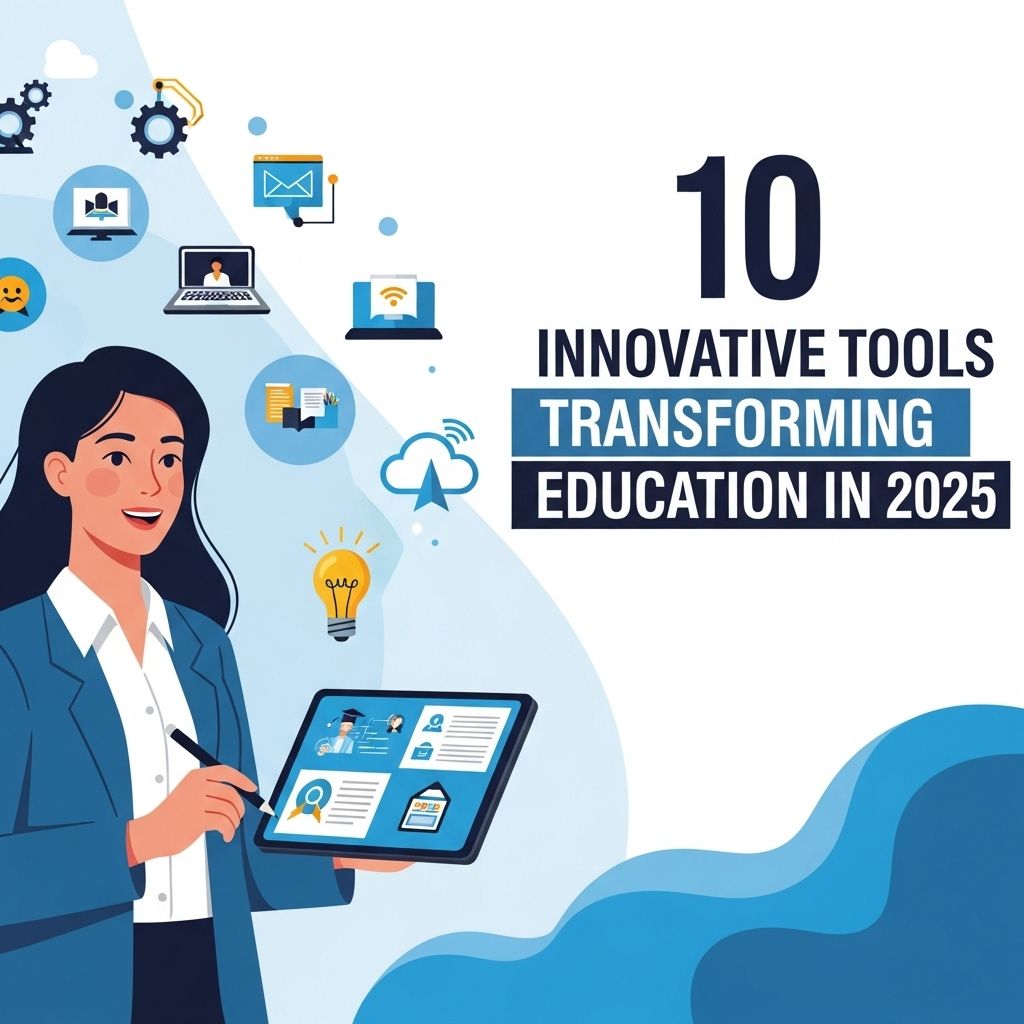
The landscape of education is continuously evolving, driven by technological advancements and innovative approaches to learning. As we look towards 2025, a wave of tools is emerging that promises to transform the way students learn, engage with content, and interact with educators. These innovative tools are not just reshaping classrooms; they are redefining the entire educational experience, making it more interactive, personalized, and accessible.
As we look ahead to 2025, the education landscape is being revolutionized by innovative tools that enhance learning experiences and foster engagement. From virtual reality classrooms to AI-driven personalized tutoring systems, these advancements are reshaping how knowledge is delivered and absorbed. One example of creativity in educational resources can be seen in the realm of design; for instance, bag mockup visualization tips offer educators fresh ways to integrate visual arts into curriculum.
Table of Contents
1. Artificial Intelligence Tutors
Artificial Intelligence (AI) is playing a pivotal role in personalized education. AI tutors can analyze a student’s learning style, strengths, and weaknesses, providing customized assistance that enhances the learning process. These tools can:
- Deliver tailored lessons based on individual needs
- Provide instant feedback on assignments
- Help identify areas for improvement
For example, platforms like Carnegie Learning leverage AI to create adaptive learning experiences that cater to each student’s progress.
2. Augmented Reality (AR) Learning Experiences
Augmented Reality (AR) bridges the gap between theoretical knowledge and practical application. By overlaying digital information in the real world, AR tools allow students to explore complex concepts in an interactive manner. Educational institutions are increasingly incorporating AR in subjects like:
- Science (visualizing molecular structures)
- History (experiencing historical events)
- Mathematics (understanding geometric principles)
Apps such as Google Expeditions take students on virtual field trips, bringing lessons to life like never before.
3. Learning Management Systems (LMS) Evolution
As remote learning becomes more prevalent, the evolution of Learning Management Systems is crucial. Modern LMS platforms are more than just repositories of course materials; they facilitate seamless communication, collaboration, and assessment. Key features of the latest LMS include:
| Feature | Description |
|---|---|
| Integrative Analytics | Analyze student performance and engagement |
| Mobile Compatibility | Access materials and submit assignments via mobile devices |
| Gamification | Incorporate game-like elements to enhance learning |
Popular LMS options like Moodle and Canvas are regularly updating their features to keep pace with these demands.
4. Blockchain for Credentialing
Blockchain technology is set to revolutionize how educational credentials are stored and shared. By using secure and immutable ledgers, educational institutions can ensure the authenticity of degrees and certifications. Benefits of blockchain in education include:
- Elimination of fraudulent qualifications
- Streamlined verification processes for employers
- Increased transparency for educational institutions
Projects like Blockcerts are pioneering this shift by providing a secure method for issuing and verifying digital diplomas.
5. Collaborative Learning Platforms
Collaboration is key in today’s educational environment, and digital platforms are making it easier than ever for students to work together, regardless of location. Tools like Slack and Microsoft Teams are being adapted for educational purposes to encourage:
- Group projects and brainstorming sessions
- Peer-to-peer discussions and feedback
- Enhanced communication with instructors
These platforms not only facilitate collaboration but also promote essential 21st-century skills.
6. Virtual Reality (VR) Classrooms
Virtual Reality provides immersive learning experiences that transport students to different environments, enhancing engagement and retention. VR classrooms enable students to:
- Explore distant locations (e.g., the surface of Mars)
- Interact with 3D models (e.g., human anatomy)
- Practice real-world skills in a safe environment
Companies like Oculus are developing VR solutions specifically targeted at educational institutions, making it easier to integrate VR into lesson plans.
7. Predictive Analytics for Student Success
Predictive analytics is a powerful tool that helps educators identify at-risk students before they fall behind. By analyzing data patterns, institutions can:
- Implement targeted interventions
- Optimize course offerings based on student needs
- Enhance overall graduation rates
Platforms such as Civitas Learning provide data-driven insights that empower educators to make informed decisions for student support.
8. Personalized Learning Paths
Personalized learning paths allow students to progress at their own pace, tailoring their education based on individual interests and goals. Edtech companies are developing platforms that:
- Enable students to select courses that align with their career aspirations
- Provide resources and support tailored to their learning styles
- Encourage self-directed learning and accountability
Tools like Edmodo are leading the charge in offering personalized education experiences that foster independence.
9. 3D Printing in Education
3D printing is making waves in various educational fields by allowing students to create tangible objects from digital designs. This technology is beneficial for subjects such as:
- Engineering (prototype development)
- Art (creating sculptures)
- Biology (modeling cells or organs)
3D printers in classrooms enhance creativity and provide hands-on learning opportunities that textbooks alone cannot offer.
10. Smart Classrooms
Smart classrooms incorporate advanced technologies to create an interactive and engaging learning environment. Features of smart classrooms include:
- Interactive whiteboards for dynamic presentations
- Voice-activated technology for hands-free control
- IoT devices that enhance connectivity and collaboration
Educational institutions are investing in these technologies to keep pace with the demands of modern learners, preparing them for the future workforce.
Conclusion
The adoption of these innovative tools is poised to redefine education by 2025, creating an ecosystem that is adaptive, engaging, and inclusive. As technology continues to advance, educators, students, and institutions must embrace these changes to foster a more effective learning environment. The future of education is bright, and the tools we implement today will shape the minds of tomorrow.
FAQ
What are some innovative tools transforming education in 2025?
In 2025, tools like AI-driven personalized learning platforms, immersive virtual reality classrooms, blockchain for credentialing, adaptive learning software, and collaborative online environments are transforming education.
How is artificial intelligence impacting education in 2025?
AI is personalizing learning experiences, providing real-time feedback to students, and automating administrative tasks, allowing educators to focus more on teaching.
What role does virtual reality play in education by 2025?
Virtual reality enables immersive learning experiences, allowing students to explore complex concepts and environments, such as historical events or scientific phenomena, in an engaging way.
How does blockchain technology benefit education in 2025?
Blockchain technology enhances security and transparency in credentialing, making it easier to verify qualifications and achievements while reducing potential fraud.
What is adaptive learning software and how is it used in education?
Adaptive learning software tailors educational content to meet individual student needs, adjusting in real-time based on performance and learning styles.
What collaborative online environments are popular in 2025?
Collaborative online environments like interactive learning platforms and cloud-based tools facilitate teamwork and communication among students and educators, enhancing the learning experience.