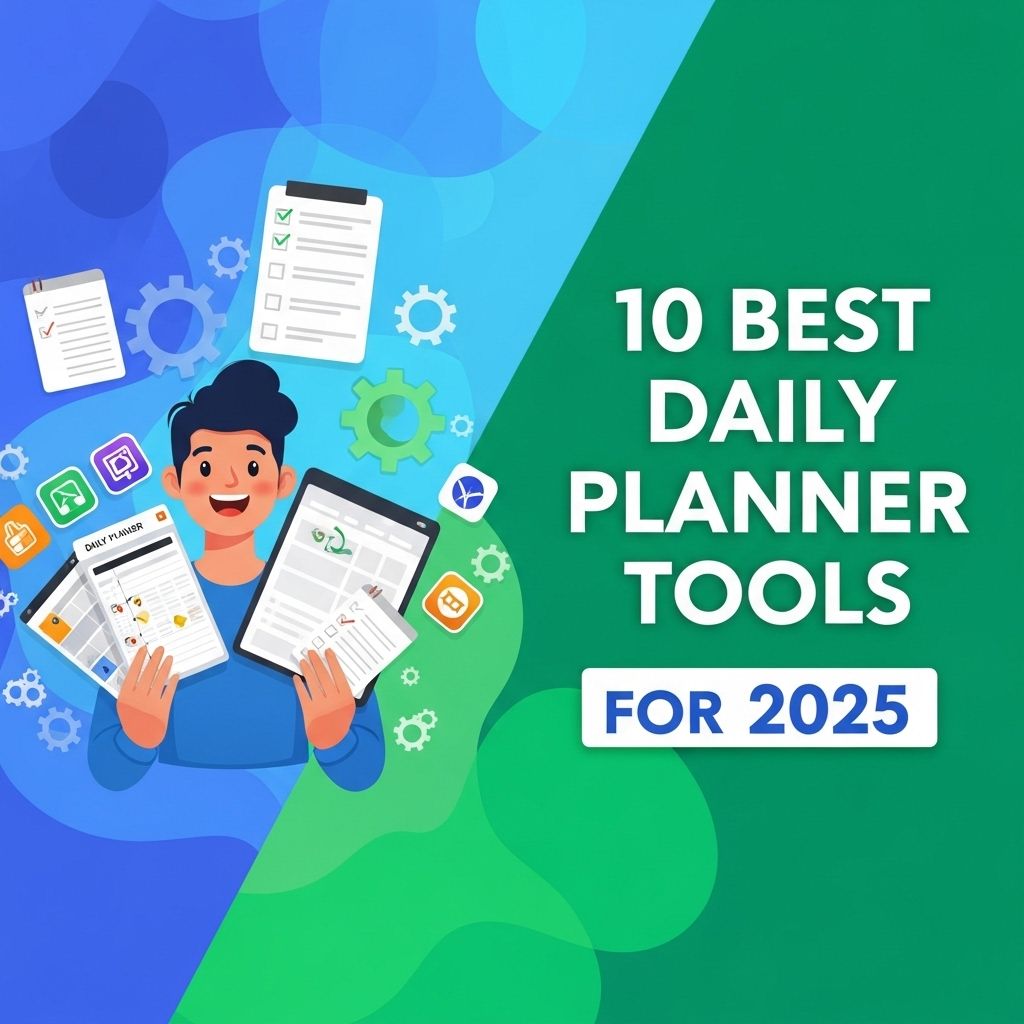
In our fast-paced world, staying organized is more crucial than ever. With the onset of 2025, the demand for effective daily planner tools has skyrocketed as individuals and teams look for ways to enhance productivity, manage their time better, and achieve their goals. Whether you’re a busy professional, a student, or someone simply looking to streamline your daily tasks, the right planner can make all the difference. Below, we delve into the ten best daily planner tools for 2025 that cater to various needs and preferences.
In the fast-paced world of 2025, staying organized is more crucial than ever. Discover the 10 best daily planner tools that can help streamline your schedule and enhance productivity. For creative projects and presentations, you can also download free bag mockups to elevate your designs.
Table of Contents
1. Todoist
Todoist is a powerful task management tool that has gained acclaim for its simplicity and flexibility. It offers a seamless experience for organizing tasks, setting deadlines, and tracking projects.
Key Features:
- Cross-platform availability (web, Android, iOS)
- Priority levels for tasks
- Collaboration tools for team projects
- Integration with various apps (e.g., Google Calendar)
2. Notion
Notion is a versatile workspace that combines note-taking, project management, and tasks into one tool. It’s an ideal choice for those who need a customizable planner.
Benefits of Notion:
- Highly customizable interface
- Ability to create databases for task management
- Rich media support (images, videos, links)
- Collaboration features for team use
3. Trello
Trello utilizes a card-based system to help users visualize their tasks and projects. This Kanban-style approach is especially effective for those who prefer a visual representation of their workload.
Advantages:
- Drag-and-drop functionality
- Customizable boards and lists
- Power-ups for added features
- Easy sharing and collaboration
4. Microsoft To Do
Microsoft To Do is a straightforward task management tool that integrates seamlessly with other Microsoft products. It’s perfect for those who already use Microsoft Office Suite.
Features to Consider:
| Feature | Description |
|---|---|
| My Day | A daily planner to focus on your top tasks |
| Lists | Create multiple lists for different projects |
| Reminders | Set reminders for important tasks |
| Integration | Works with Outlook and other Microsoft apps |
5. ClickUp
ClickUp aims to be an all-in-one productivity platform, offering a comprehensive suite of tools for task management, goals, and docs. Its flexibility makes it suitable for both individuals and large teams.
Noteworthy Features:
- Customizable task views (list, board, calendar)
- Goal tracking and reporting
- Time tracking capabilities
- Integrations with various apps and services
6. Google Calendar
Google Calendar remains a favorite for scheduling and event planning. It offers a simple interface and integrates well with other Google services.
Why Choose Google Calendar?
- Real-time collaboration on shared calendars
- Integration with Gmail for event creation
- Mobile app for on-the-go access
- Reminders and notifications for events
7. Asana
Asana is a robust project management tool that excels in team settings. It provides a variety of views to manage tasks effectively.
Unique Selling Points:
- Task dependencies to understand project timelines
- Custom project templates
- Workload management for resource allocation
- Integration with communication tools (e.g., Slack)
8. Evernote
Evernote is not just a note-taking app but also a powerful planner. It allows users to capture ideas, set reminders, and manage tasks in one place.
Essential Features:
| Feature | Description |
|---|---|
| Web Clipper | Save web content directly to your notes |
| Tagging system | Organize notes with customizable tags |
| Cross-device syncing | Access notes from any device |
| Document scanning | Capture and digitize paper documents |
9. Any.do
Any.do combines tasks, lists, and calendars into a single tool, making it easy to manage daily activities and long-term projects.
Key Features:
- Daily planner and reminder system
- Simplified user interface
- Collaboration tools for shared tasks
- Recurring tasks functionality
10. Airtable
Airtable is a flexible platform that combines the simplicity of a spreadsheet with the functionality of a database. Its versatility allows for extensive project management capabilities.
Highlights of Airtable:
- Customizable templates for various use cases
- Rich field types (attachments, checkboxes, links)
- Collaboration features for teams
- Integration with numerous apps for enhanced functionality
Conclusion
Choosing the right daily planner tool can significantly enhance your productivity and organization in 2025. Each tool mentioned above caters to different preferences and needs, from simple task management to comprehensive project planning. Assess your specific requirements, explore these options, and implement the one that aligns best with your workflow. Remember, the most effective planner is one that you will consistently use!
FAQ
What are the top daily planner tools for 2025?
The top daily planner tools for 2025 include Notion, Todoist, Trello, ClickUp, Google Calendar, and Microsoft Outlook.
How can digital daily planners improve productivity?
Digital daily planners can improve productivity by offering features like task prioritization, reminders, collaboration tools, and integration with other apps.
Are there any free daily planner tools available?
Yes, many daily planner tools offer free versions, including Todoist, Trello, and Google Calendar, which provide essential features for effective planning.
What features should I look for in a daily planner tool?
When choosing a daily planner tool, look for features like customizable templates, task tracking, calendar integration, collaboration options, and mobile accessibility.
Can I use a daily planner tool for team collaboration?
Yes, many daily planner tools like ClickUp and Trello are designed for team collaboration, allowing users to assign tasks, share updates, and communicate effectively.
How do I choose the right daily planner for my needs?
To choose the right daily planner, assess your specific needs, such as whether you prefer digital or paper planners, your task management style, and any team collaboration requirements.