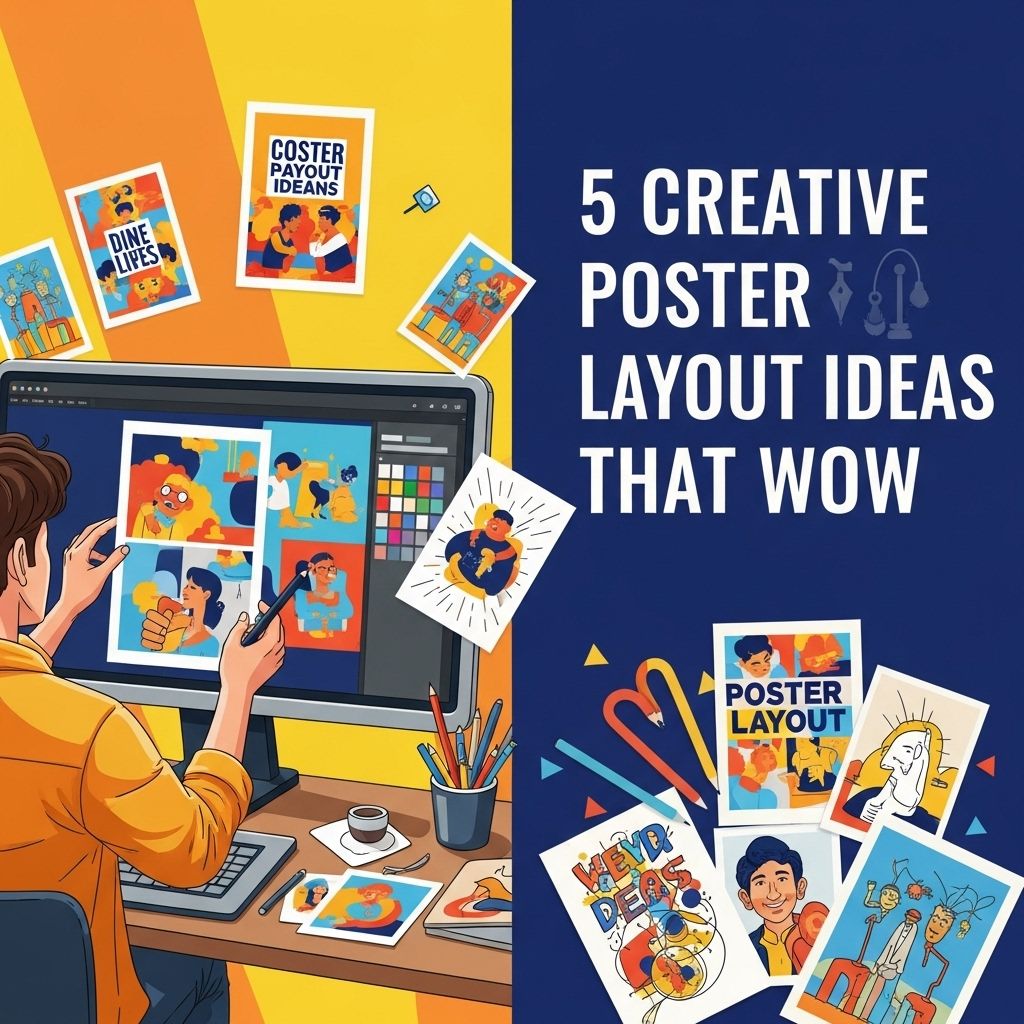
When it comes to making a statement in the world of design, a captivating poster can be the perfect medium. Posters are not just for advertisements; they are a form of artistic expression that can convey powerful messages and emotions. Whether for an event, a campaign, or simply as a piece of art, the layout plays a crucial role in how the message is perceived. Here, we will explore five creative poster layout ideas that are sure to wow your audience and elevate your design game.
Creating an eye-catching poster is an art that combines creativity with effective design principles. In this article, we’ll explore 5 innovative layout ideas that can transform your posters into visually stunning pieces that capture attention. For more inspiration, check out these creative poster ideas.
Table of Contents
The Importance of Layout in Design
A well-structured layout ensures that the viewer’s attention is drawn to the most important elements of the poster. It helps in organizing content logically and aesthetically. Here are some key factors to consider:
Use negative space effectively to avoid clutter. Choose a harmonious color palette that complements your theme.
1. The Grid Layout
The grid layout is a classic approach that utilizes a structured framework of rows and columns. This method is particularly effective for posters with multiple elements, such as images, text, and icons.
Benefits of Grid Layout
- Creates consistency across designs.
- Facilitates easier alignment of elements.
- Improves overall readability.
Implementation Tips
- Decide on the number of columns you need based on your content.
- Maintain uniform margins and padding for each grid section.
- Use images and text that resonate well within their designated grids.
2. The Asymmetrical Layout
Asymmetry in design can create dynamic and engaging posters that stand out. This layout breaks traditional rules and allows for a creative expression of ideas.
Key Features
- Unequal distribution of visual elements.
- Encourages movement and flow throughout the design.
- Can use contrasting sizes and shapes for added interest.
Best Practices
- Balance the visual weight with careful placement of elements.
- Incorporate bold colors or textures to enhance focal points.
- Experiment with layering images and text to create depth.
3. The Minimalist Approach
Less is often more in design. The minimalist approach focuses on simplicity to convey a message effectively. This layout eliminates unnecessary elements, allowing the main idea to shine.
Characteristics of Minimalist Design
- Limited color palette, often monochromatic.
- Simple typography with strong legibility.
- Ample white space to enhance focus.
Creating Minimalist Posters
- Identify the core message and remove any distractions.
- Use high-quality images or typography as focal points.
- Ensure that every element serves a purpose.
4. The Typography-Driven Layout
For those who believe that words can be powerful visuals, a typography-driven layout showcases text as the primary design element. This approach focuses on fonts, sizes, and arrangements to create visual interest.
Elements to Consider
- Choose fonts that reflect the tone of your message.
- Utilize various font sizes to create contrast and hierarchy.
- Incorporate creative text arrangements such as circular or diagonal placements.
Design Tips
- Experiment with font pairings to find complementary styles.
- Ensure text is legible from a distance.
- Consider using text as a backdrop for images or graphics.
5. The Collage Layout
The collage layout integrates different visual elements—photos, illustrations, and textures—into a cohesive design. This technique is great for storytelling and creating an emotional connection.
Advantages of Collage Layout
- Allows for creativity and individuality.
- Can convey a narrative through visual juxtaposition.
- Creates a dynamic and engaging visual experience.
Creating an Effective Collage
- Gather diverse visual elements that relate to your theme.
- Use layering and transparency to blend images seamlessly.
- Maintain a consistent color or style to unify the design.
Conclusion
Ultimately, the key to an impressive poster lies in its layout. By exploring various designs such as the grid, asymmetrical, minimalist, typography-driven, and collage layouts, you can develop compelling visuals that resonate with your audience. Embrace creativity, experiment with different techniques, and don’t be afraid to push the boundaries of traditional design. The fusion of innovative layouts and high-quality content will not only attract attention but also leave a lasting impact on viewers.
FAQ
What are some innovative poster layout ideas?
Consider using asymmetrical designs, grid layouts, layering elements, bold typography, and minimalistic styles to create posters that stand out.
How can I make my poster visually appealing?
Utilize contrasting colors, unique fonts, high-quality images, and ample white space to enhance visual appeal and readability.
What is the importance of a focal point in poster design?
A focal point draws the viewer’s attention and guides them through the content, making your message more effective.
How can I effectively use typography in my poster?
Mix different font styles and sizes to create hierarchy, but ensure they complement each other and maintain legibility.
What role does color play in poster design?
Color influences emotions and can set the tone of your poster. Choose a color palette that aligns with your message and target audience.
Are there specific dimensions I should consider for posters?
Common poster sizes include 24×36 inches for large formats and 11×17 inches for smaller prints, but always consider your display environment.