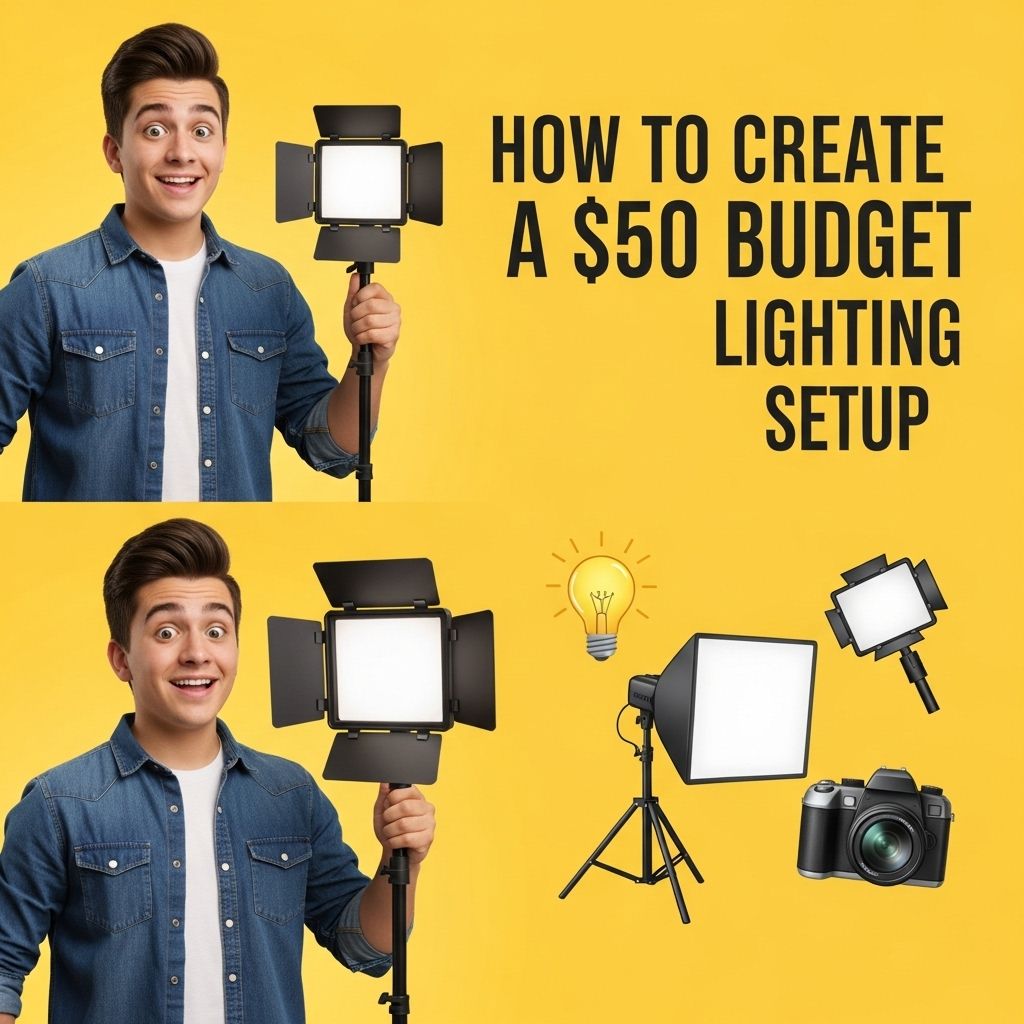
Creating an effective lighting setup on a budget can seem daunting, especially for photographers, videographers, or streamers who want professional-quality results without breaking the bank. However, with a little creativity and resourcefulness, it is entirely possible to achieve excellent lighting for under $50. This guide will walk you through the essential components of a budget lighting setup, providing tips and tricks to maximize your investment and elevate your content.
Creating a stunning lighting setup doesn’t have to break the bank; you can achieve beautiful results for just $50. By carefully selecting cost-effective lighting options and utilizing creative techniques, you can elevate your photography or videography projects. For visual inspiration, consider using bag mockups for branding to showcase your work effectively.
Table of Contents
Understanding Light Types
Before diving into how to assemble your lighting setup, it’s important to understand the different types of lights available and their applications. Here are the main categories:
1. Natural Light
Utilizing sunlight can be one of the most cost-effective ways to light your scenes. Positioning yourself near windows can provide soft, diffused light, but it’s crucial to be mindful of the time of day as the intensity and color temperature of natural light can vary.
2. Continuous Lighting
These lights are always on, providing consistent illumination. They are often found in the form of LED or fluorescent bulbs and are great for video work since they don’t flicker.
3. Strobe Lighting
Strobe lights produce a powerful burst of light and are typically used in photography. However, they may not be suitable for budget setups due to their higher cost and the need for additional equipment.
Essential Equipment for a Budget Setup
For a budget setup, you’ll need to focus on affordability and versatility. Here’s a breakdown of items you should consider acquiring:
1. LED Light Bulbs
Investing in a few bright LED bulbs is a must. Look for bulbs with adjustable color temperatures (measured in Kelvin) to give you control over the warmth or coolness of your light. Aim to spend around $20 for a pair of good quality bulbs.
2. Light Stands or Tripods
While you can use any flat surface to place your lights, investing in robust light stands will allow you to position your lights at various angles and heights. You can find budget-friendly stands for around $15.
3. Diffusers
Diffusion helps soften the harshness of direct light, resulting in a more flattering appearance. You can make DIY diffusers using:
- White shower curtains
- Bed sheets
- Diffusion fabric
Alternatively, you can purchase inexpensive diffusion panels for about $10.
4. Reflectors
Reflectors can bounce light and fill in shadows, enhancing the overall lighting. You can create these at home using:
- Foam boards
- White poster boards
- Aluminum foil
Assembling Your Lighting Setup
Now that you have your equipment, it’s time to assemble your lighting setup. Follow these steps to create an effective arrangement:
Step 1: Choose Your Location
Pick a space that has sufficient room and is not cluttered. If possible, use a spot with natural light as a base, then supplement with your artificial lights.
Step 2: Set Up Your Main Light
Position your main light source (key light) at a 45-degree angle to your subject. This lighting placement is ideal for creating depth and dimension. Use your LED bulbs with a diffuser if needed to soften the light.
Step 3: Add Fill Light
Your fill light should be softer and less intense than your key light. Use reflectors or a second LED light to fill in shadows on the opposite side of your main light.
Step 4: Backlighting
To add depth to your setup, consider incorporating a backlight. This light will separate you from the background and create a three-dimensional effect. Position it behind your subject and aimed toward their back.
Lighting Techniques to Enhance Your Setup
Once your lighting equipment is set up, it’s time to experiment with different lighting techniques:
1. Three-Point Lighting
This classic technique involves a key light, fill light, and backlight, creating a balanced and professional look.
2. Rembrandt Lighting
Named after the famous painter, this technique features a triangle of light on the shadowed side of the face and is great for dramatic effects.
3. Butterfly Lighting
This setup places the key light directly in front of the subject, creating a butterfly-shaped shadow under the nose and enhancing cheekbones.
Common Mistakes to Avoid
When creating your budget lighting setup, it’s crucial to avoid the following pitfalls:
- Ignoring Color Temperature: Ensure your lights have similar color temperatures to maintain consistency.
- Overlighting: Too much light can wash out your subject. Start with lower intensity and adjust as needed.
- Neglecting Background: Pay attention to what is behind your subject. A well-lit background can enhance your overall setup.
Conclusion
Creating a professional lighting setup on a budget is achievable with the right knowledge and tools. By understanding the types of lighting, assembling essential equipment, and applying effective techniques, you can produce stunning results without overspending. Remember to experiment, as lighting can dramatically alter the mood and quality of your content. With this guide, you are now equipped to illuminate your projects effectively and efficiently.
FAQ
What are the essential components of a $50 budget lighting setup?
The essential components include affordable LED lights, a light stand or tripod, and reflectors or diffusers made from inexpensive materials.
Where can I find budget-friendly lighting equipment?
You can find budget-friendly lighting equipment at local hardware stores, online marketplaces like Amazon, or second-hand shops.
How can I maximize the effectiveness of my budget lighting setup?
To maximize effectiveness, position your lights at angles that reduce shadows, use reflectors to bounce light, and adjust the color temperature to suit your needs.
What types of lights are best for a $50 budget?
The best types of lights for a $50 budget are LED bulbs, softbox lights, or even clamp lights that can be easily adjusted.
Can I create a professional look with a budget lighting setup?
Yes, with careful placement and the right techniques, you can achieve a professional look even with a budget lighting setup.
What DIY options are available for creating budget lighting?
DIY options include using household lamps, making homemade reflectors from aluminum foil, and building your own light diffusers using sheer white fabric.